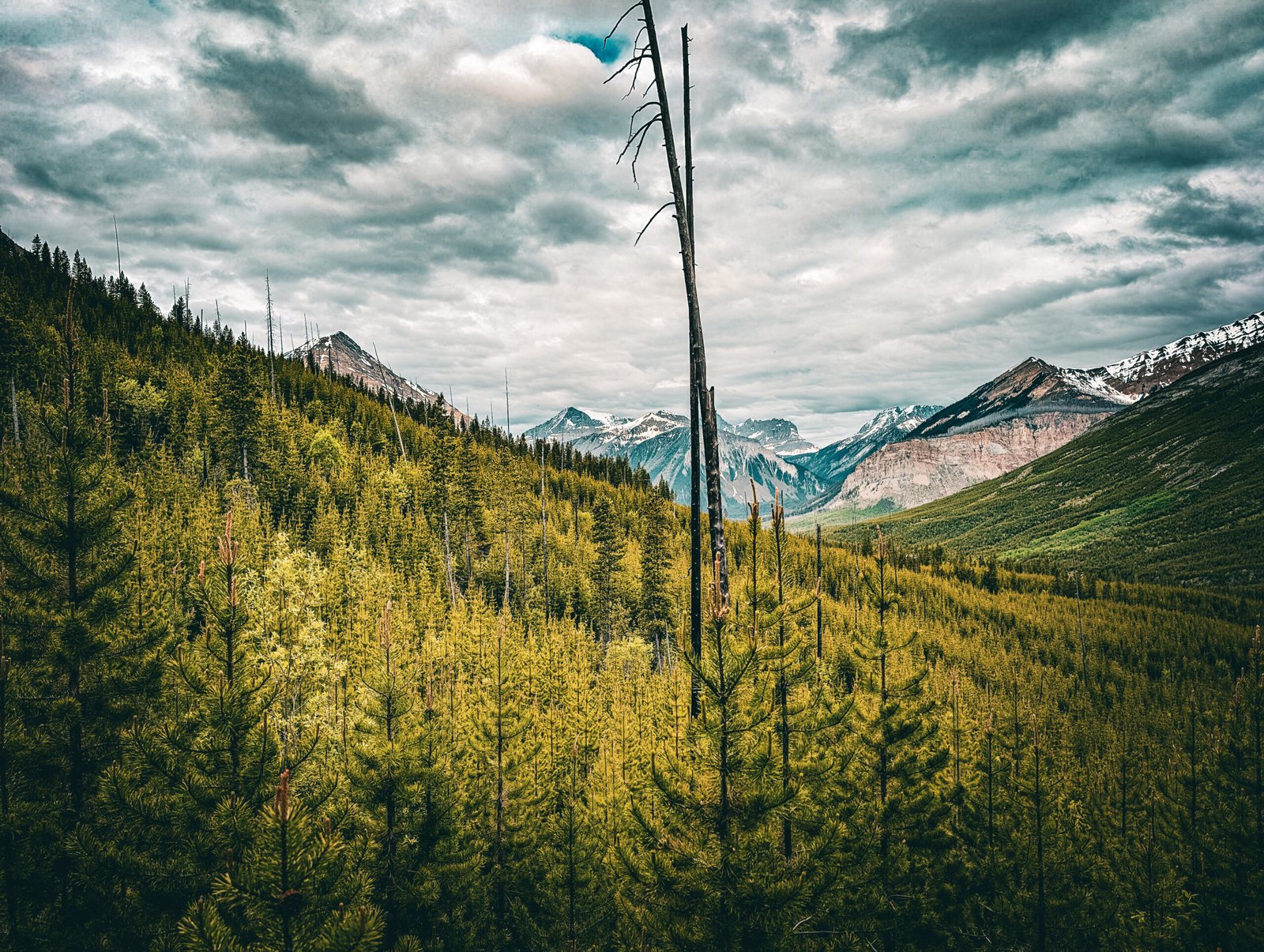
Slowly checking of all the Eastern European countries. Next up is Austria. After Poland, Germany and Northern Italy I should have learned my lesson, as I can only take so much sauerkraut, sausage, and Schnitzel, but the beer evens it out a bit.
We were using our Home Exchange points to fly into Salzburg and stay in the “Sound of Music” mountains and work our way East along the Danube until flying out of Vienna a week later.
Normally, before each trip I am excited to learn about the history of a country, but the history of Austria was a bit underwhelming. Maybe because it is in the middle of Europe and it seemed to lack a regional identity or maybe the whole Hapsburgs aristocrat vibe turned me off. Regardless, here is my short overview.
Charlemagne, King of the Franks, conquered the area in 788, encouraged colonization, and introduced Christianity. As part of Eastern Francia, the core areas that now encompass Austria were bequeathed to the house of Babenberg. Their reign came to an end with a defeat at Dürnkrut at the hands of Rudolph I of Germany in 1278. Thereafter, until World War I, Austria's history was largely that of its ruling dynasty, the Habsburgs.
Vienna served as the Holy Roman Empire's administrative capital. The Holy Roman Empire was dissolved in 1806, two years after Austria had established its own empire, which became a great power and one of the largest states in Europe. The empire's defeat in wars and the loss of territories in the 1860s paved the way for the establishment of Austria-Hungary in 1867.
Archduke Franz Ferdinand of Austria, heir presumptive to the Austro-Hungarian throne, and his wife, Sophie, Duchess of Hohenberg’s murder was the flashpoint that kicked off WW1. With the loss of WW1, the country fell on hard times, and a year before the outbreak of World War II, Austria was annexed into Nazi Germany by Adolf Hitler, and it became a sub-national division. After its liberation in 1945 and a decade of Allied military occupation, the country regained its sovereignty and declared its perpetual neutrality in 1955.
The Alps cover 2/3 of country. Besides mountains, it is birthplace of classical music and played host to different composers including Joseph Haydn, Wolfgang Amadeus Mozart, Ludwig van Beethoven, and Franz Schubert.
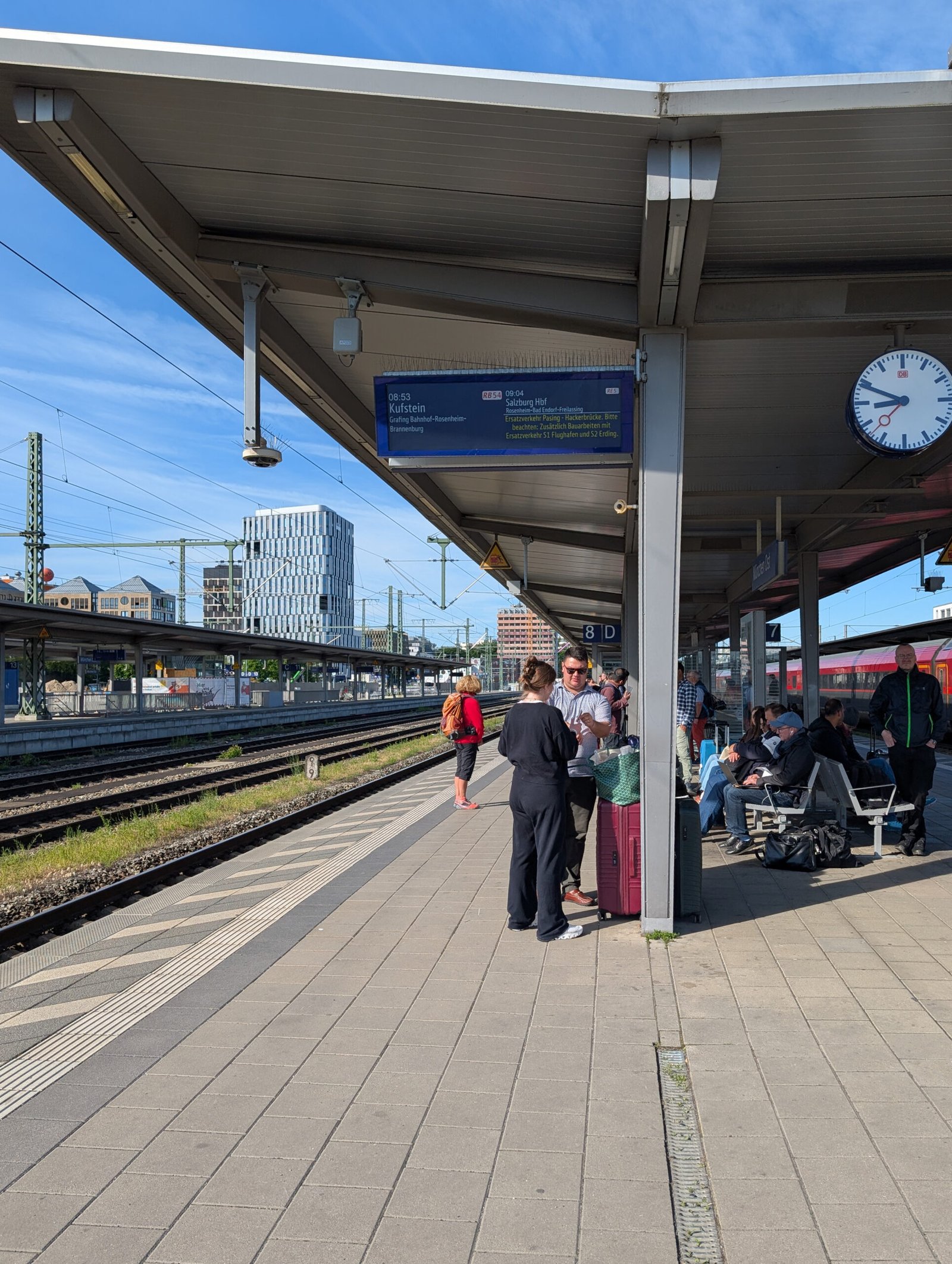
When I planned this I thought it would be a good idea to fly direct to Munich and then take a train into Salzburg. My rationale was to skip a connection at the airport and make it more of an adventure. At 6am local time after being cramped in airplane plane steerage, you really are not up for an adventure. We had this lady on the plane next to us that talked to everyone for hours on end, making it hard to sleep or even relax. When I boarded in Detroit, and put my bag in the overhead, she announced that my luggage was much to big and needed to be checked. That immediately put us at odds. I had shaved that morning and had cut my ear. While flying, Amy asked me if I cut myself, and I responded, “Yes, is it bad?” No, she said, just leave it alone. Mid-flight I got up to use the bathroom and saw clotted blood running down my ear and gathered in a clump the size of an earring hanging off the bottom of the lobe. I returned to my seat and asked, “You let me walk around the airport looking like I got cut by a chainsaw?” Her excuse was that she didn’t want me fussing with it and making it worse.
The train into Salzburg was smooth with German efficiency. Even the rental car pickup was over in under 2 minutes.
We had grand plans of hiking and touring the mountains that morning, but after almost falling asleep a few times behind the wheel, we opted for a quick 4 hour nap and arise for an early dinner.
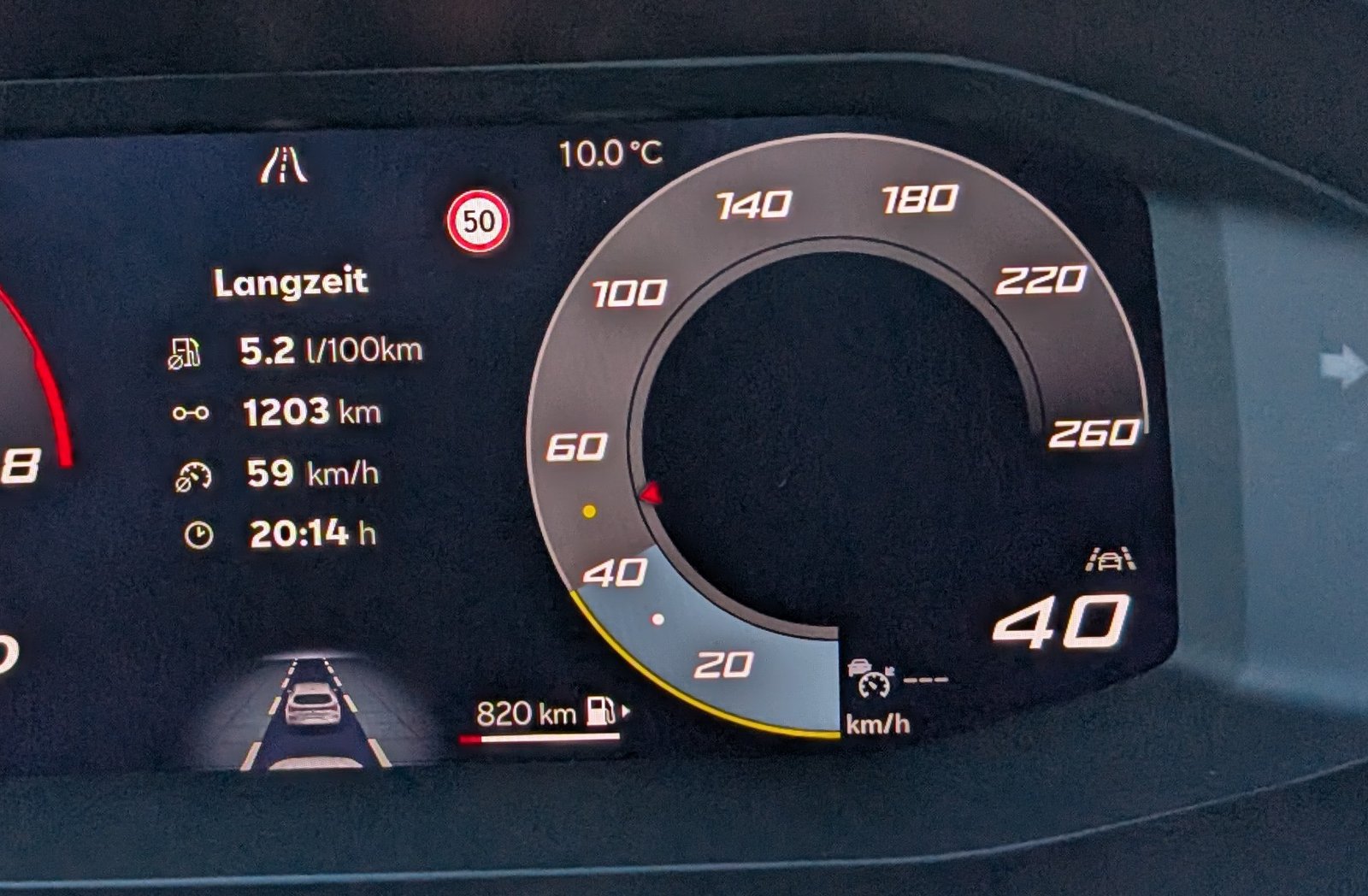
The rental car caused me great anxiety. The below picture shows the gas gauge has the numbers 860km above it. While driving I could not figure out how to read it. Even after filling up I was not sure. Was the 860 how many km I had left in the tank, cause that did not change after fill up. What did the red line mean? On the last day I eventually solved the riddle that the gauge goes down from right to left and the red indicates when you are getting low. I think the 860km is how many km/tank you are getting based on your driving pattern. It was kinda funny because there were all these online chats going on how to read it. I know that now that I have explained it, it makes perfect sense and only an idiot would think otherwise, but its amazing sometimes how you can twist and turn yourself into a moron.
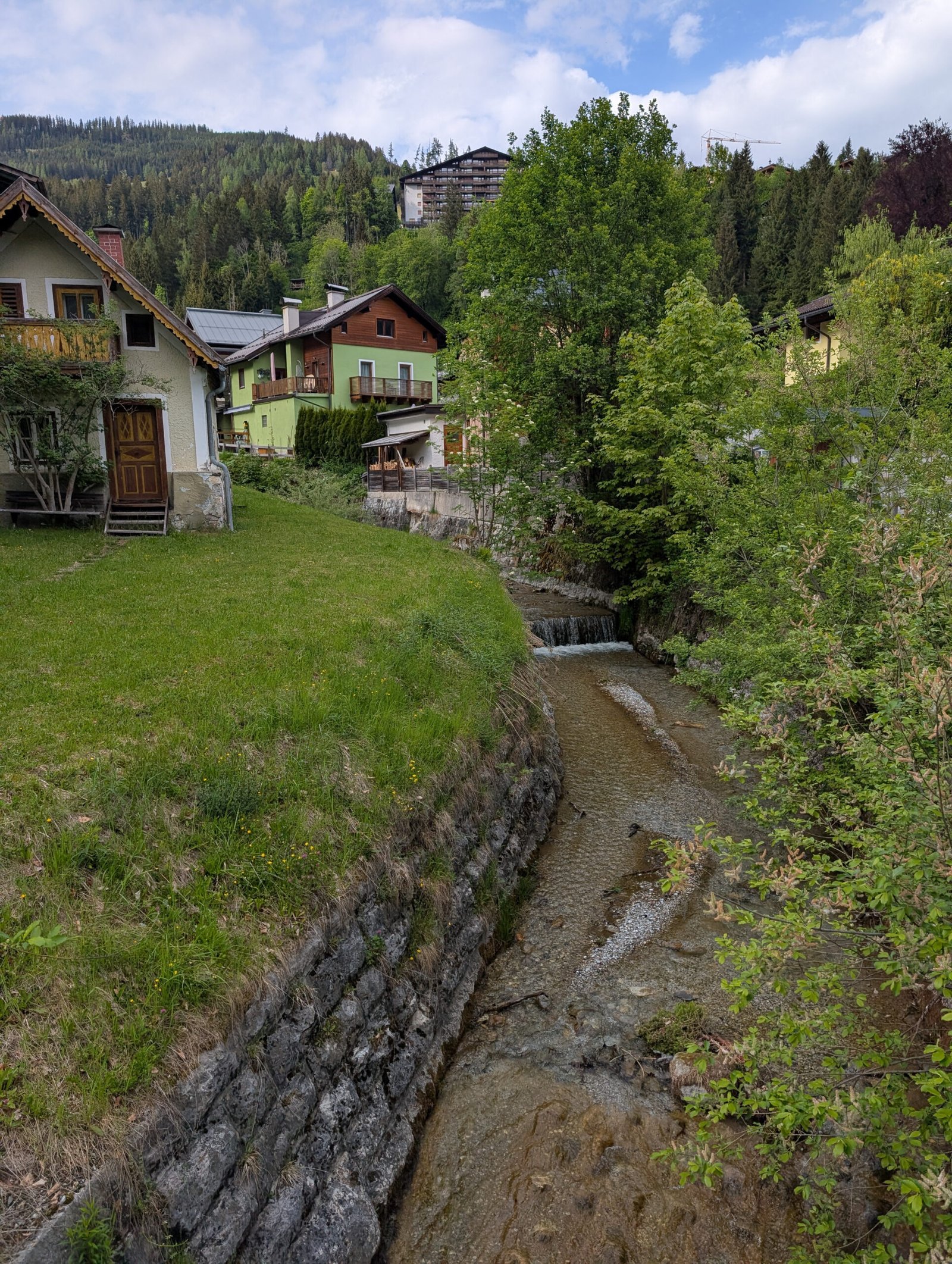
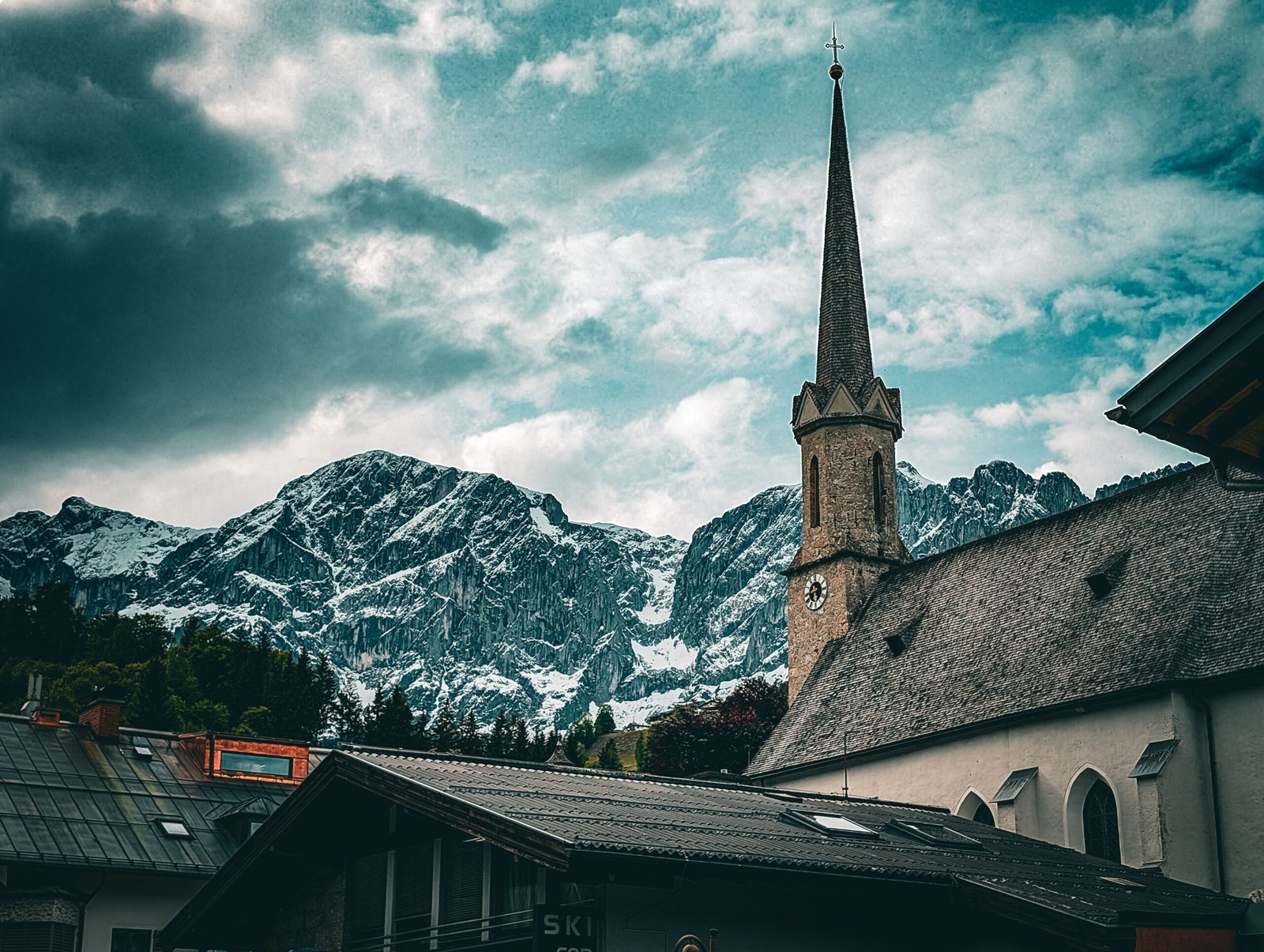
At 5pm we walked from our Home Exchange into the town of Mühlbach am Hochkönig. We were in the shoulder season between skiing and hiking. It was pretty quiet as the gondolas were not opening for another couple days. Most restaurants were closed but we found one across the street from our place that had nice outside seating.
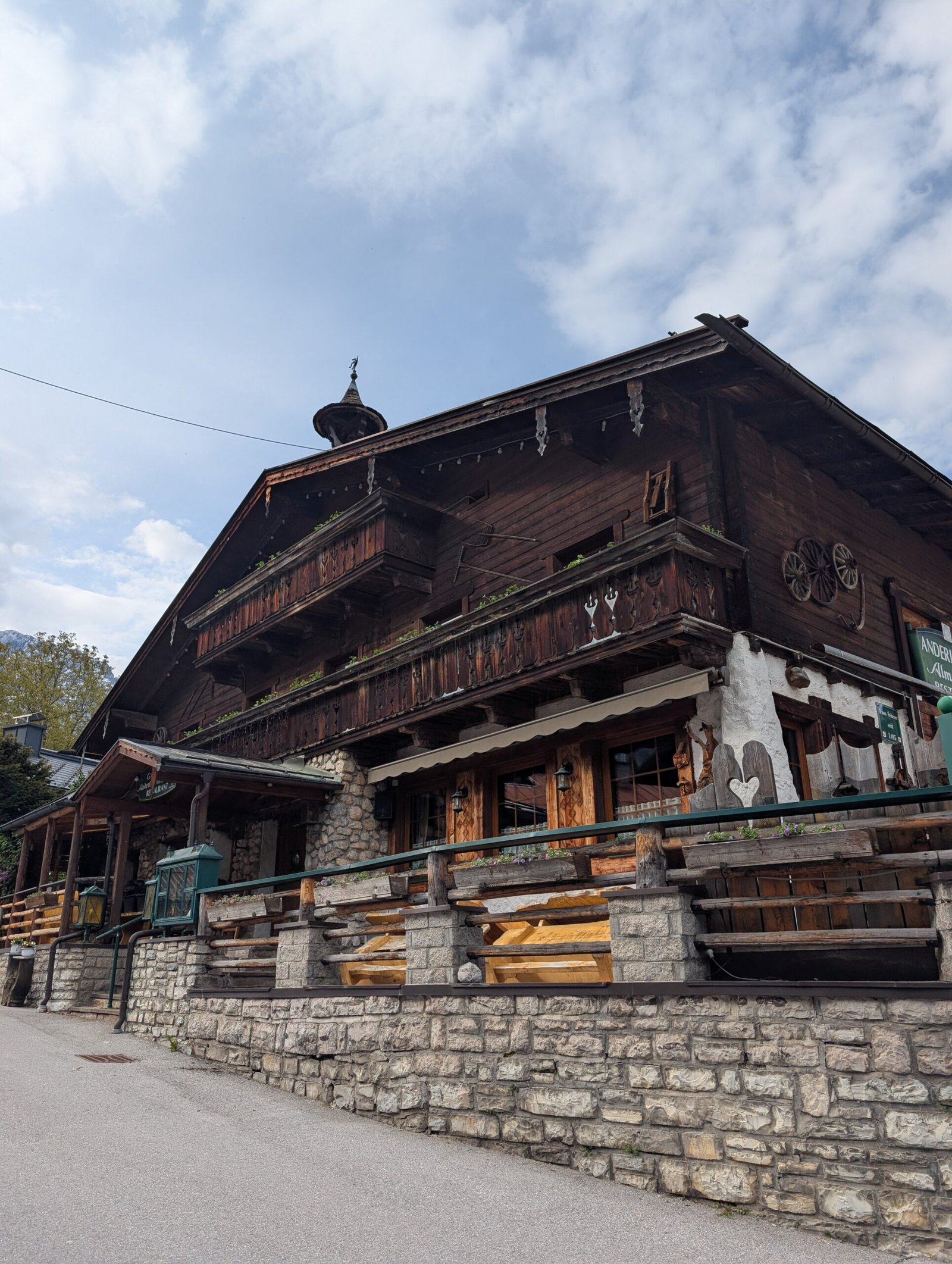
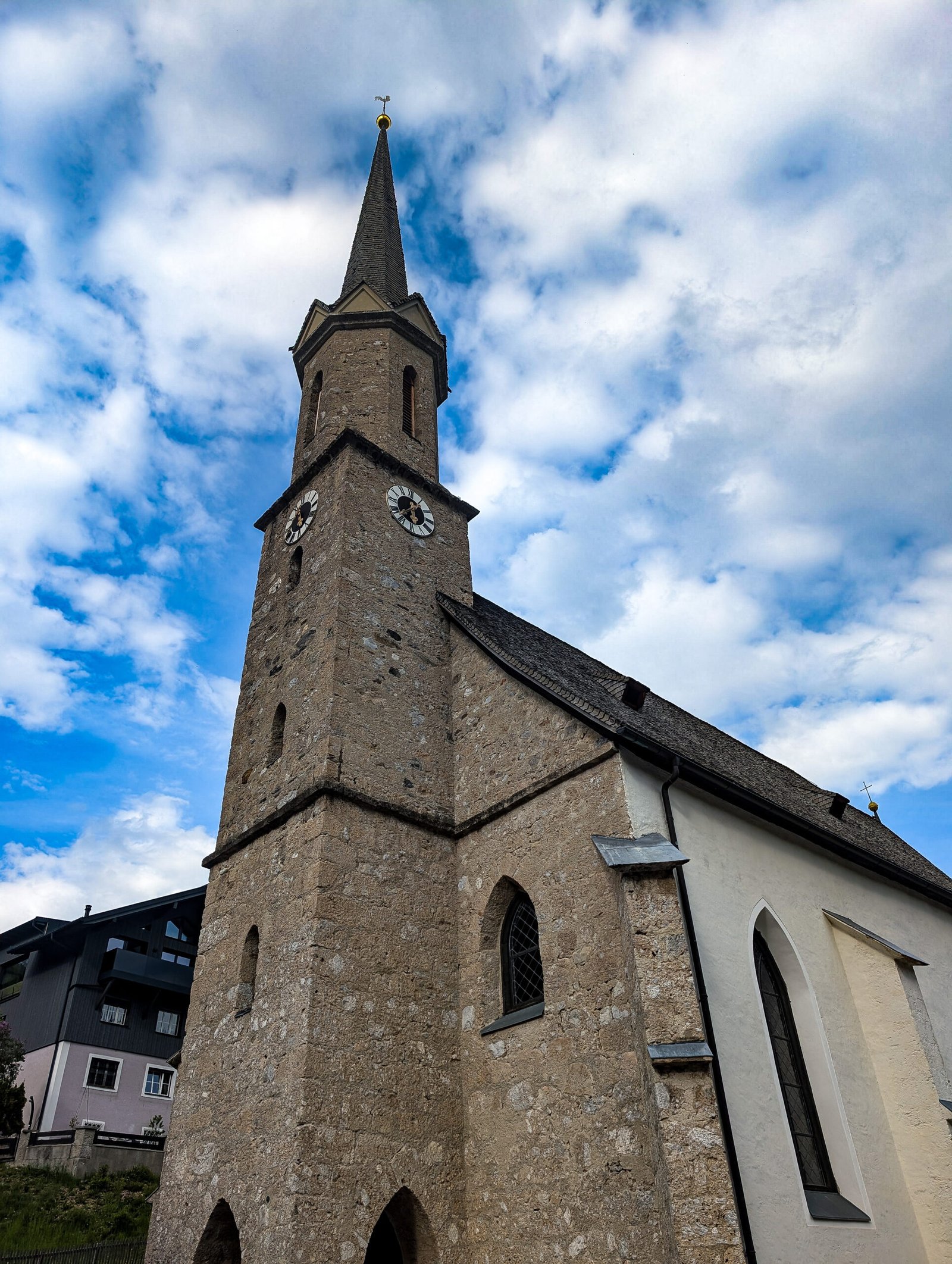
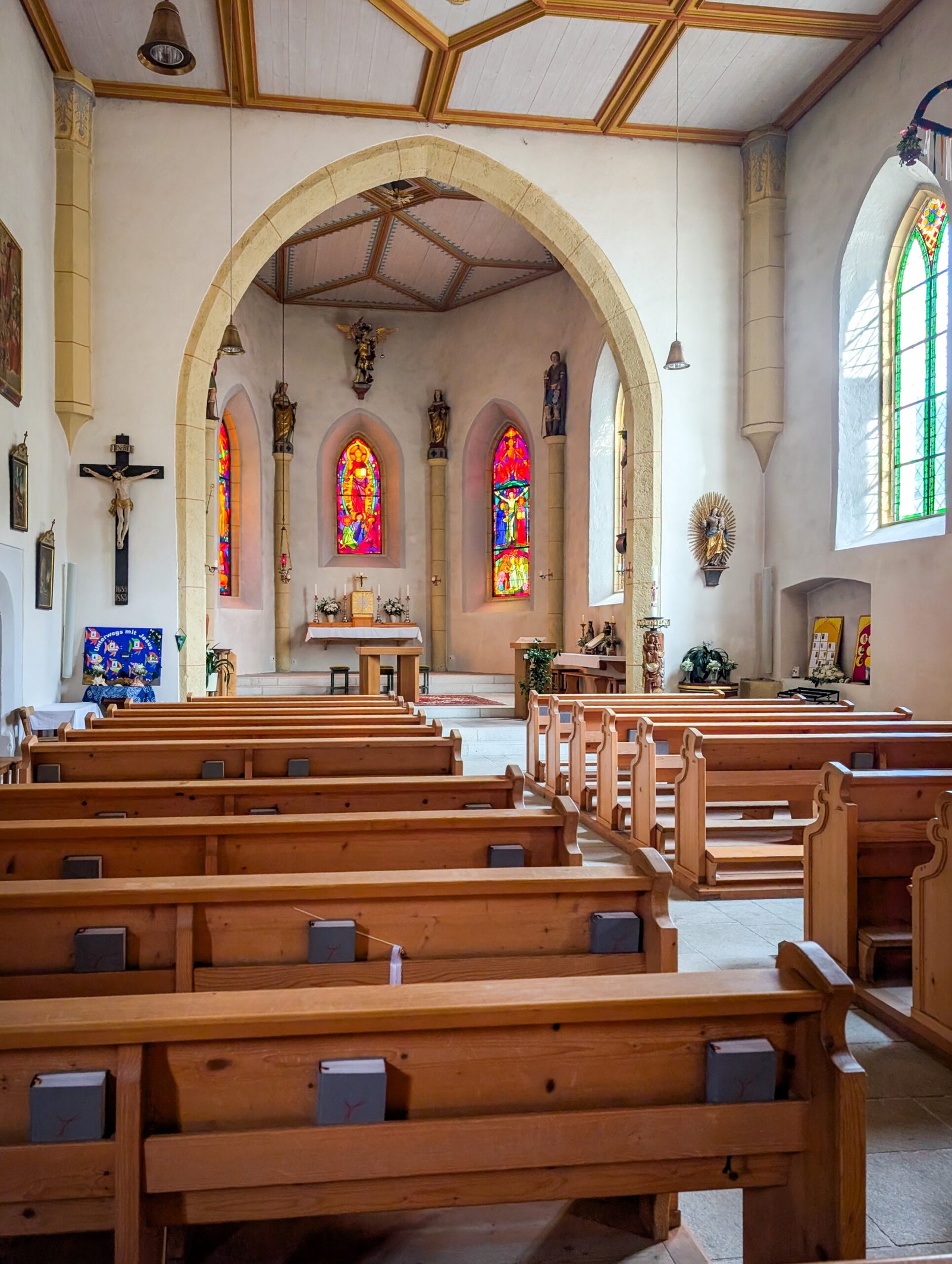
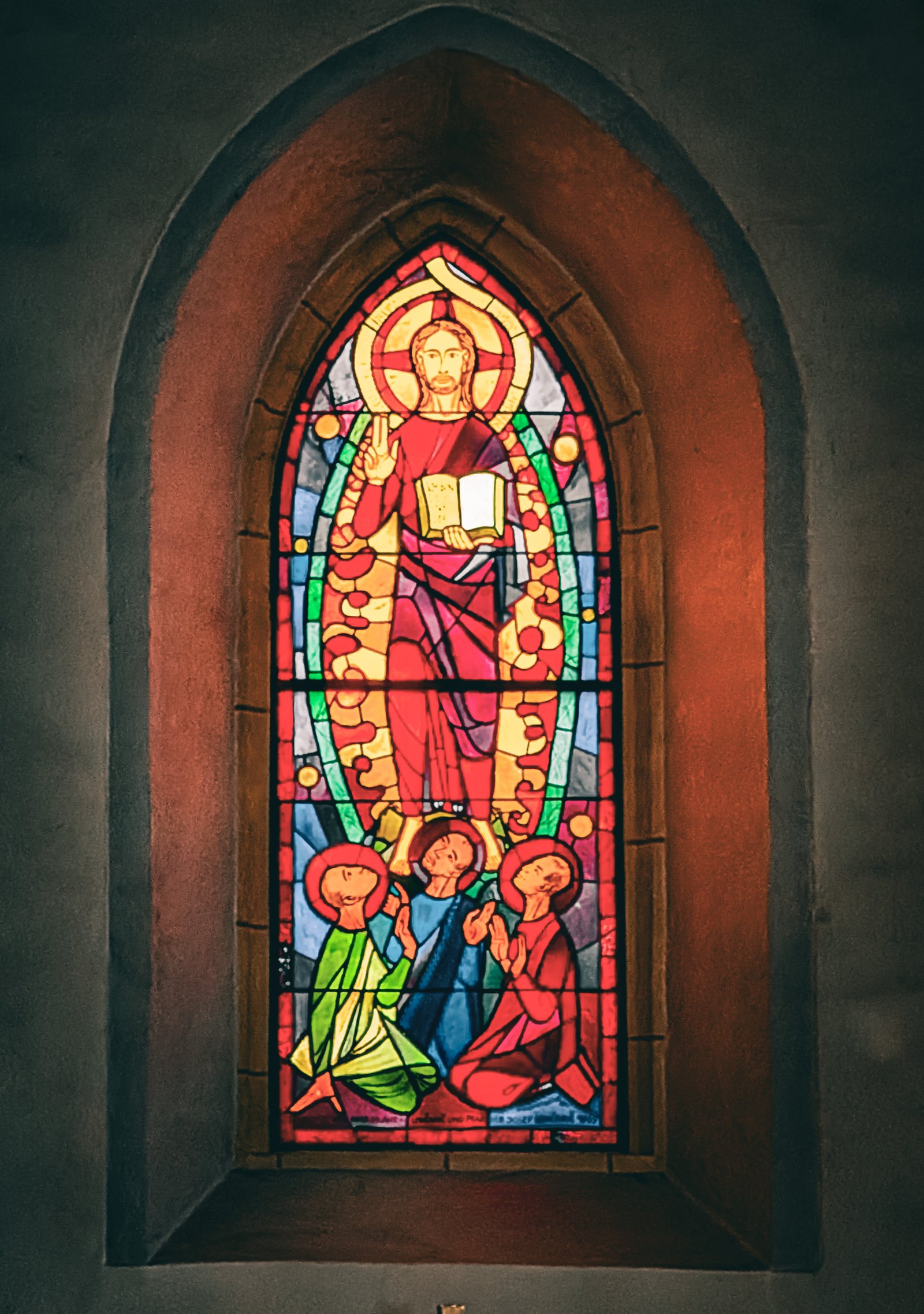
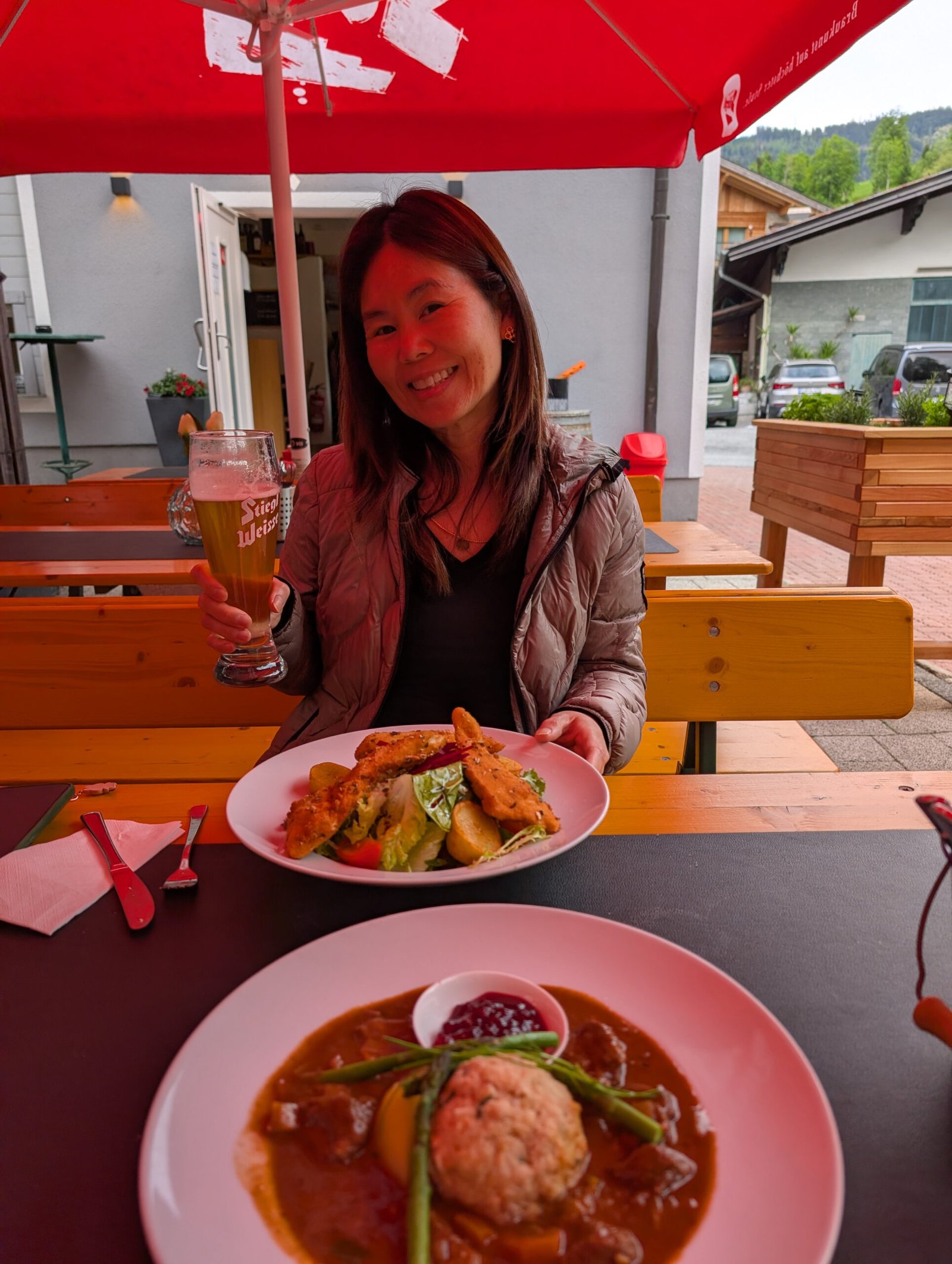
After dinner we walked to the grocery store to get some snacks. They were closing in 10 minutes and made us aware of that fact. Another boy came in behind us and started racing around the store like he was a contestant in some Supermarket Sweep gameshow. We get anxious and started doing the same, resulting in a number of strange impulse buys of local flavor.
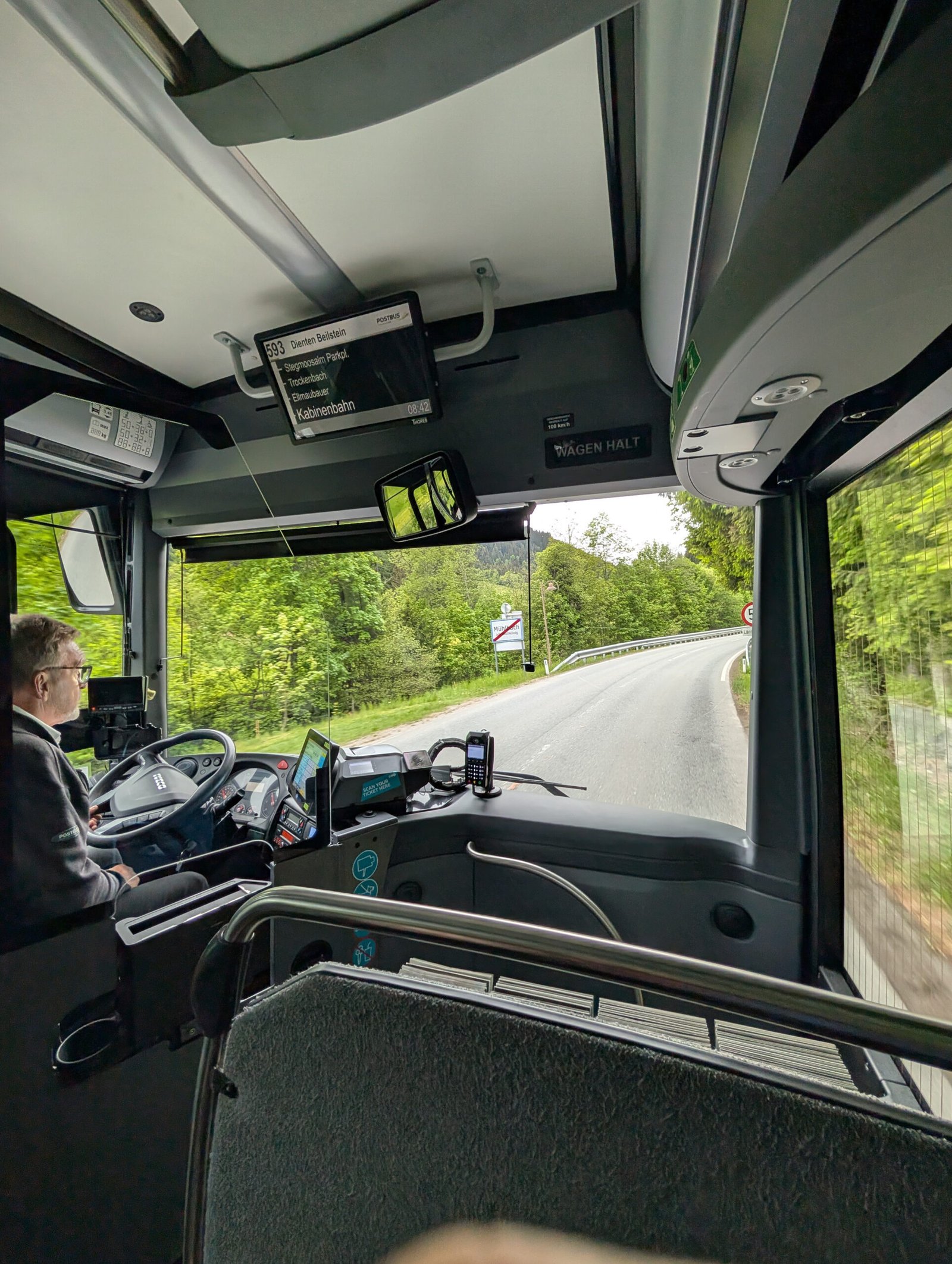
In the morning we sat in the only café for an hour waiting for a bus to take us about 20 minutes up the road so we could hike back along the Mühlbach High Trail.
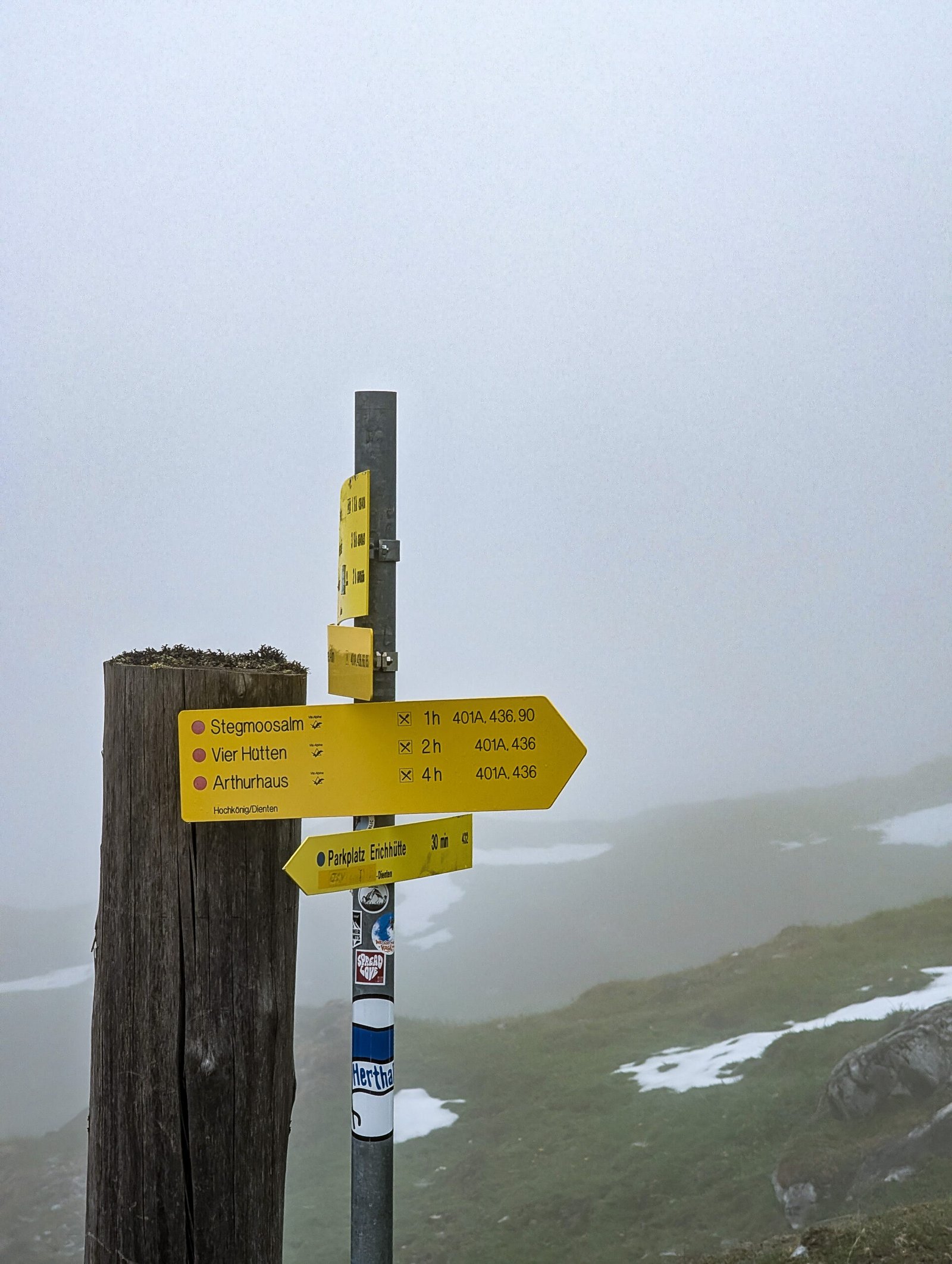
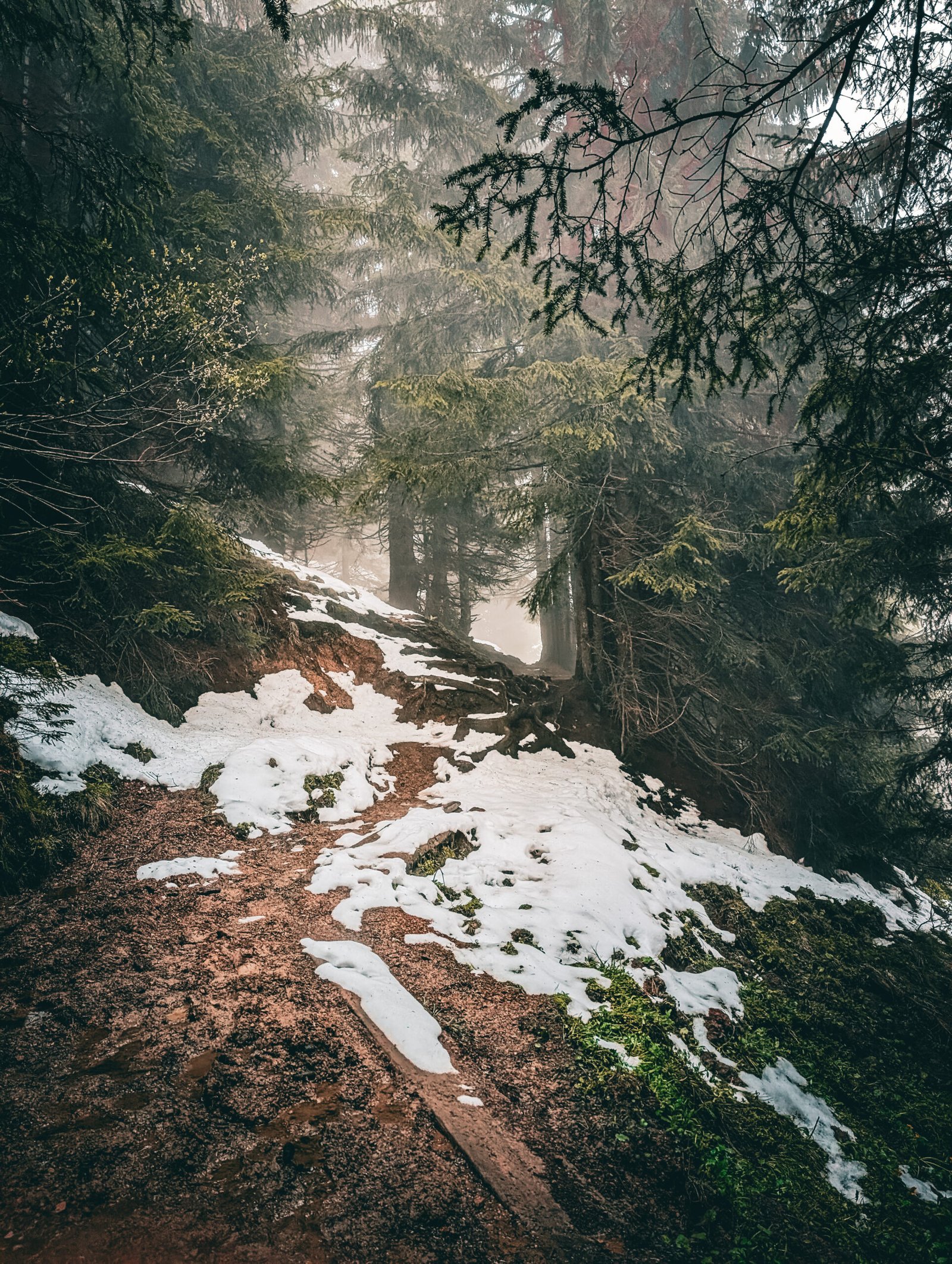
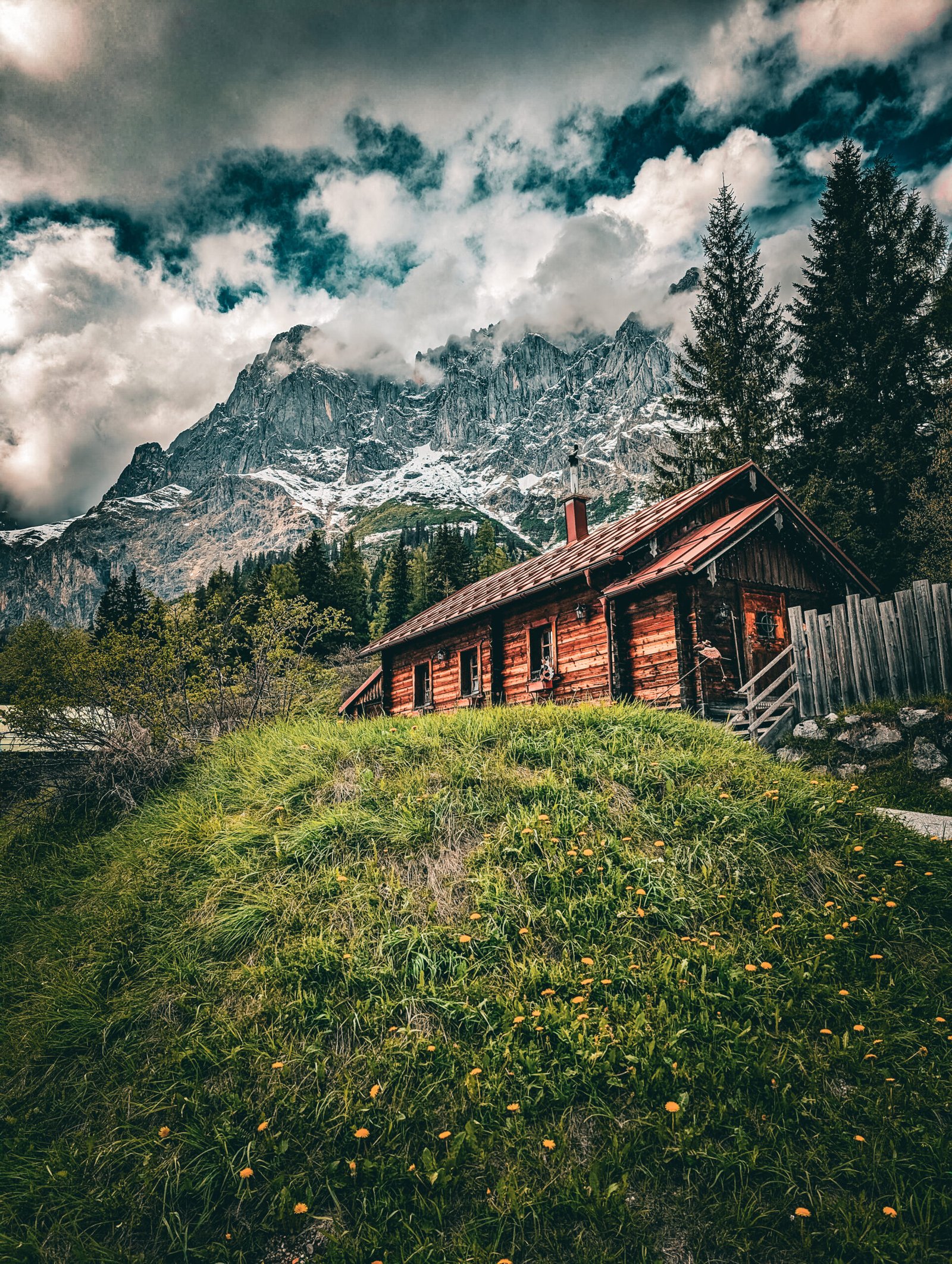
We walked 20 minutes up the trailhead. It was quite foggy with some snow on the ground. Amy’s knee was already bothering her. A big surprise since she had spent exactly zero hours at the gym in preparation for this trip. To her credit she muscled through and her pain went away and did not cause much discomfort for the rest of the trip. Our hike was a 6 mile point-to-point ending at Arthurhause Hutte where we would stop for lunch
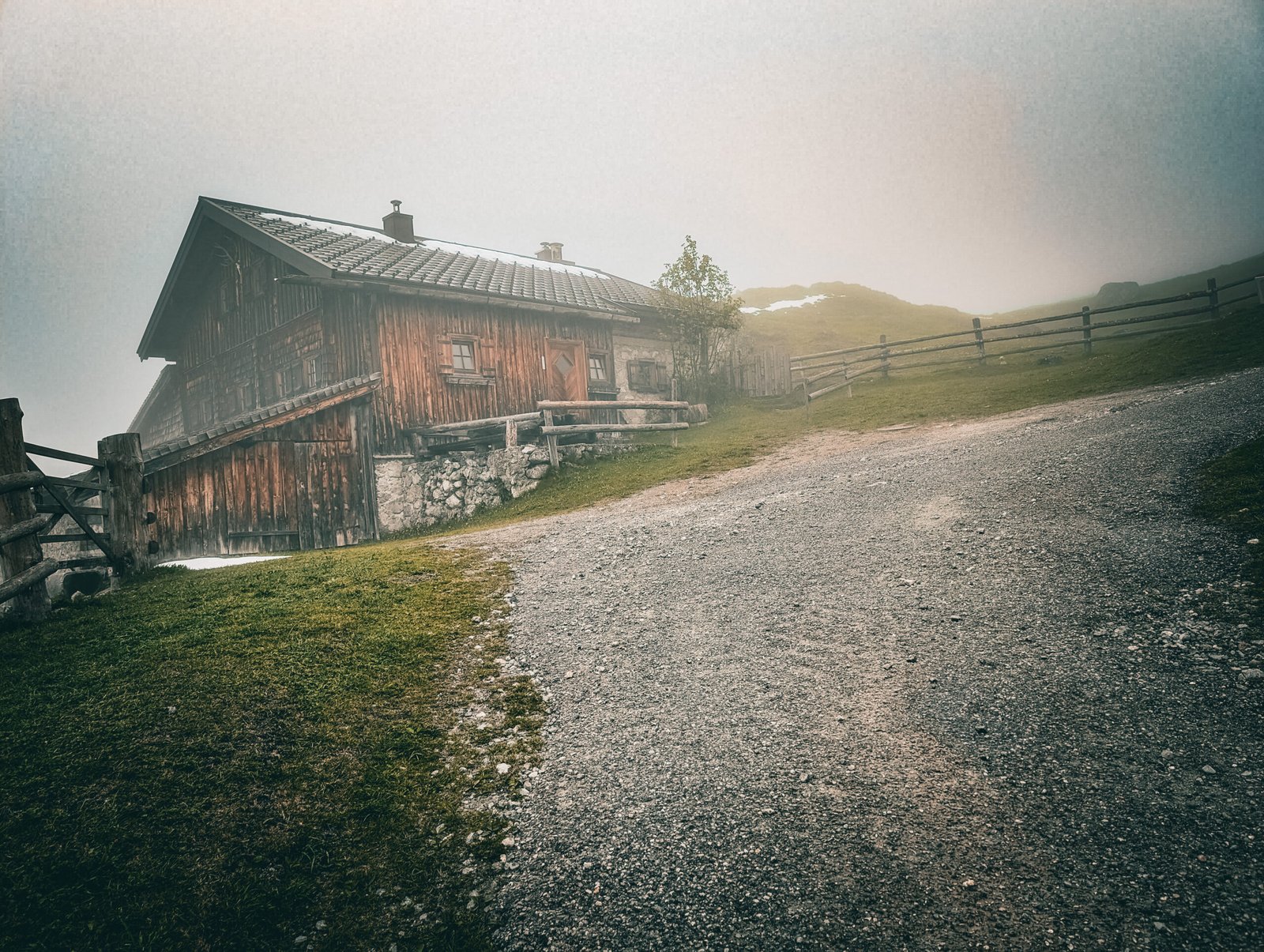
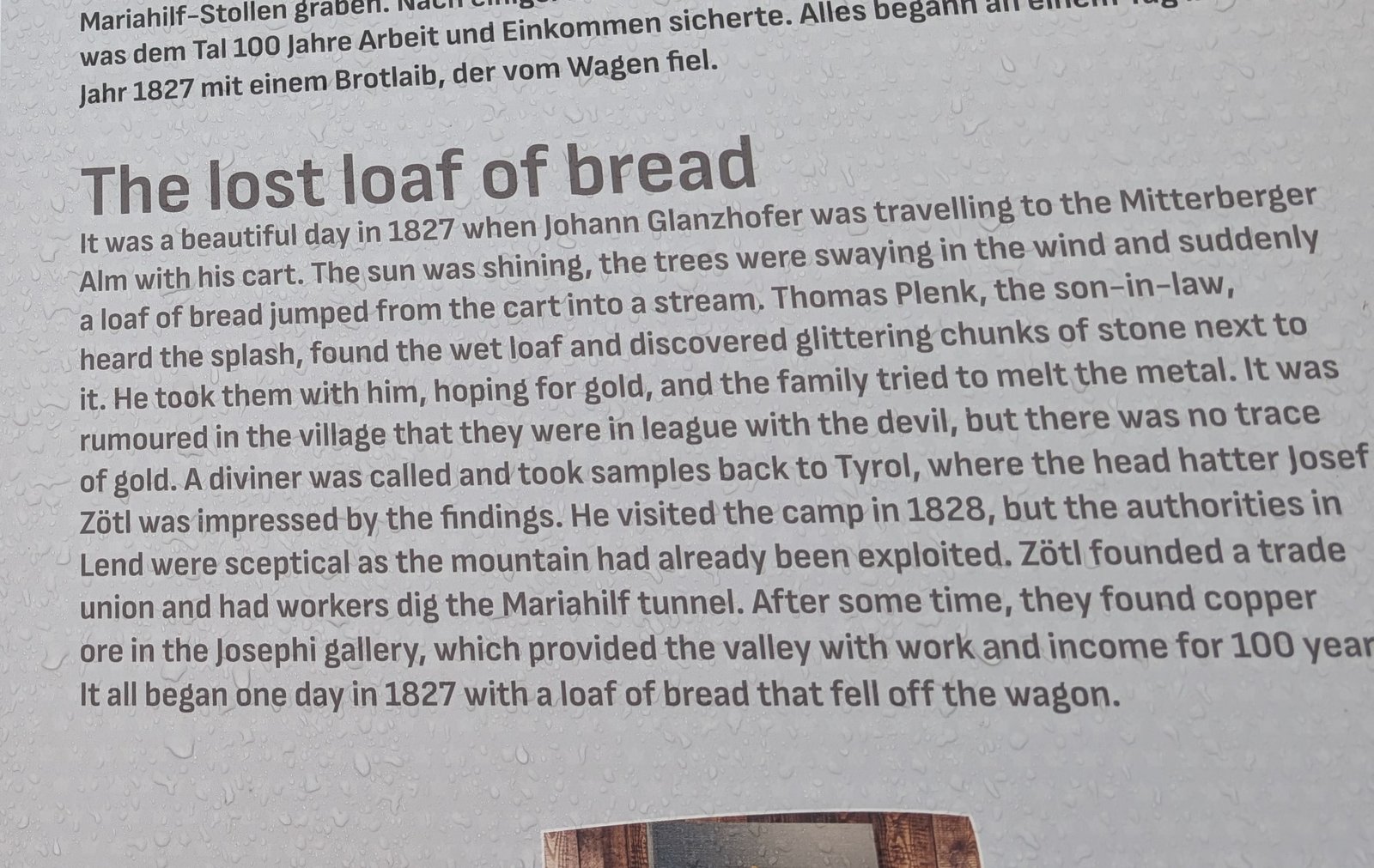
I include the information plaque above regarding the discovery of copper because it is this areas claim to fame. Many of the sculptures and signs are made from copper.
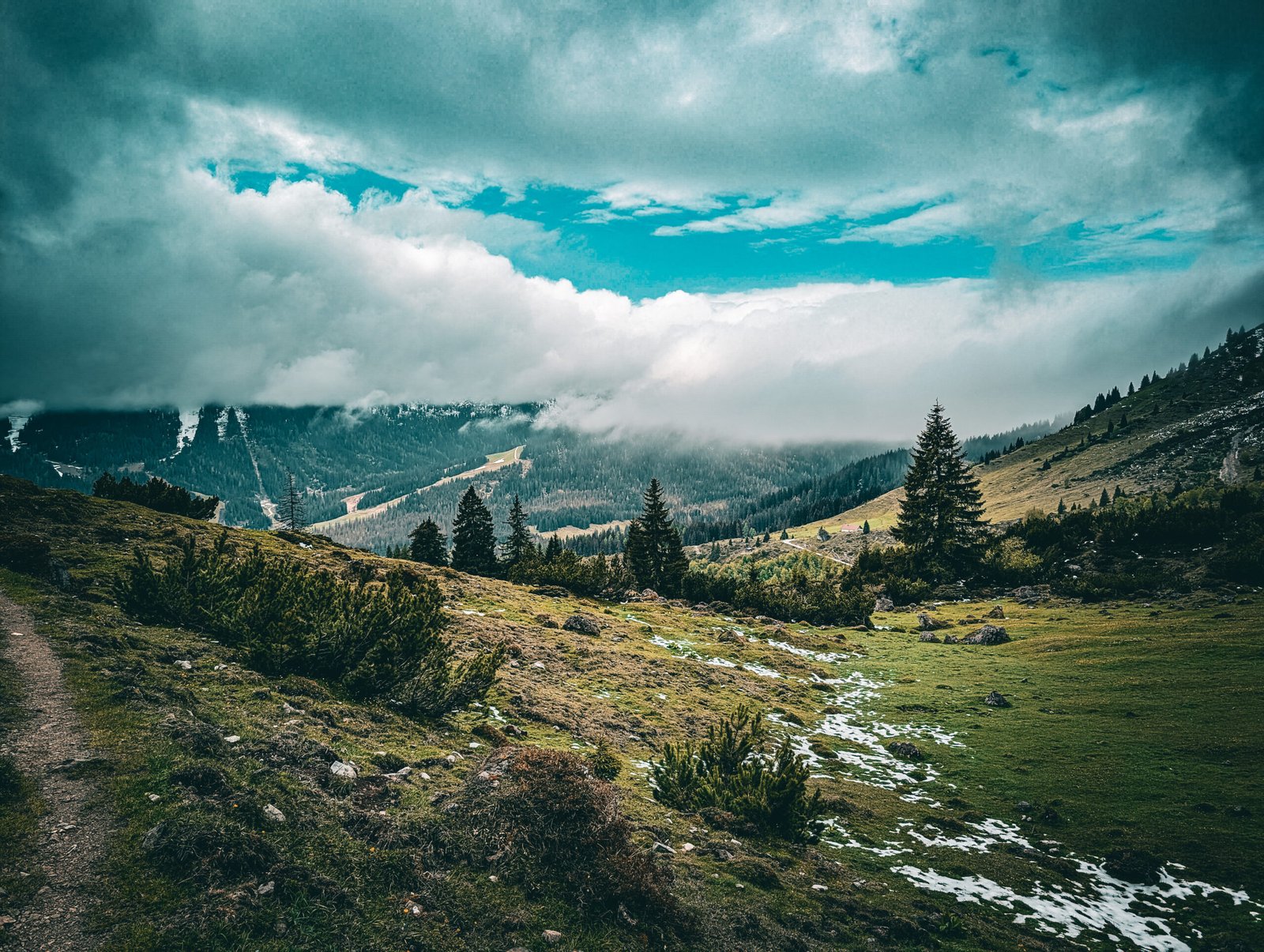
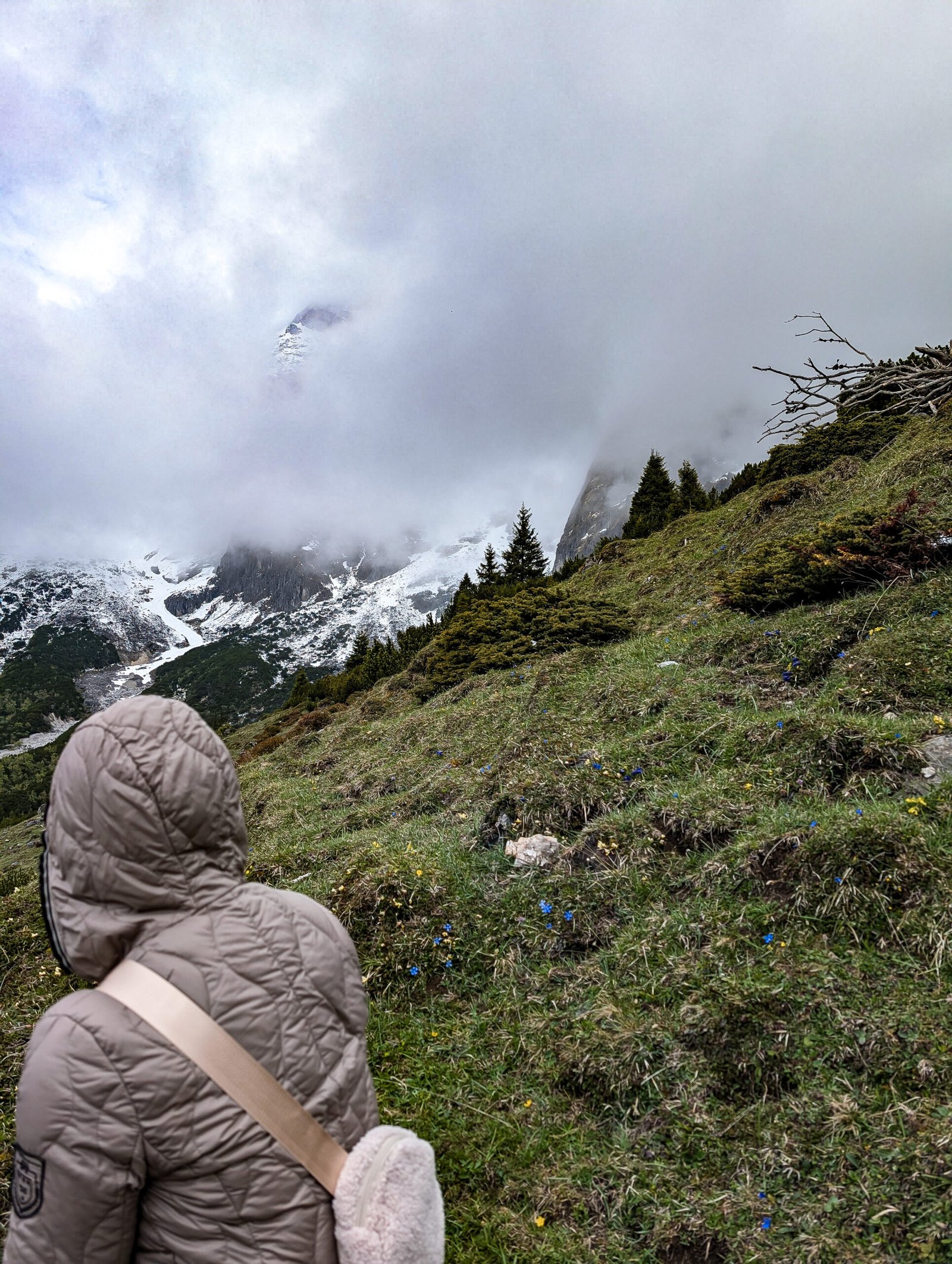
We waited at this spot, pictured above, for 30 minutes hoping for the clouds to lift as they usually do as the sun emerges. They retreated a bit but we never got a complete glimpse of the mountains behind, but I guess that adds a bit more intrigue.
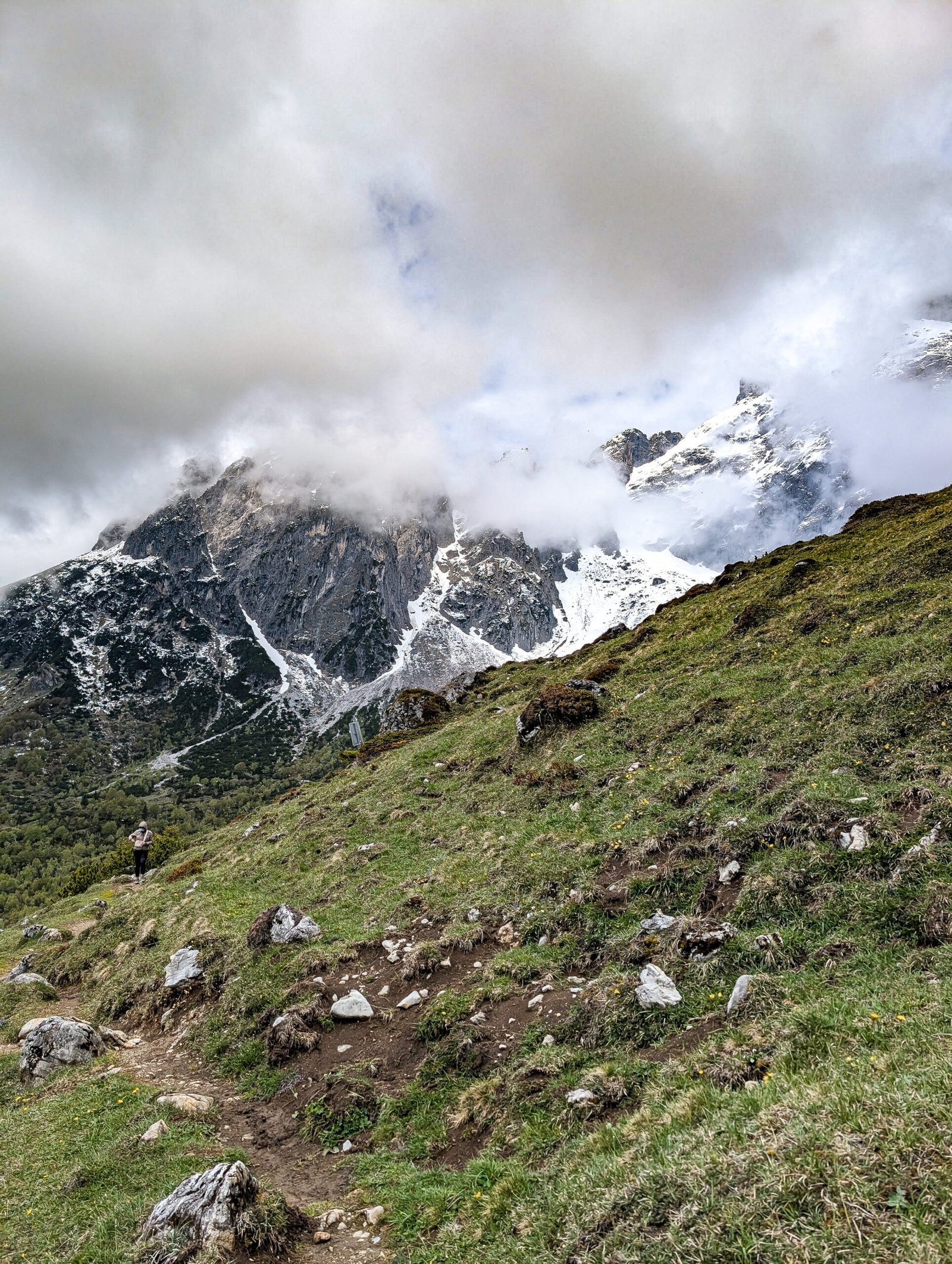
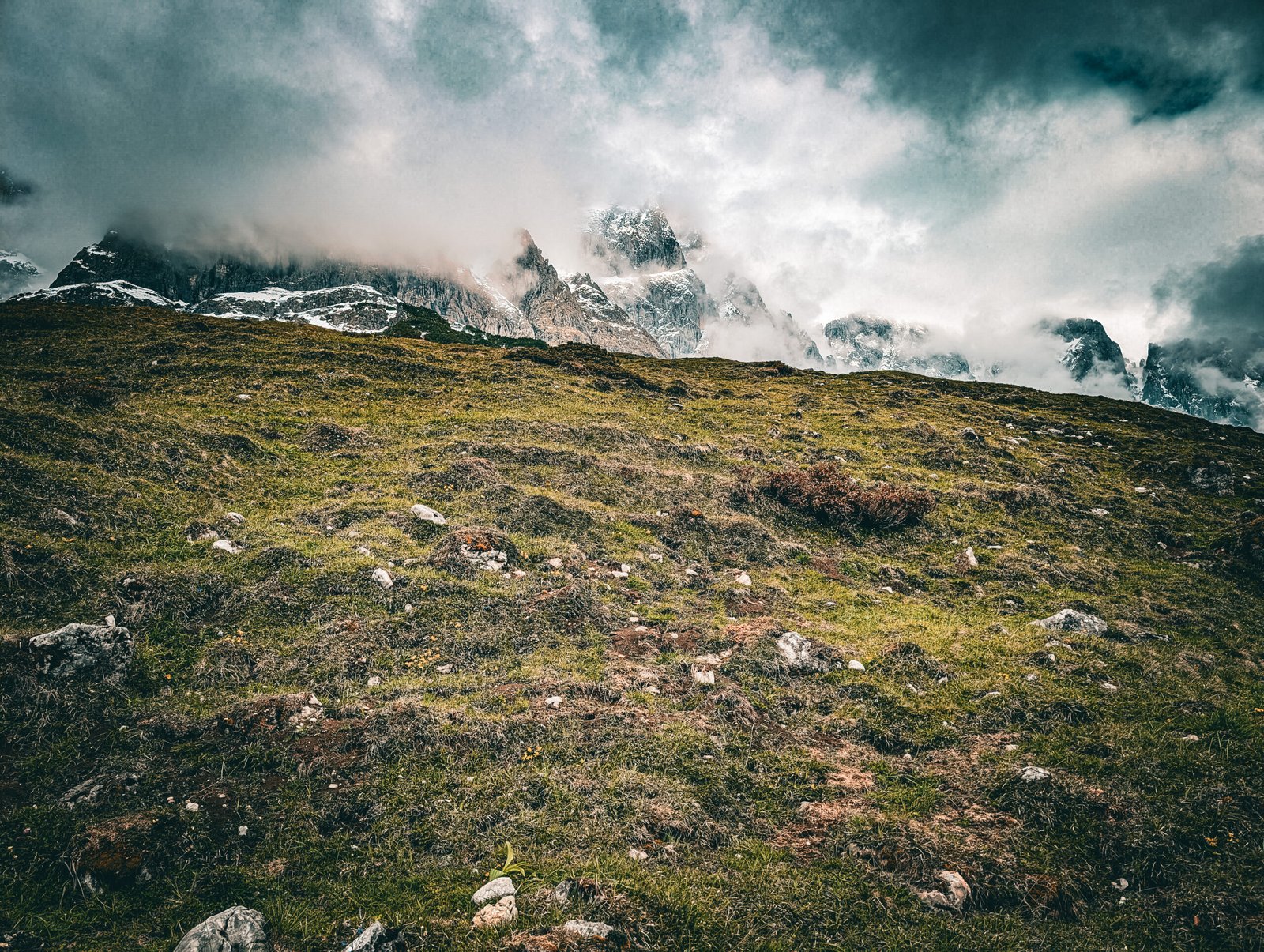
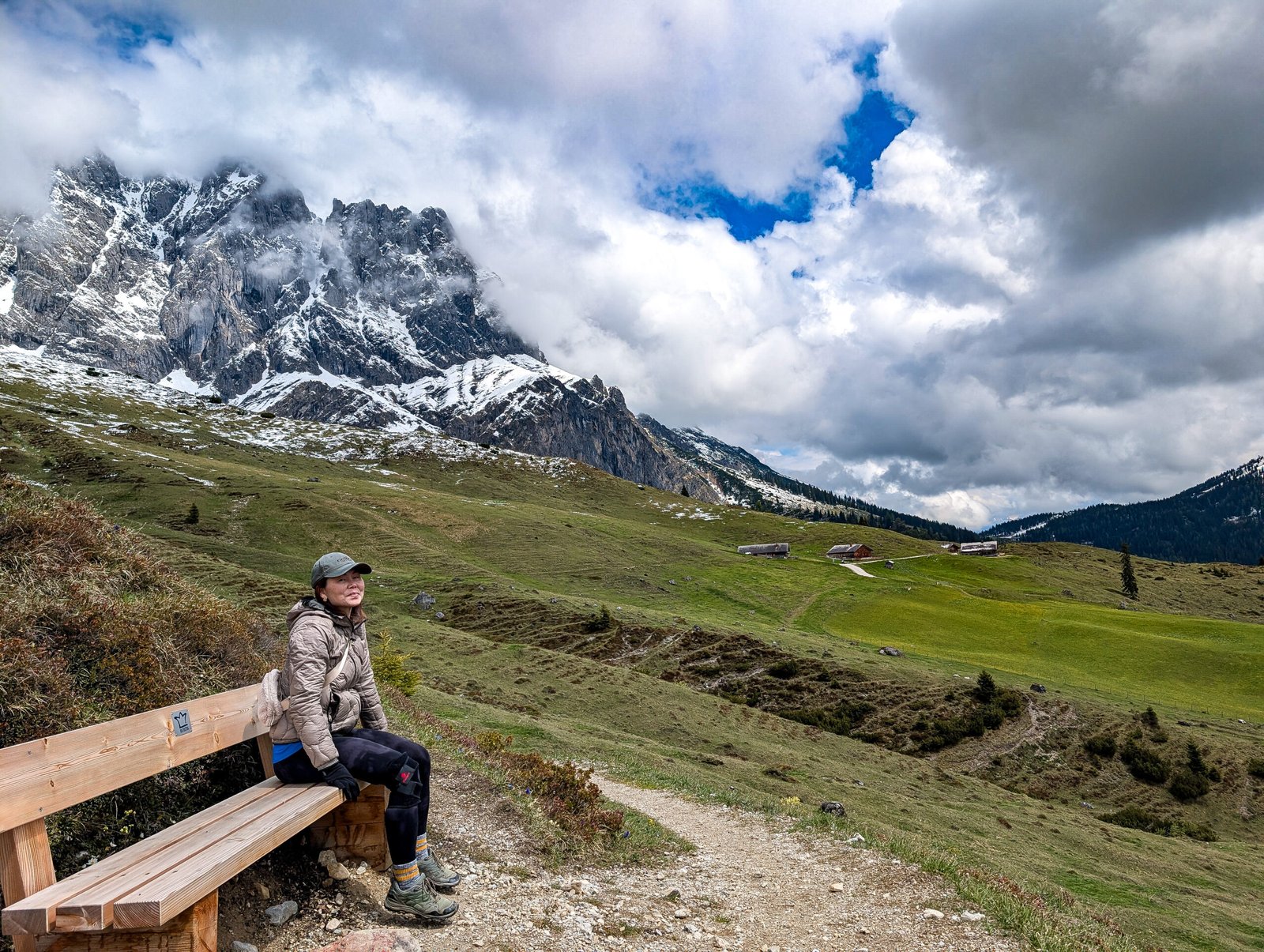
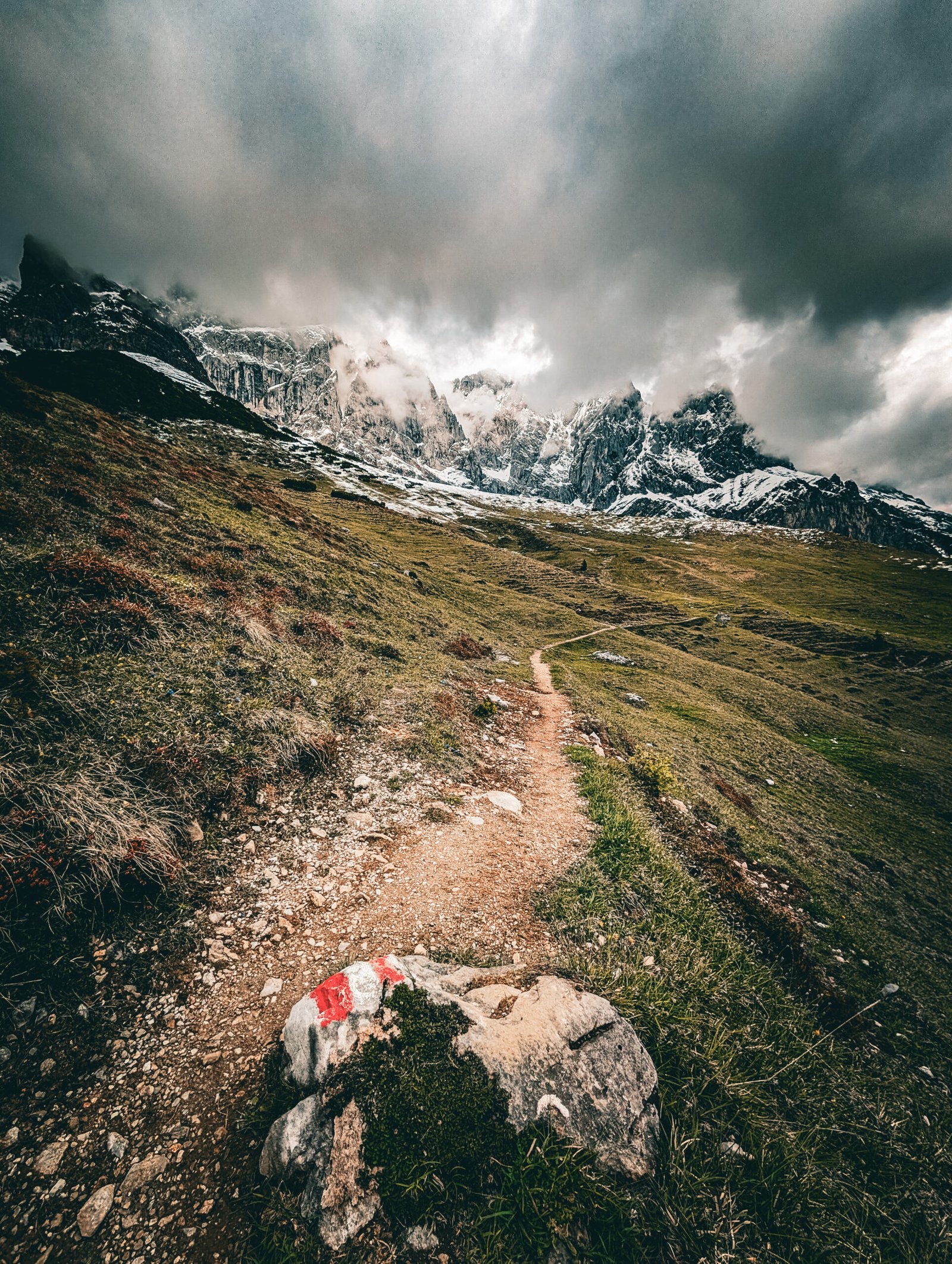
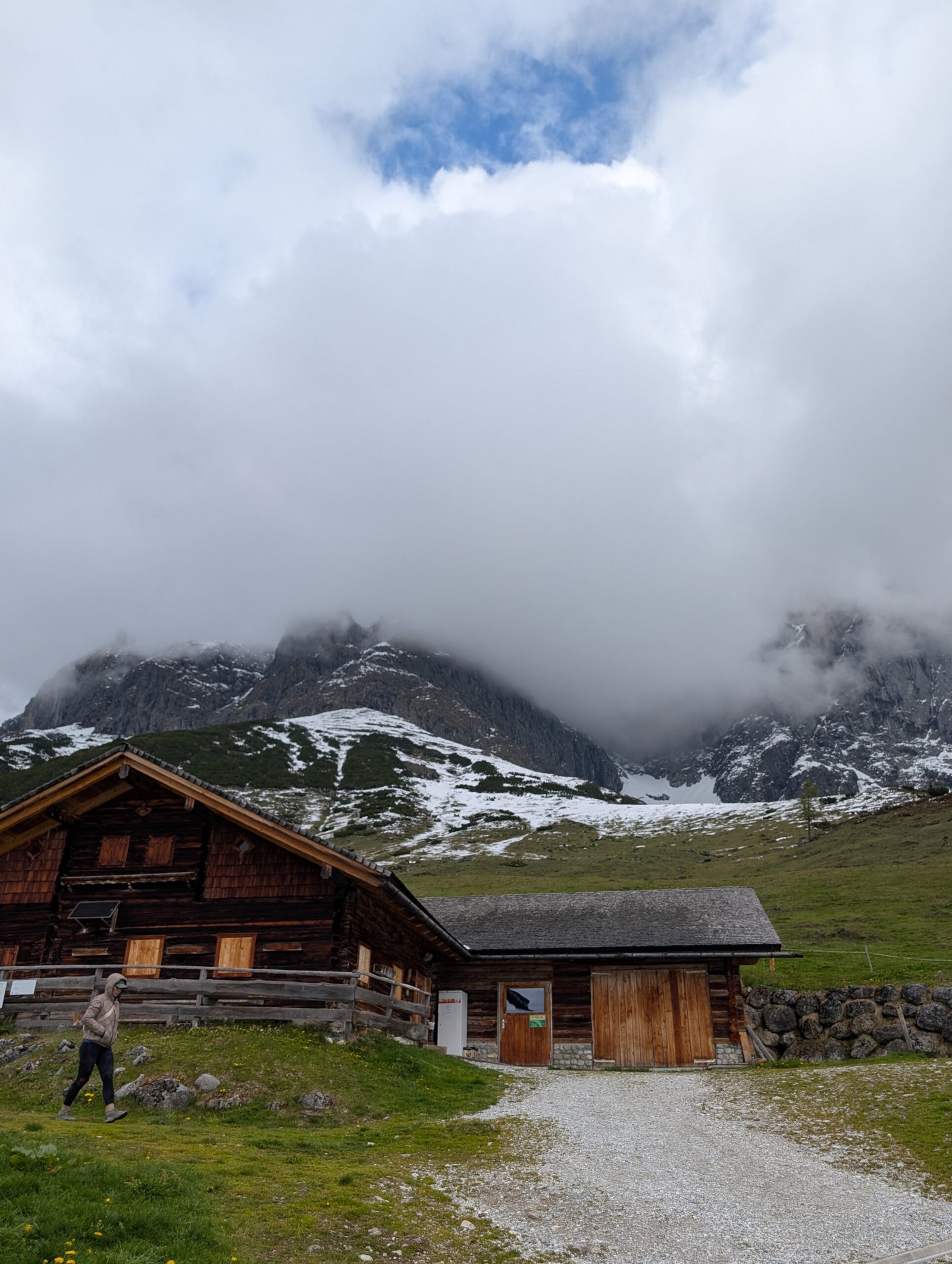
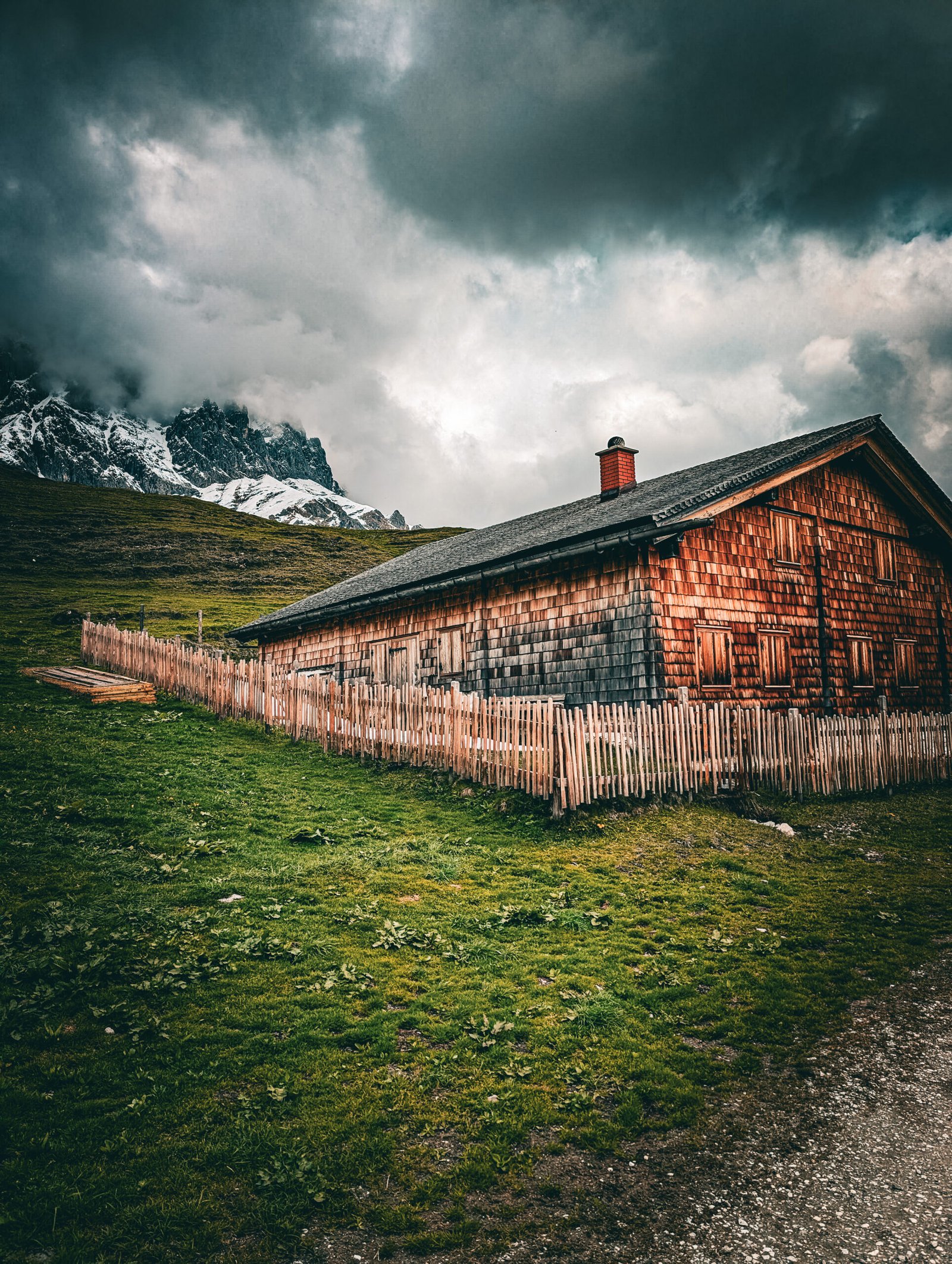
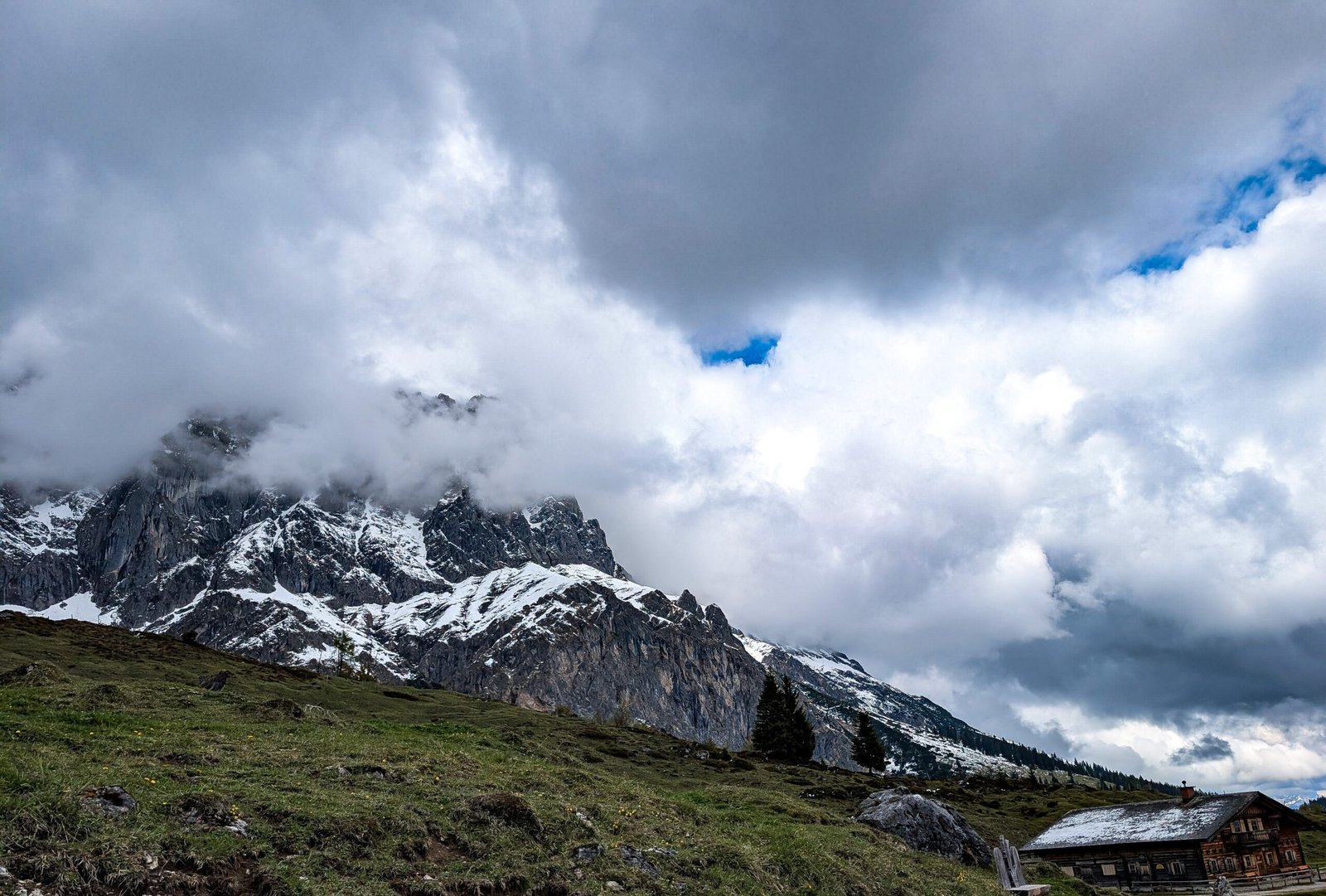
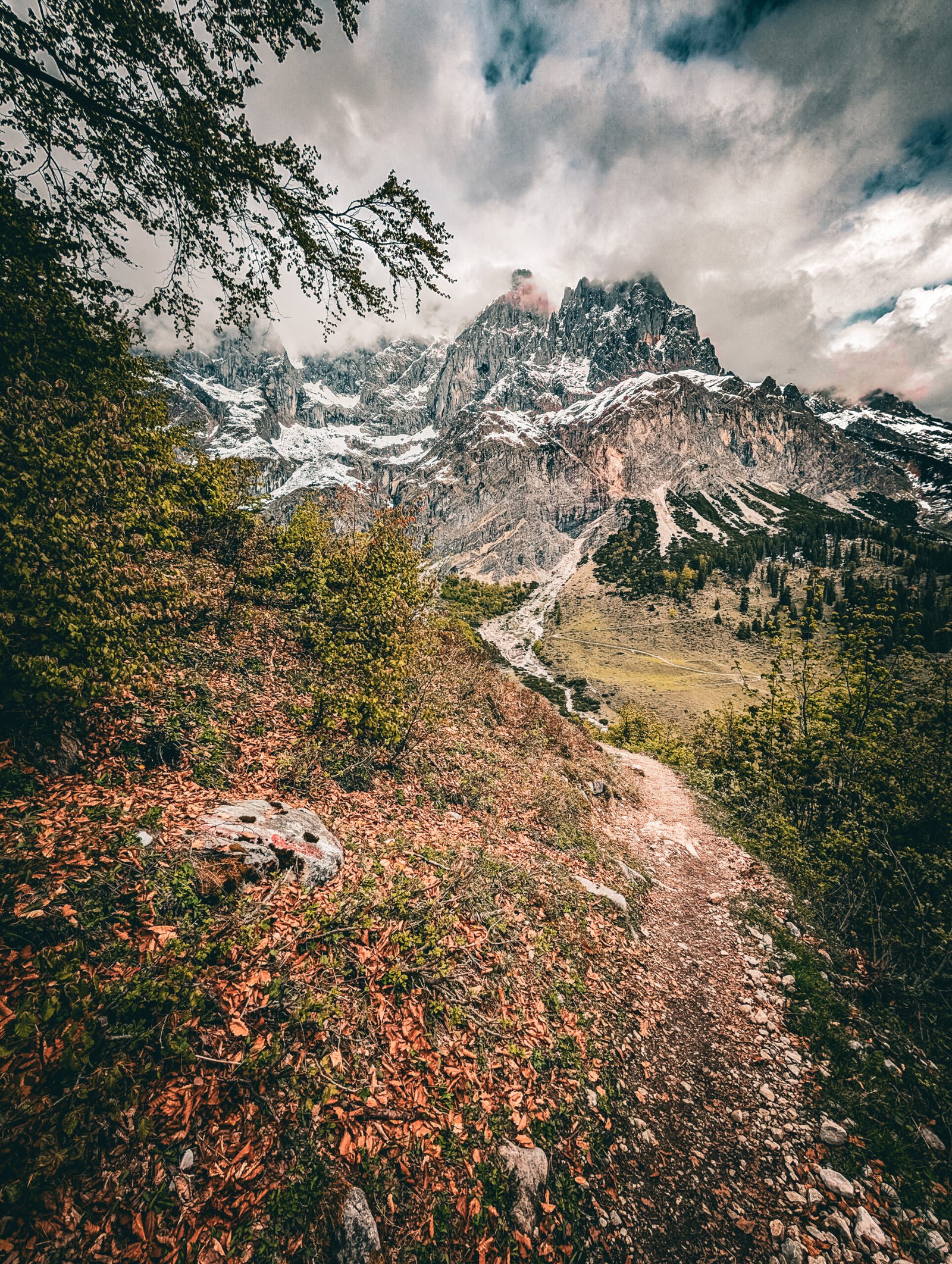
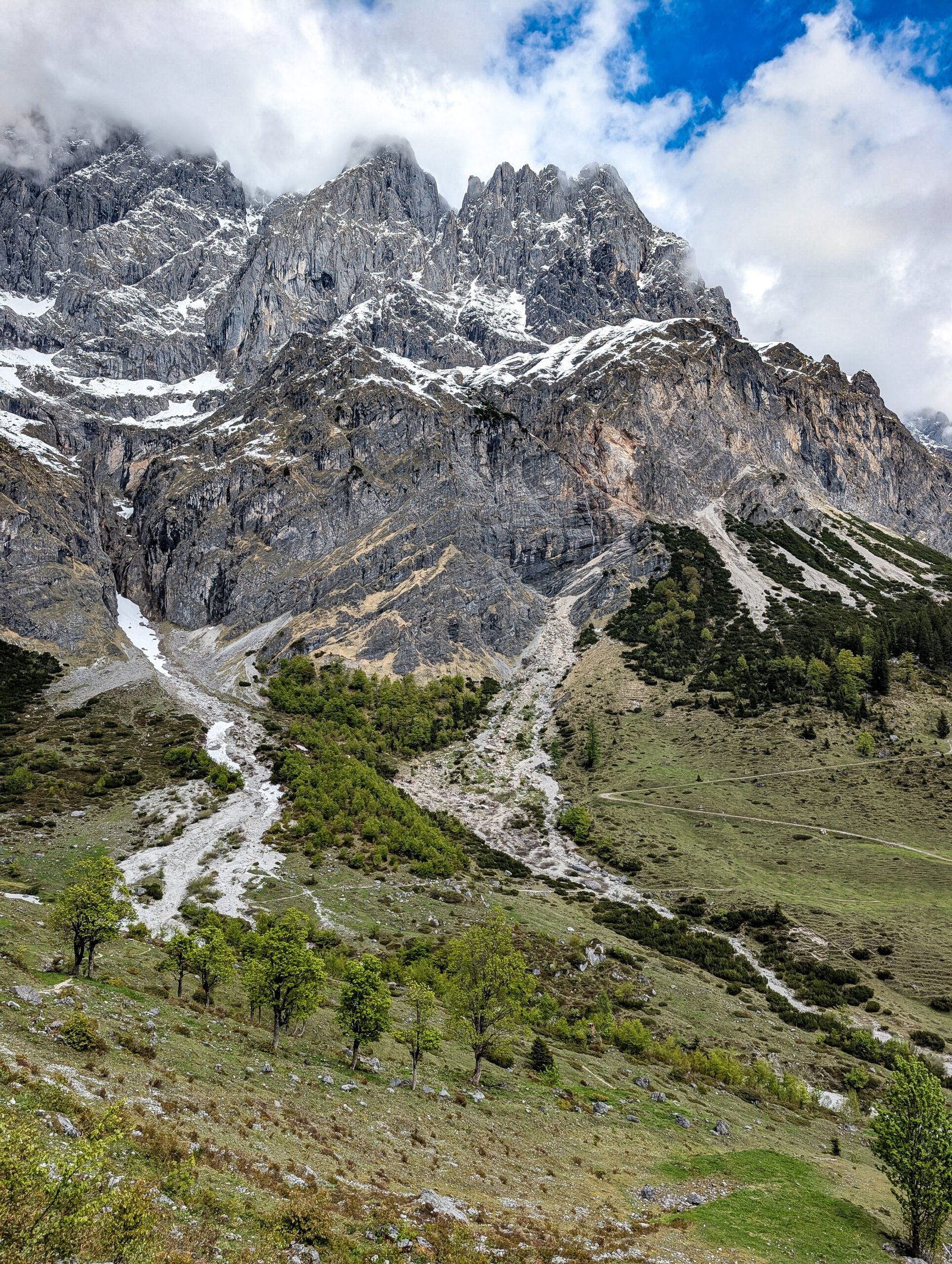
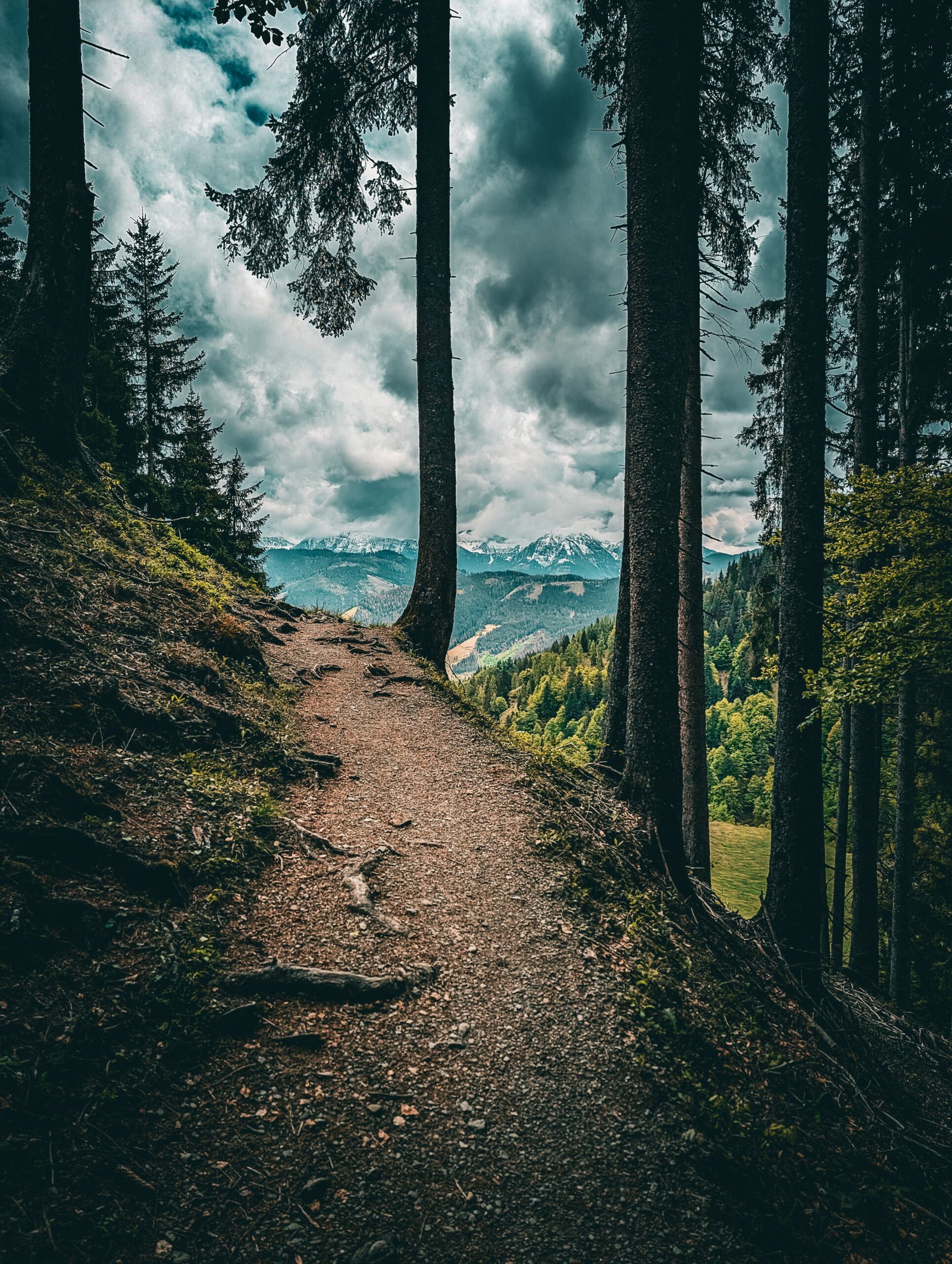
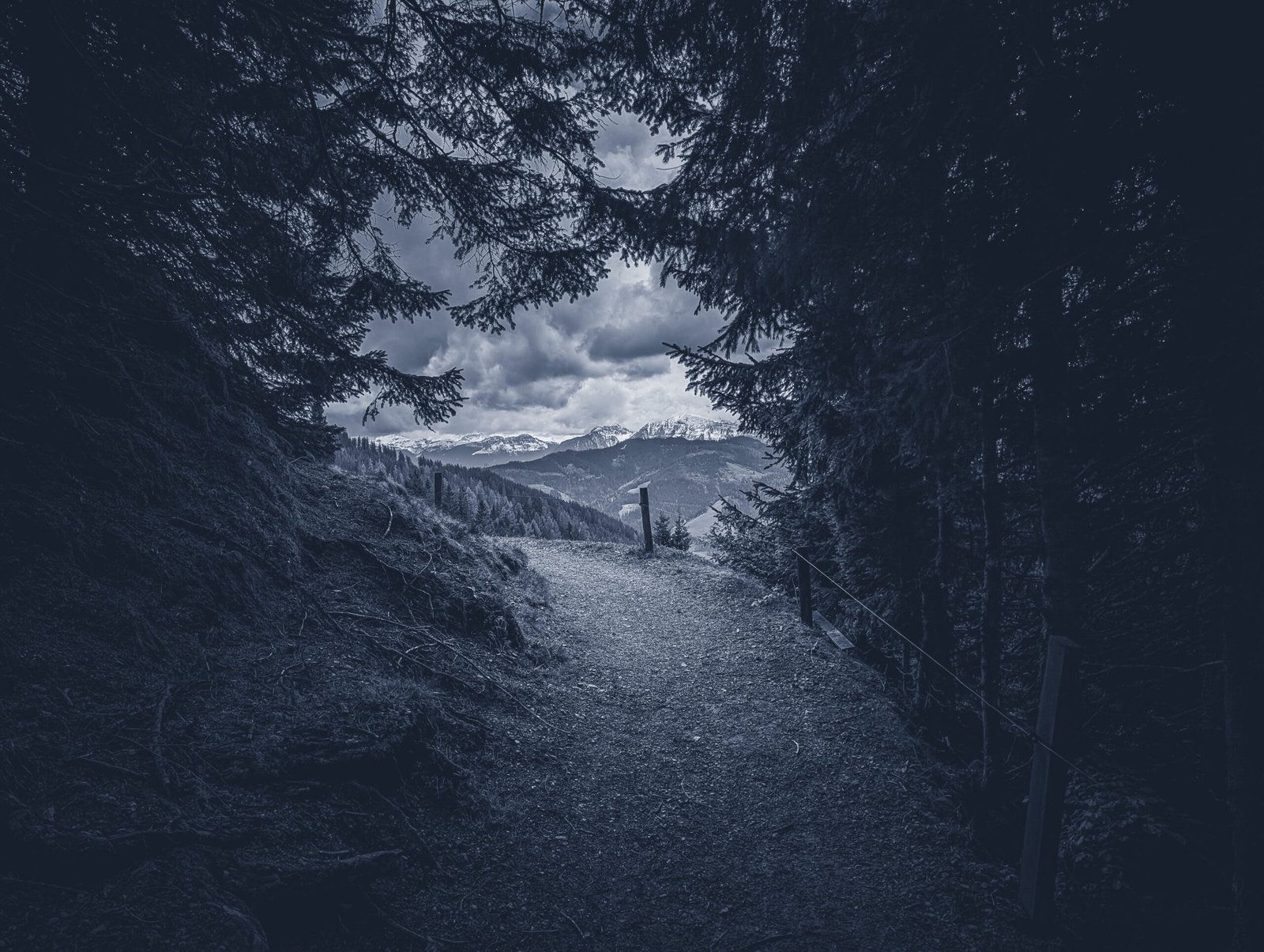
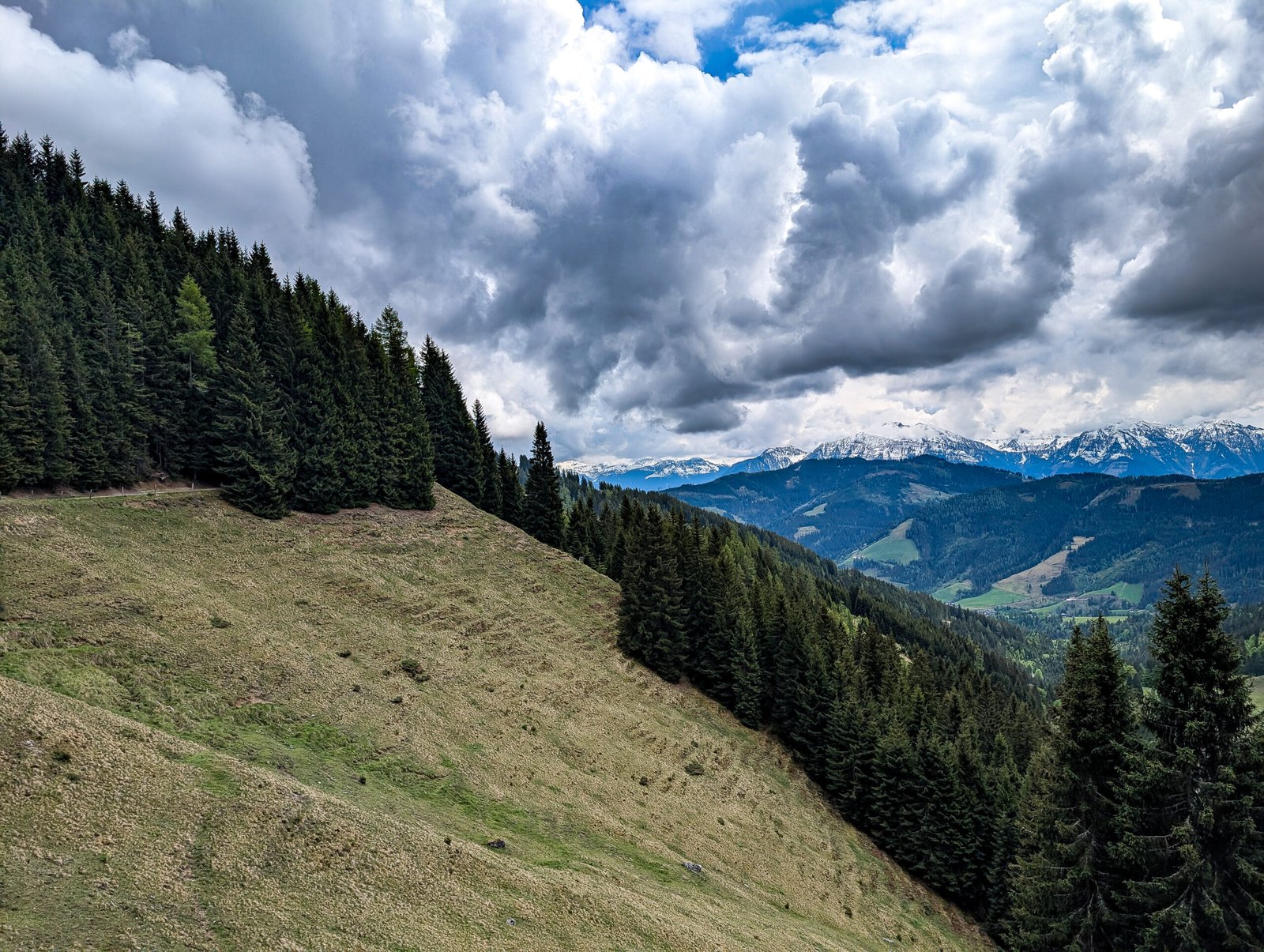
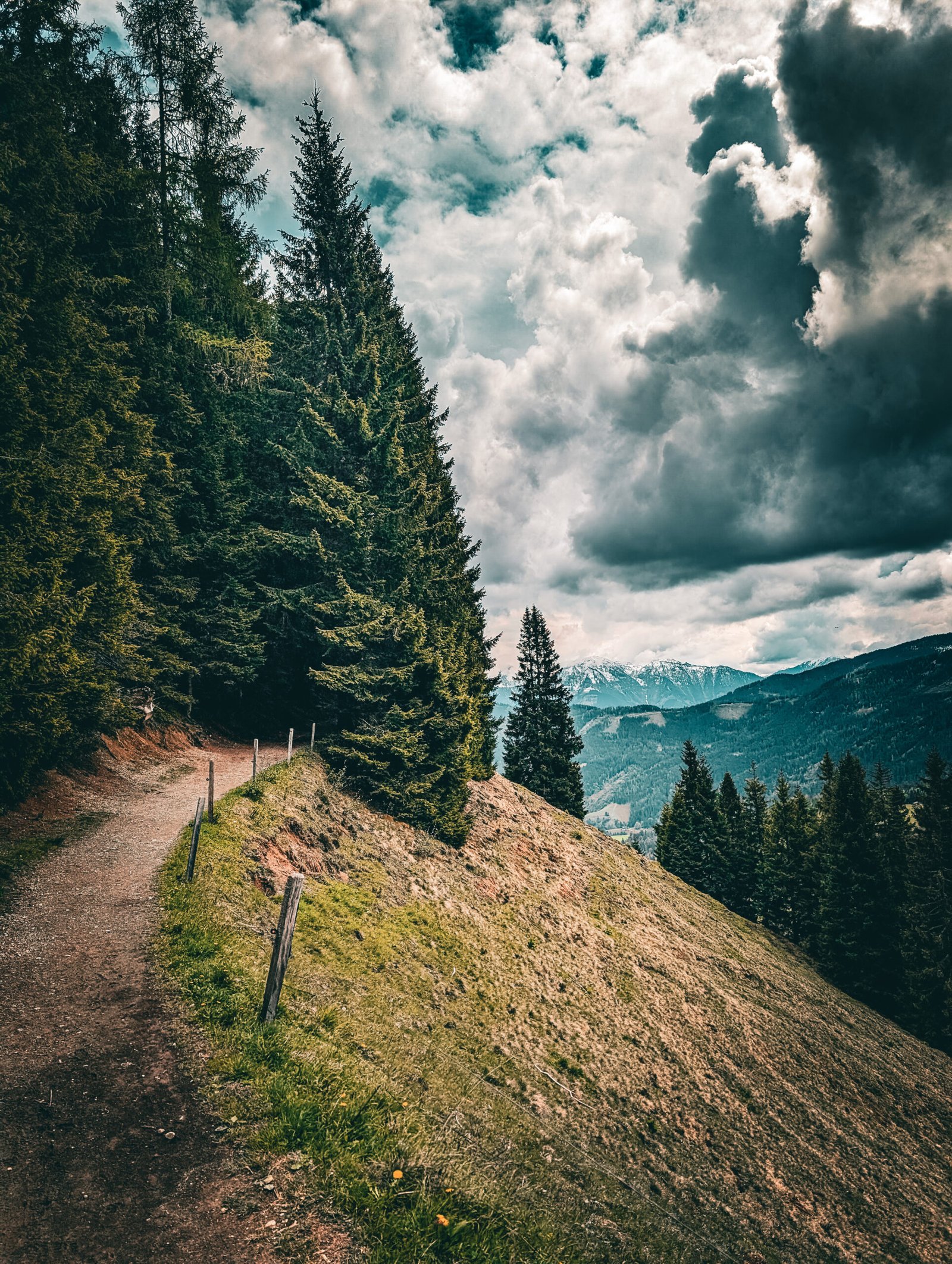
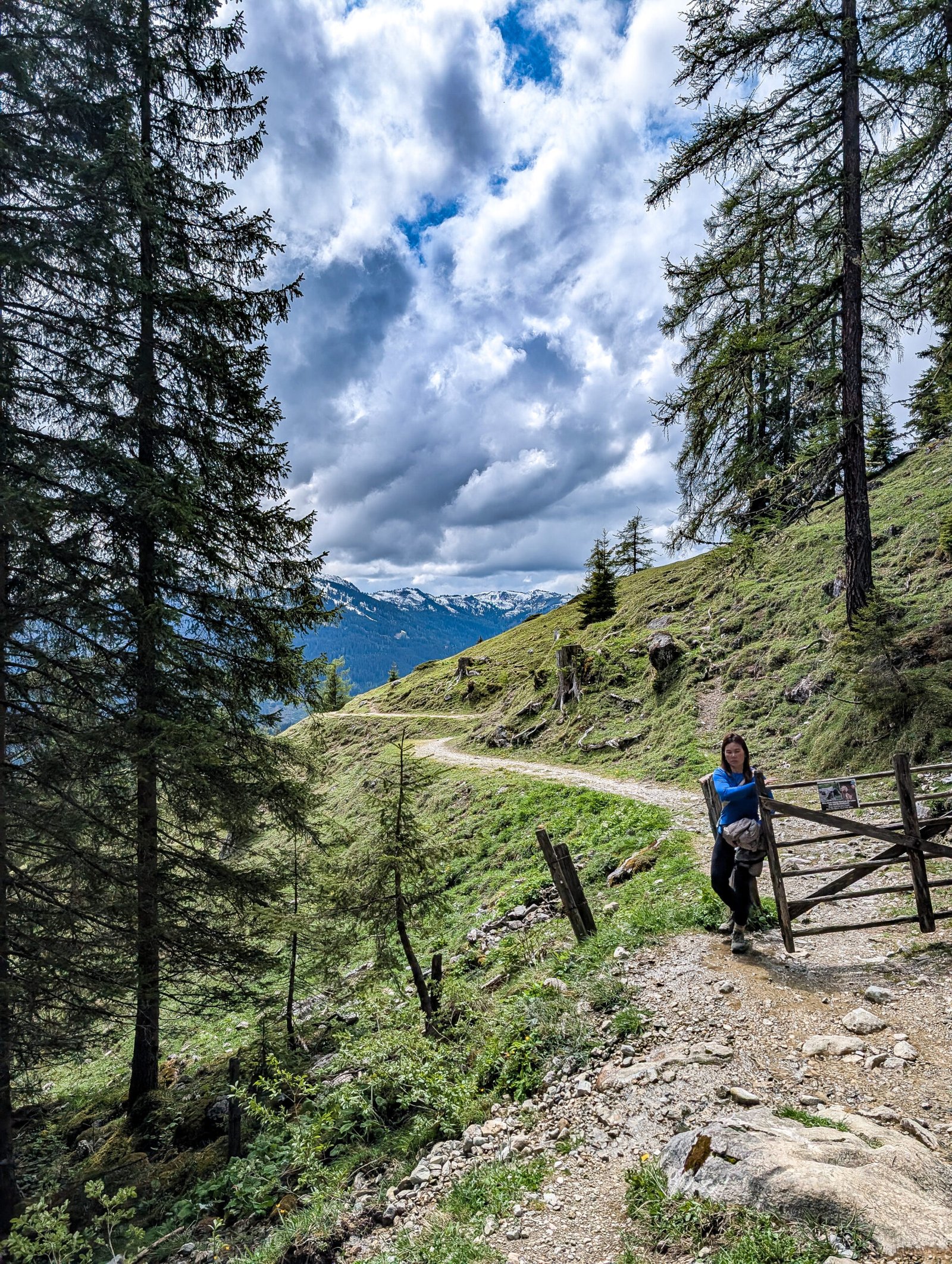
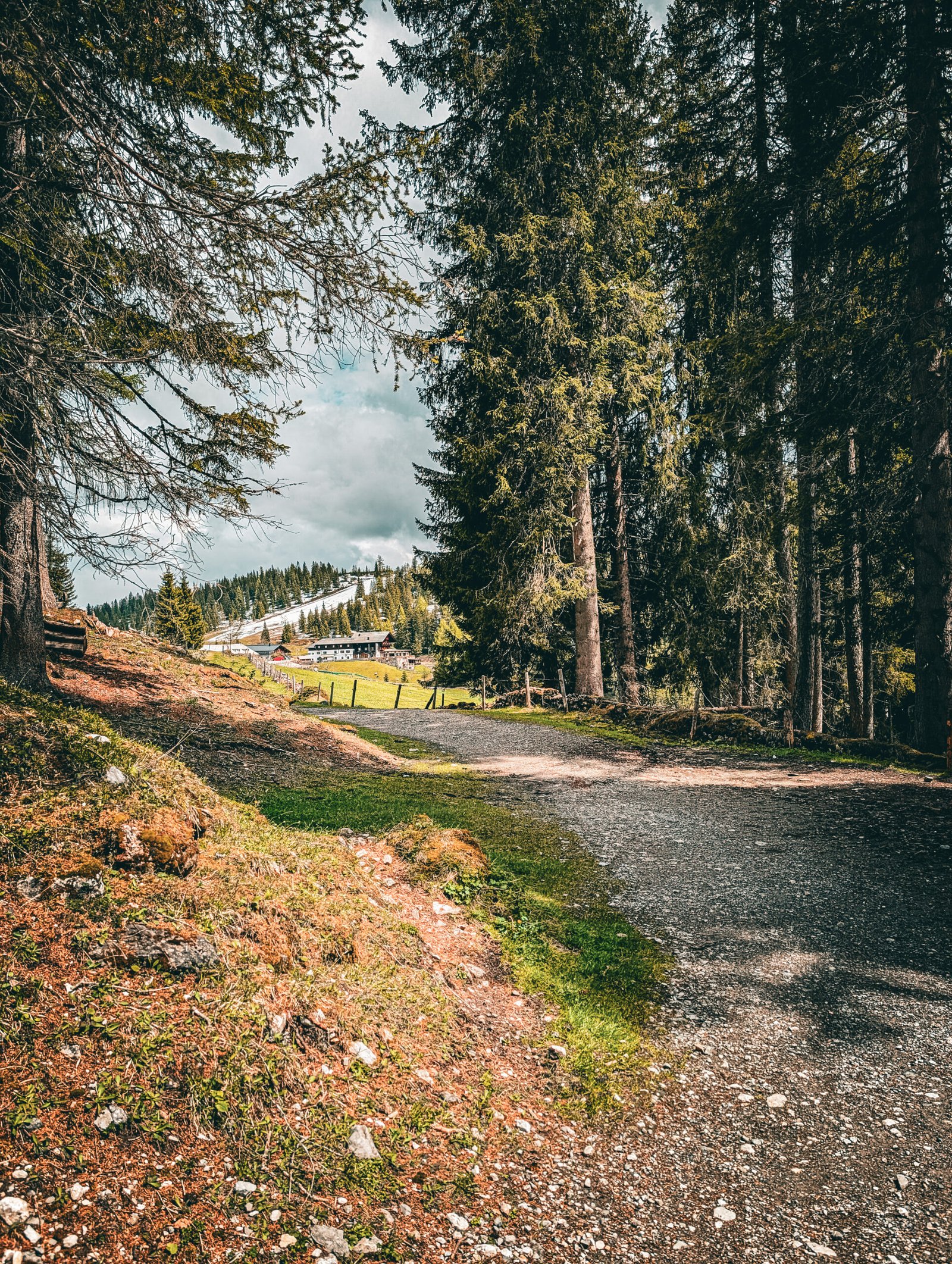
We arrived at the Arthurhause in time for lunch and see the chickens and pigs
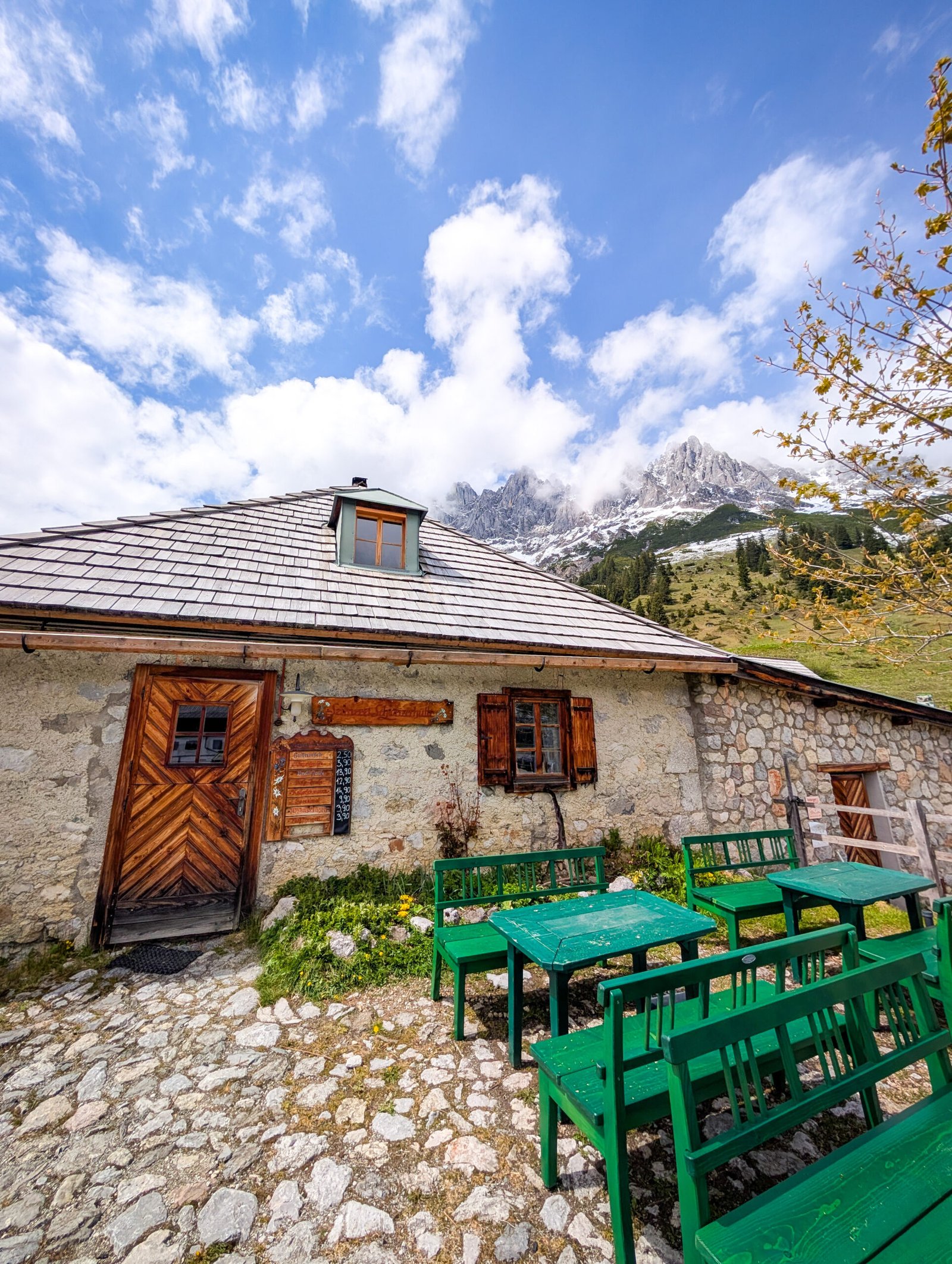
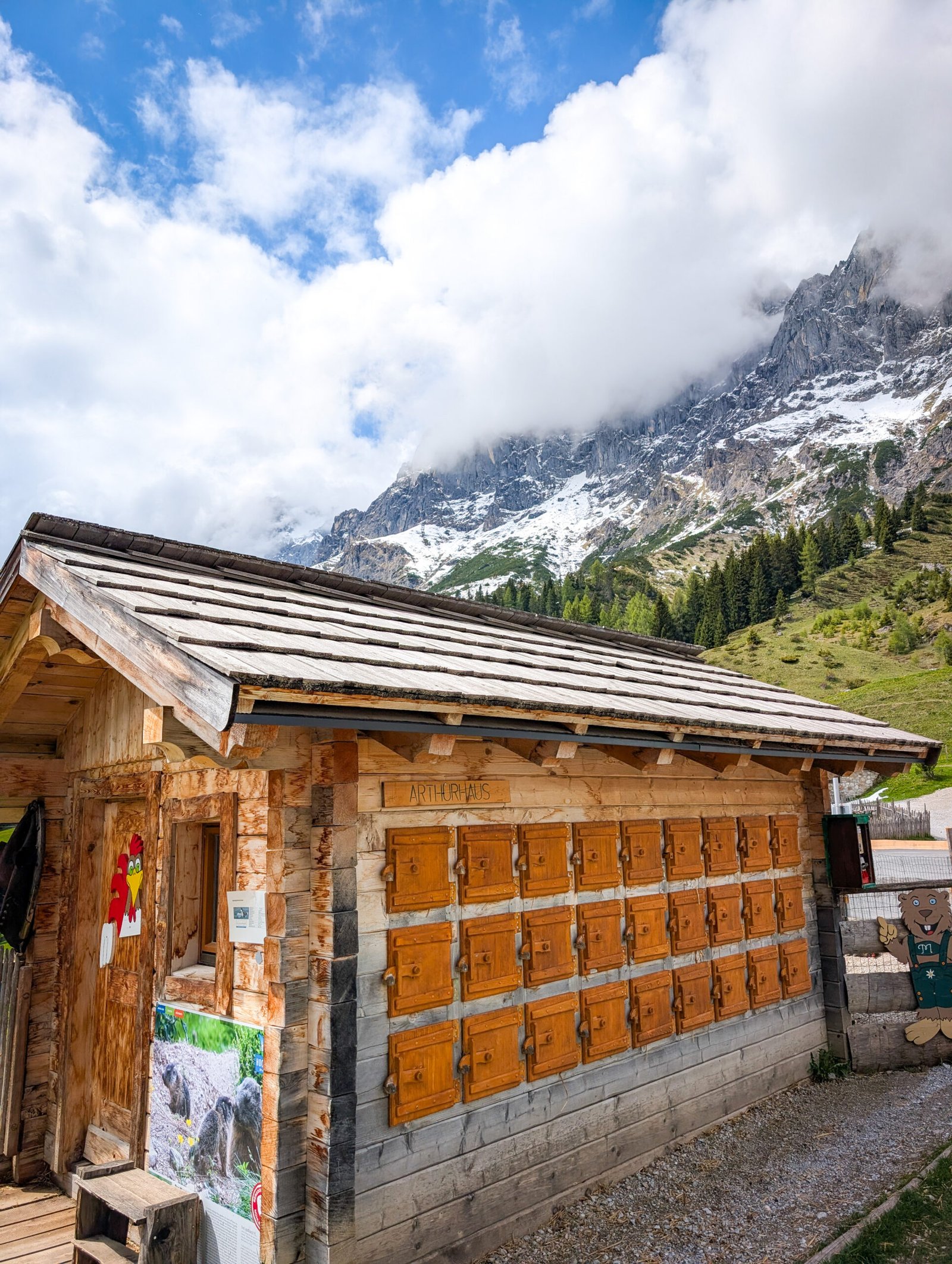
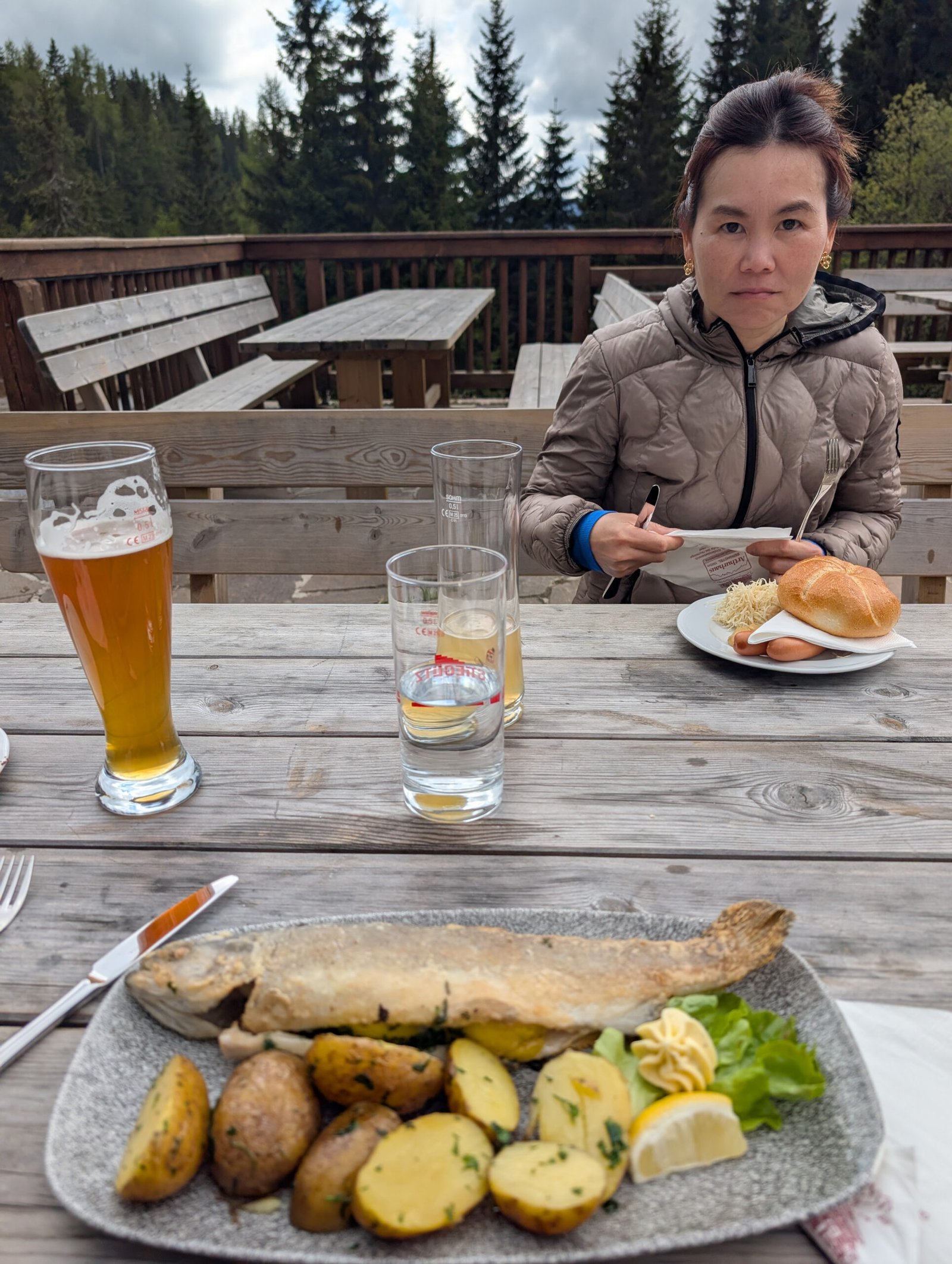
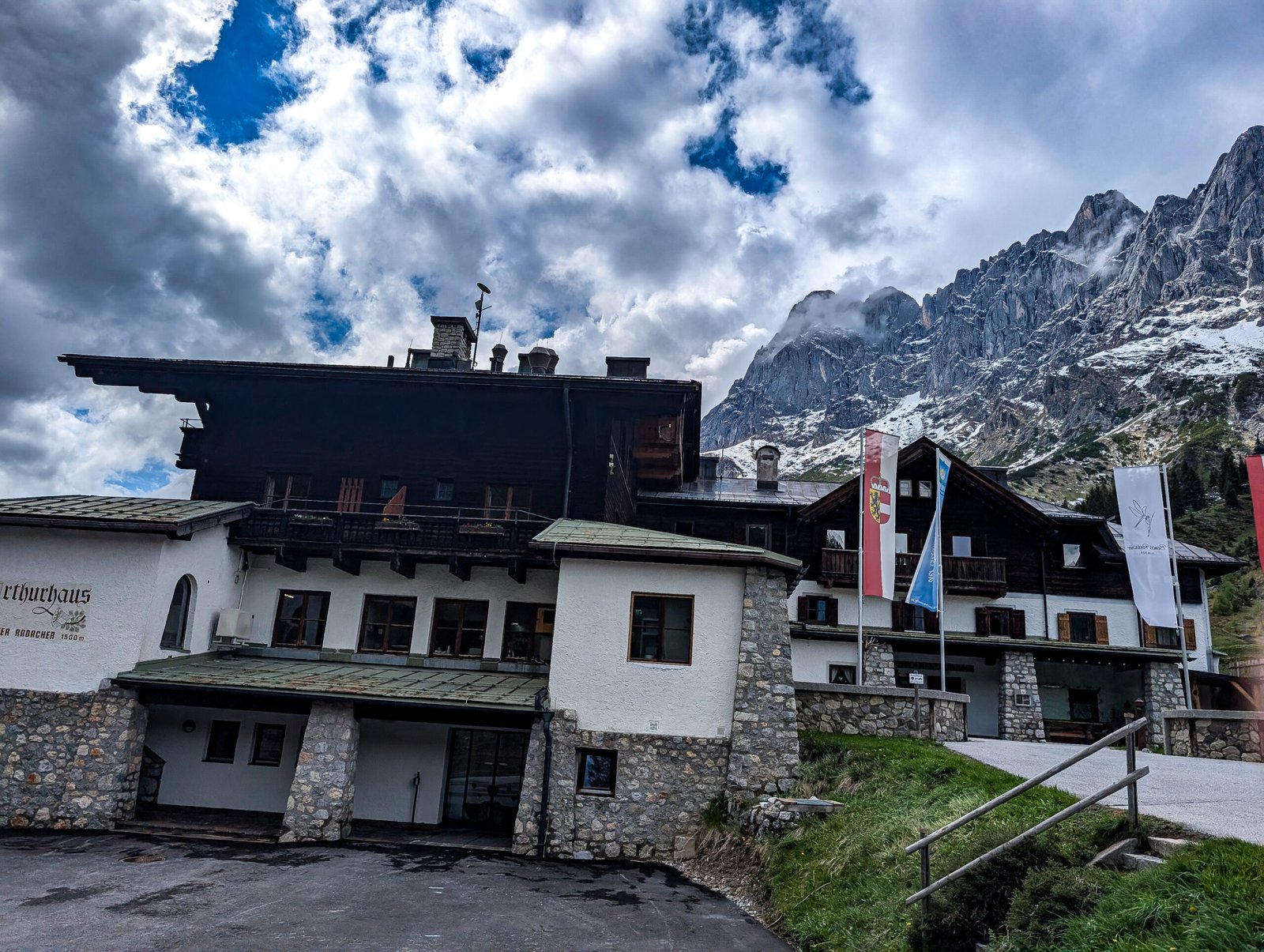
I screwed up on the bus schedule and had to walk down the hill part way before Amy had had enough hiking and we sat until the next bus came along.
We were jet lagged and exhausted and skipped dinner that night and went right to bed. I woke up and it was light out and looked at my phone and it said 9:00. How could I have slept this late? Nope, it was 9pm.
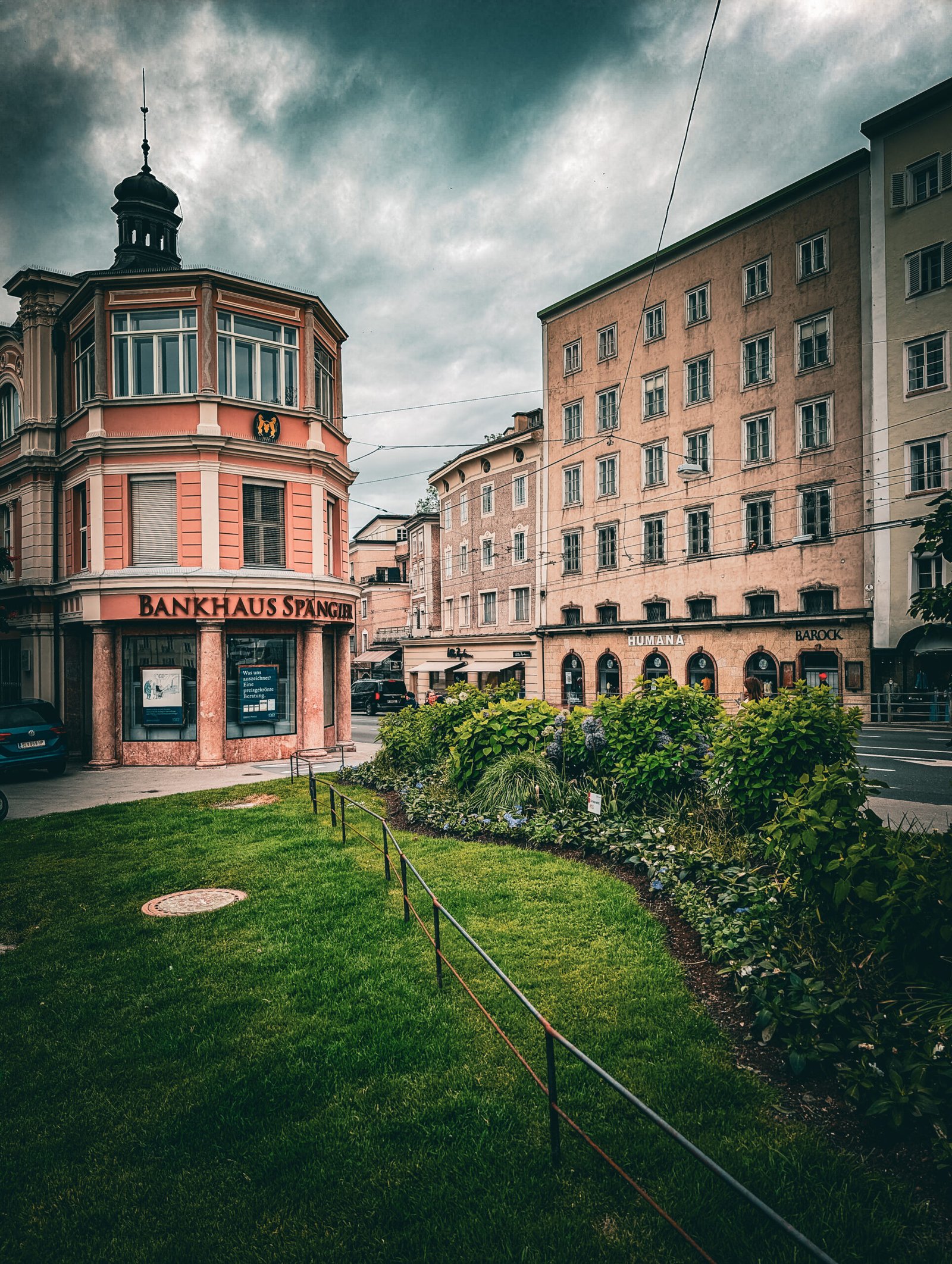
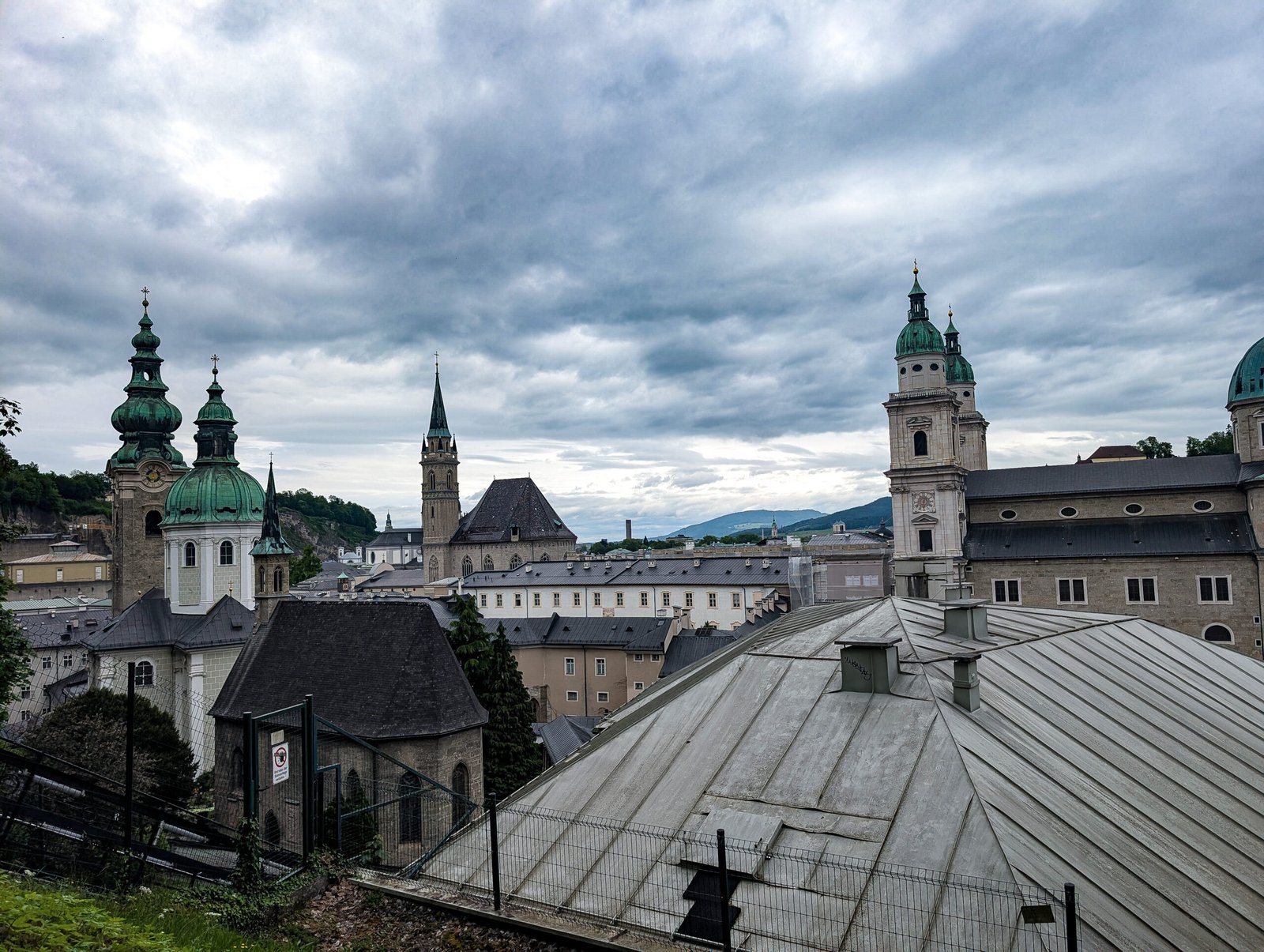
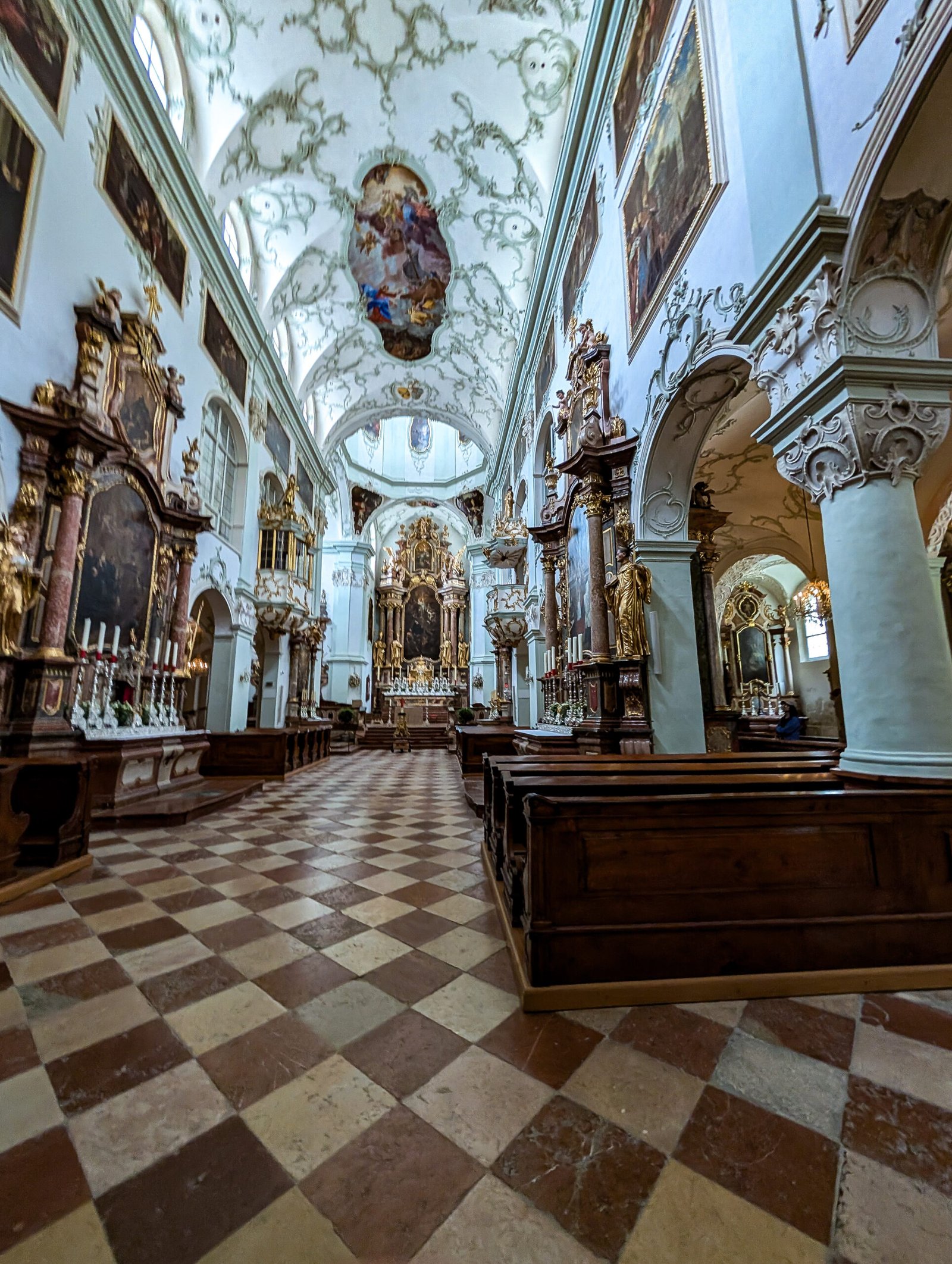
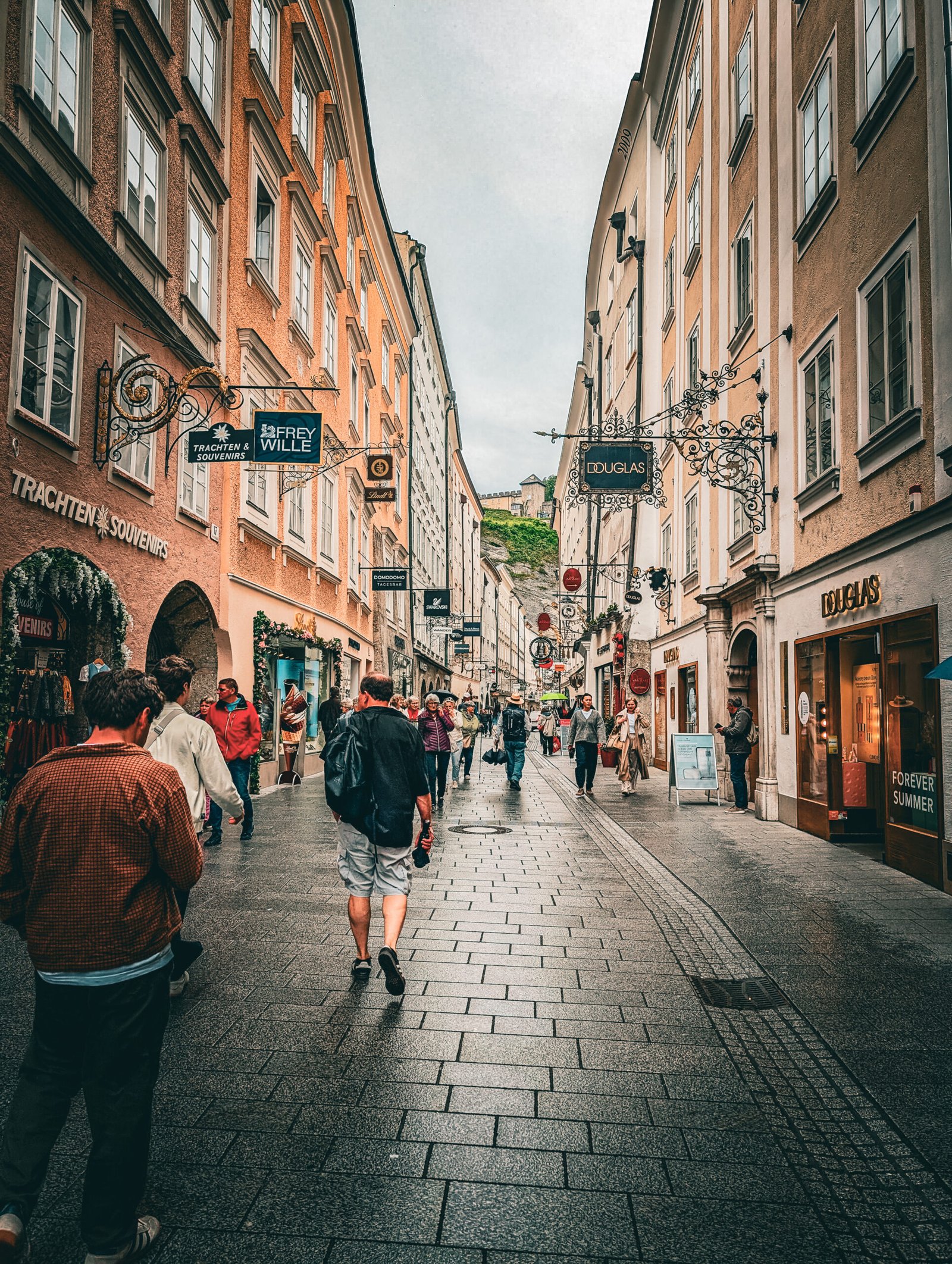
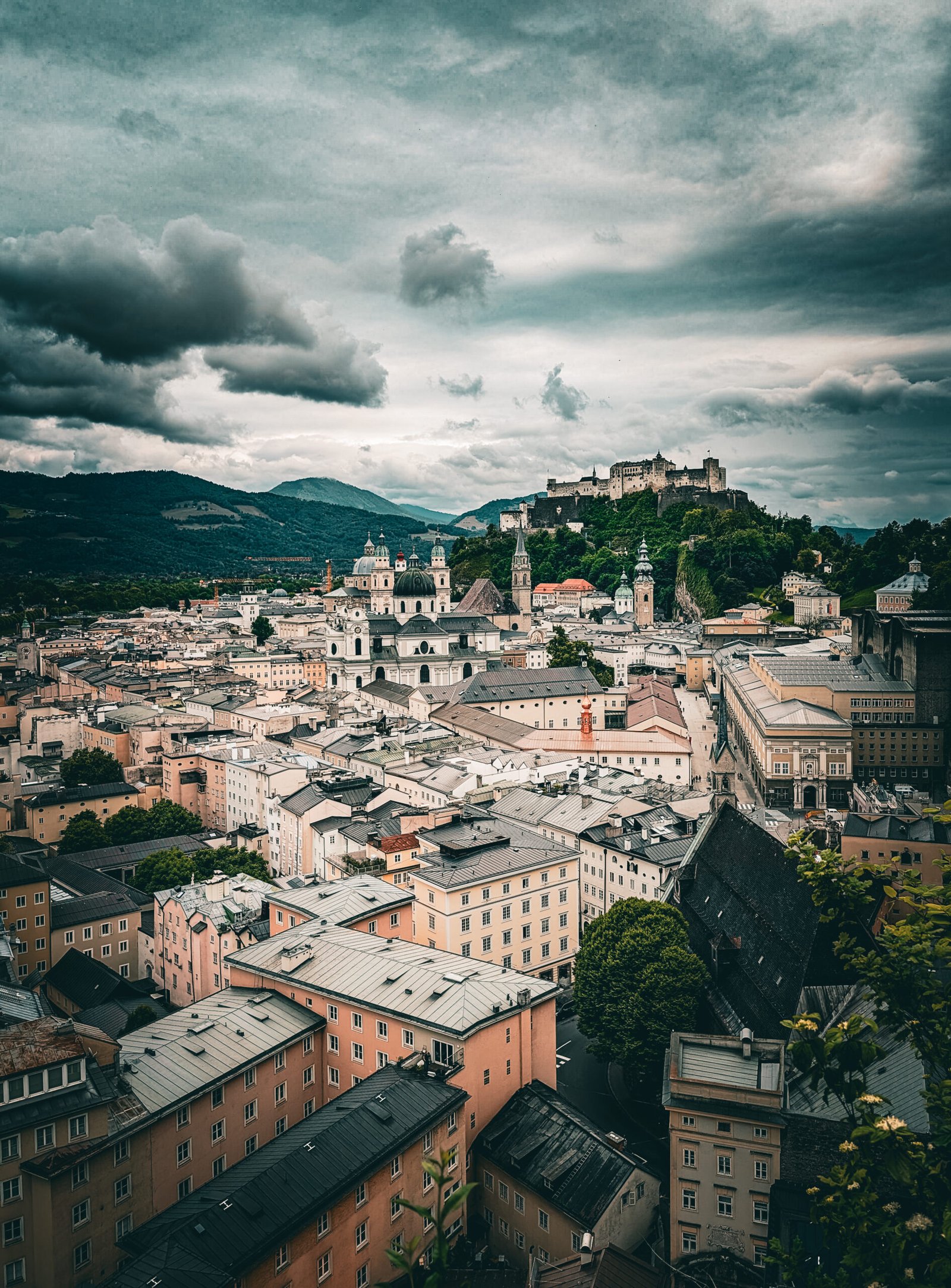
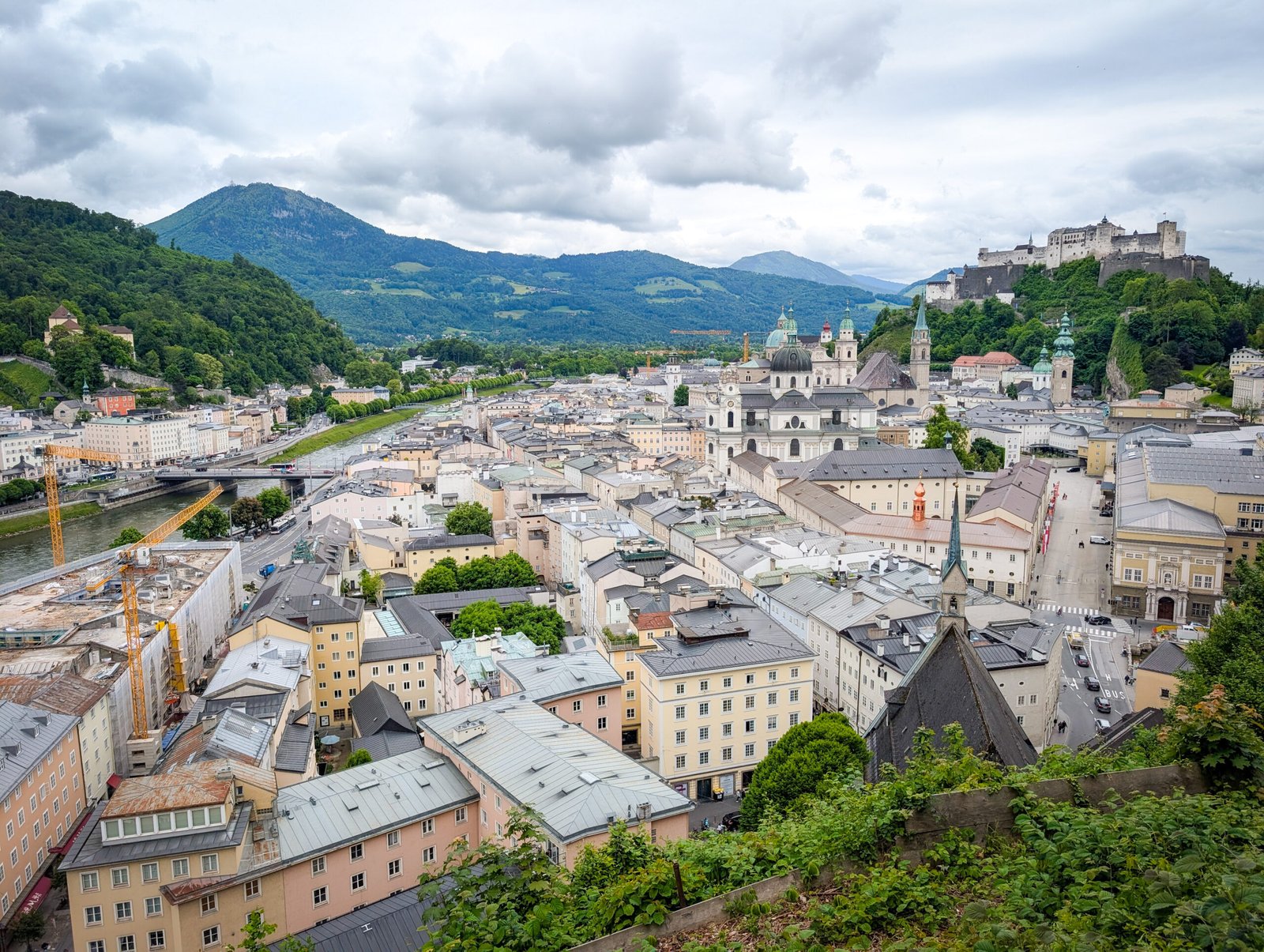
The next morning we drove into Salzburg for the day. We parked outside the Old Towne and followed a free walking tour I had downloaded and layered on top of Google maps.
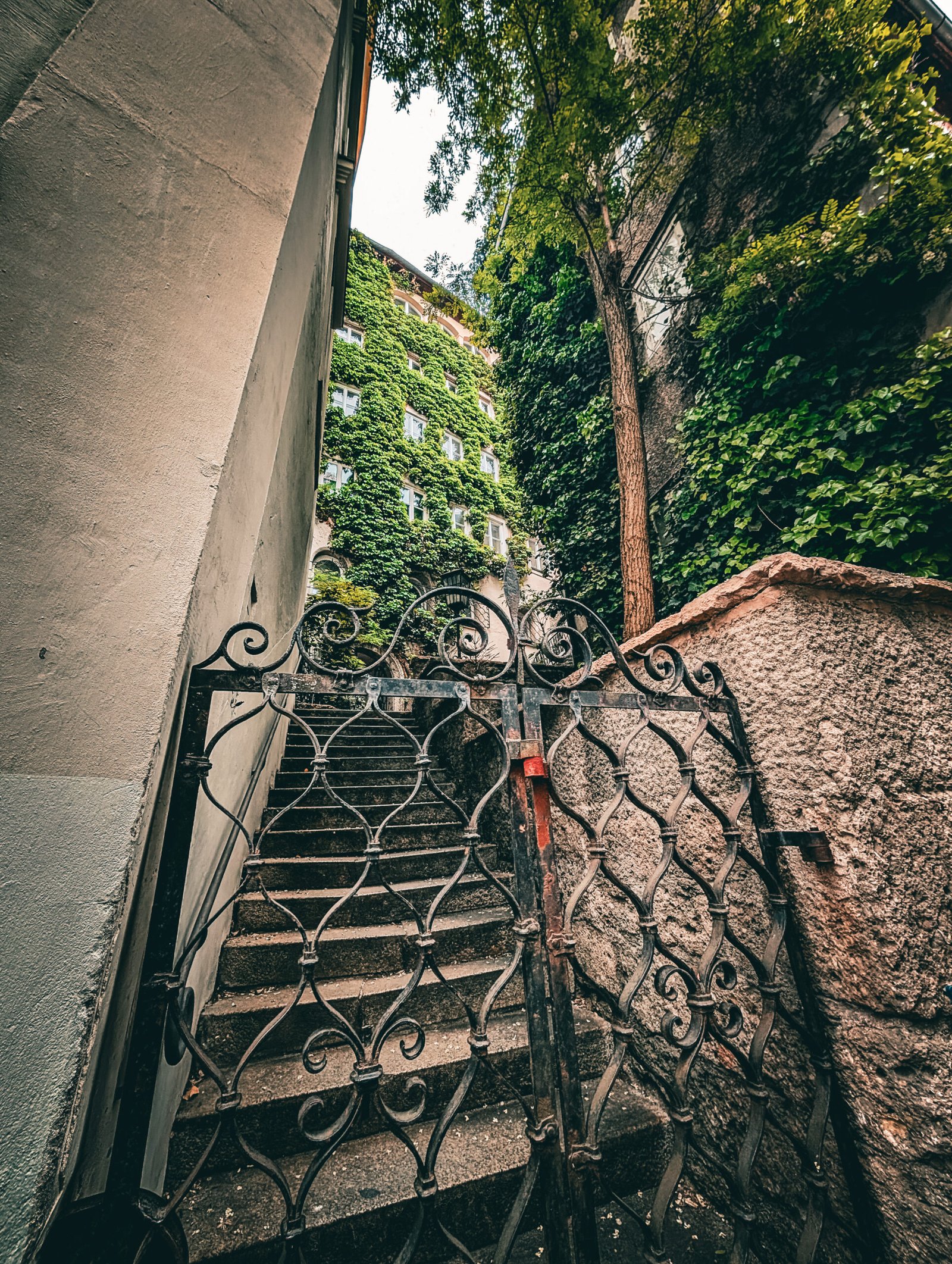
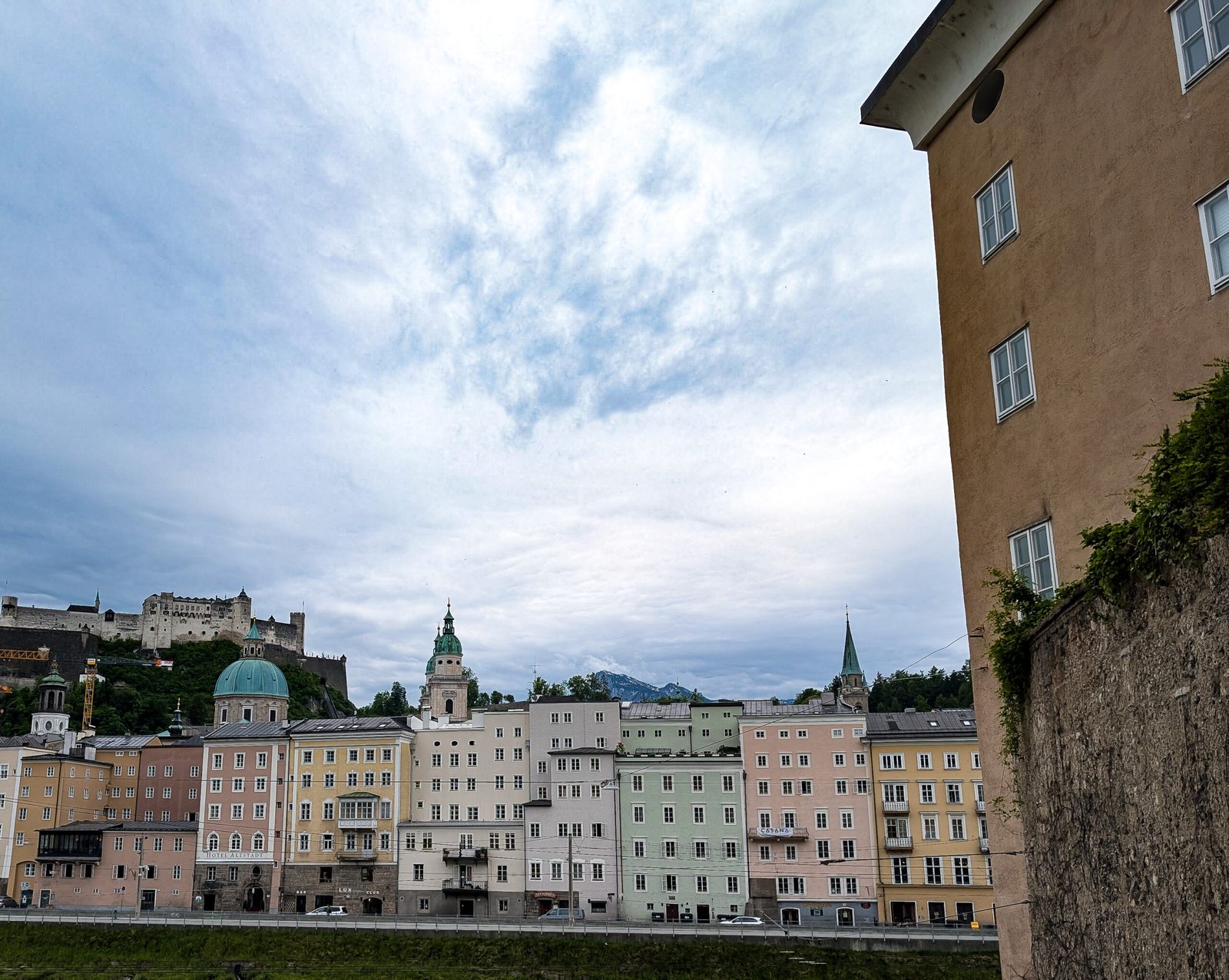
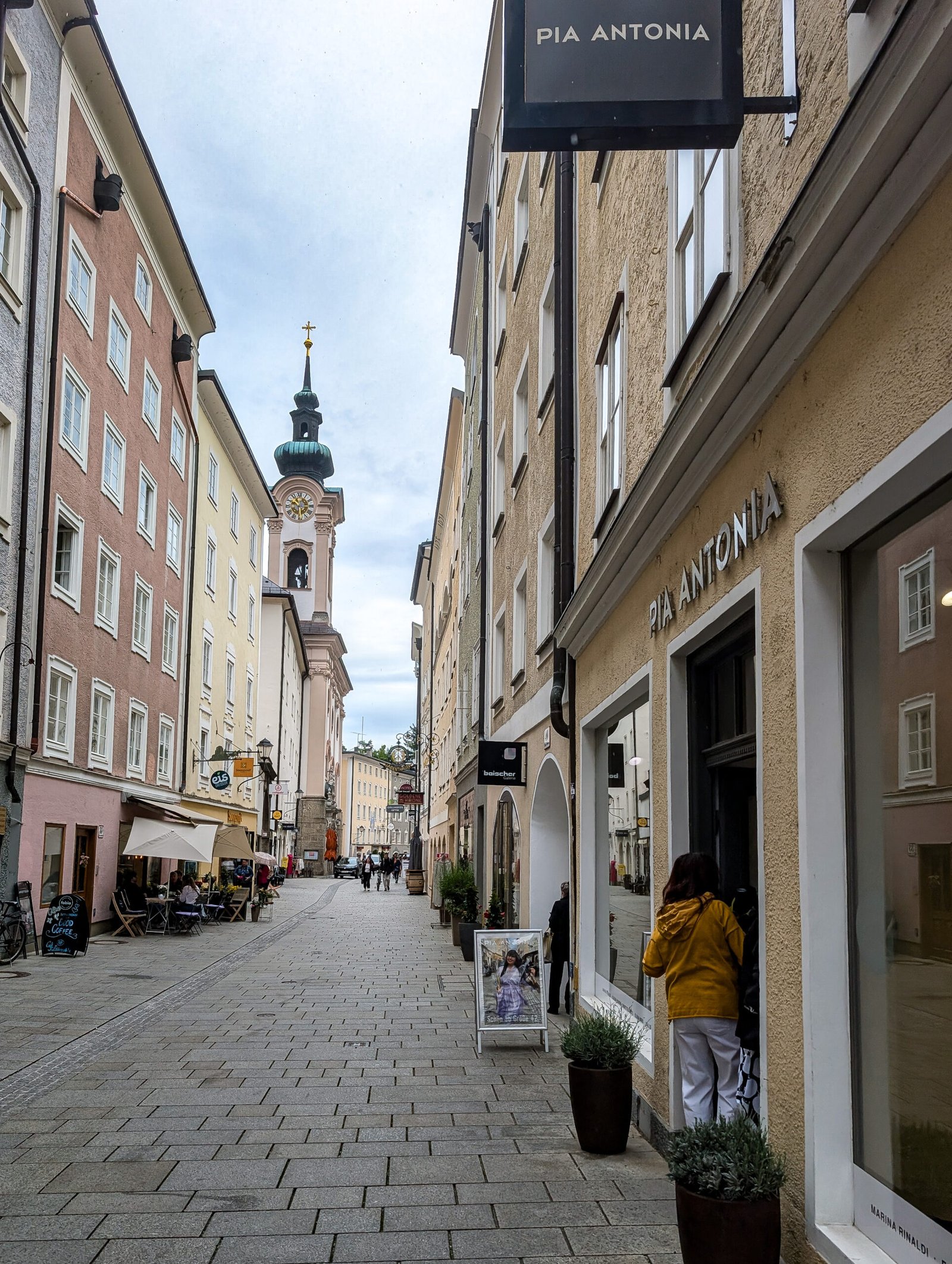
Salzburg is the home of the Sound of Music and Mozart and they won't let you forget it. Everywhere you turn is some locale featured in the movie. I felt like I was back in New Zealand where they promoted the hell out of The Lord of the Rings. And you didn’t need a map to know you were in front of a setting for the movie, the 50 asian tourists dressed like the Von Trapps would give it away.
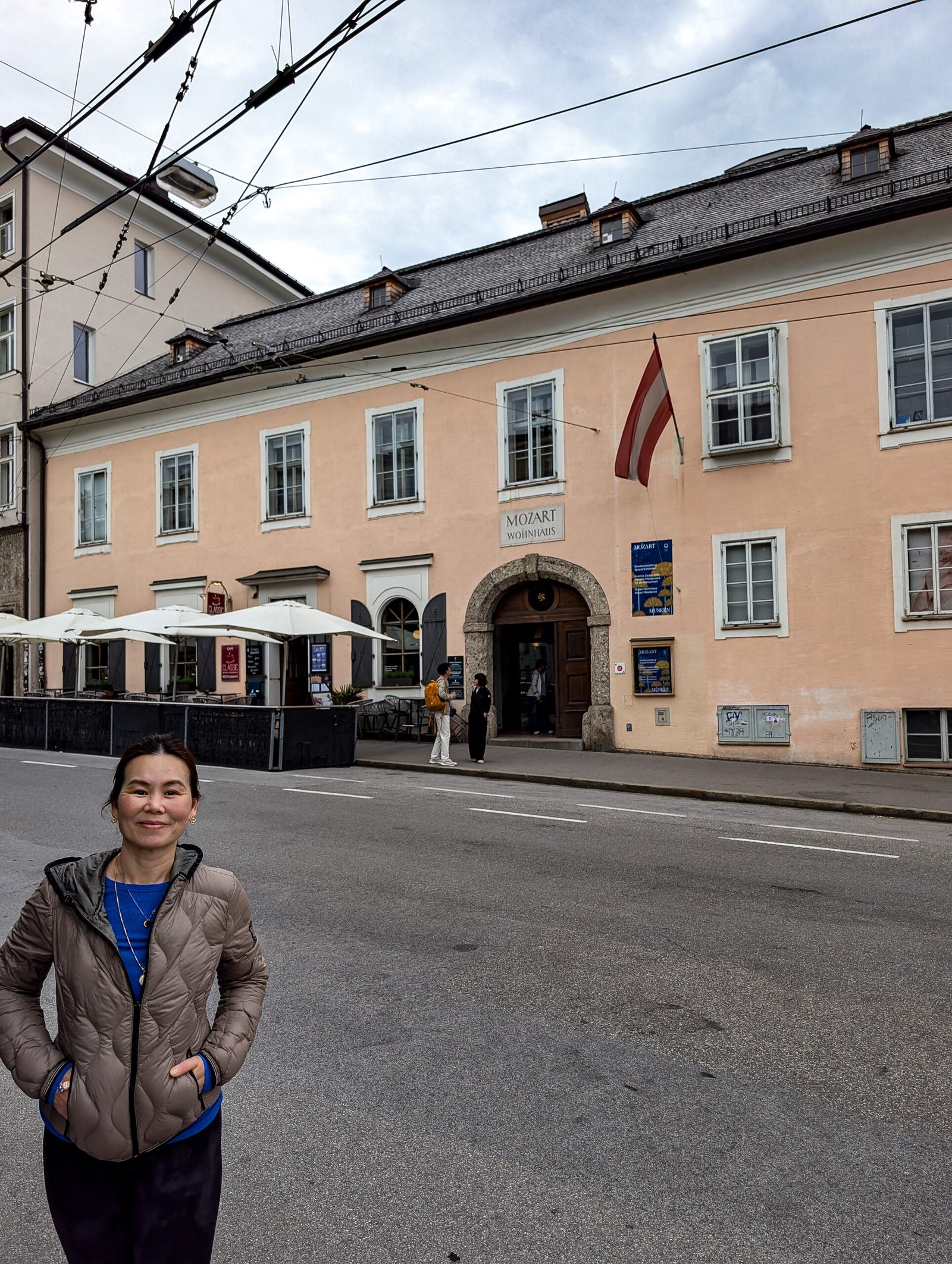
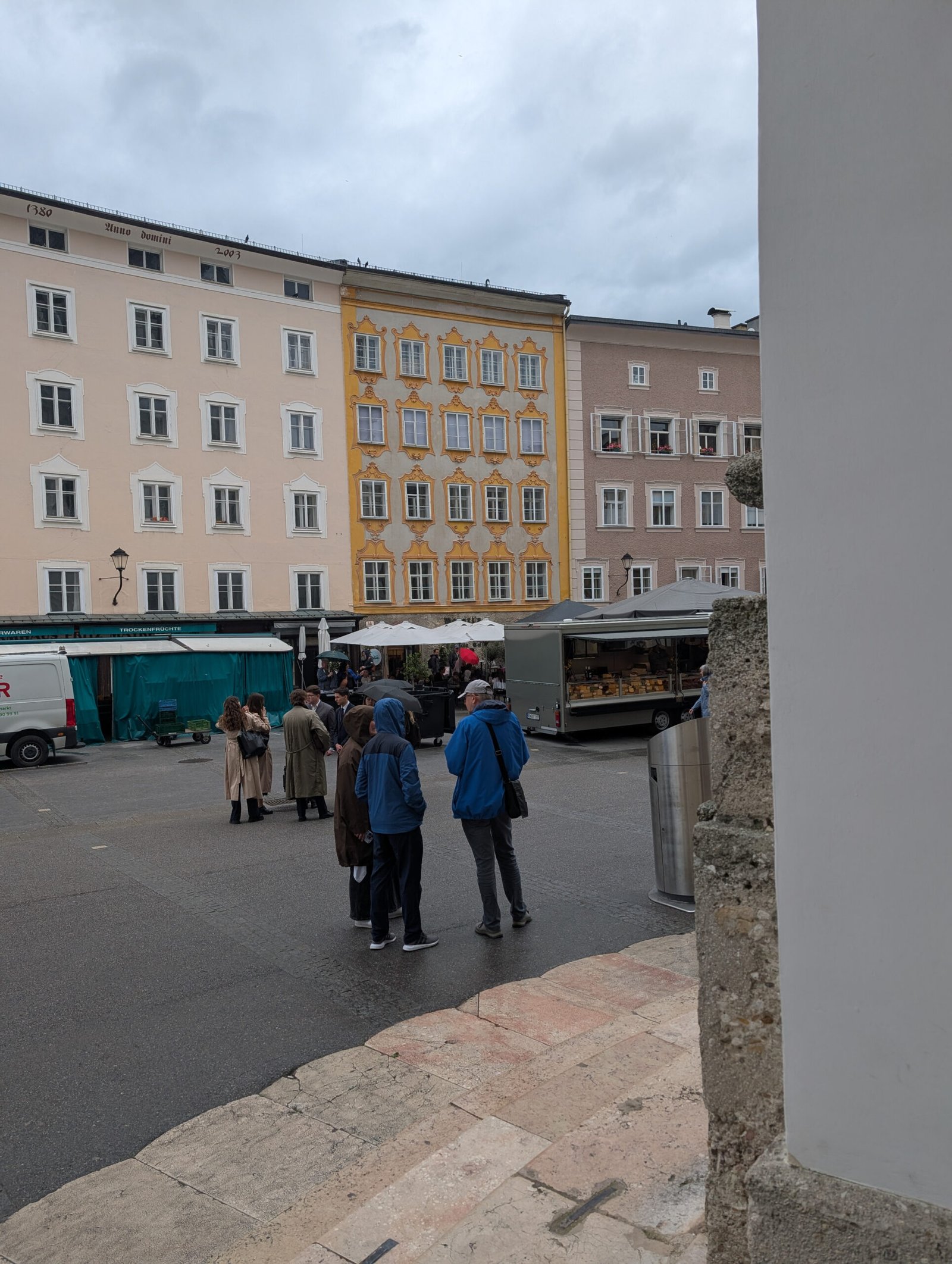
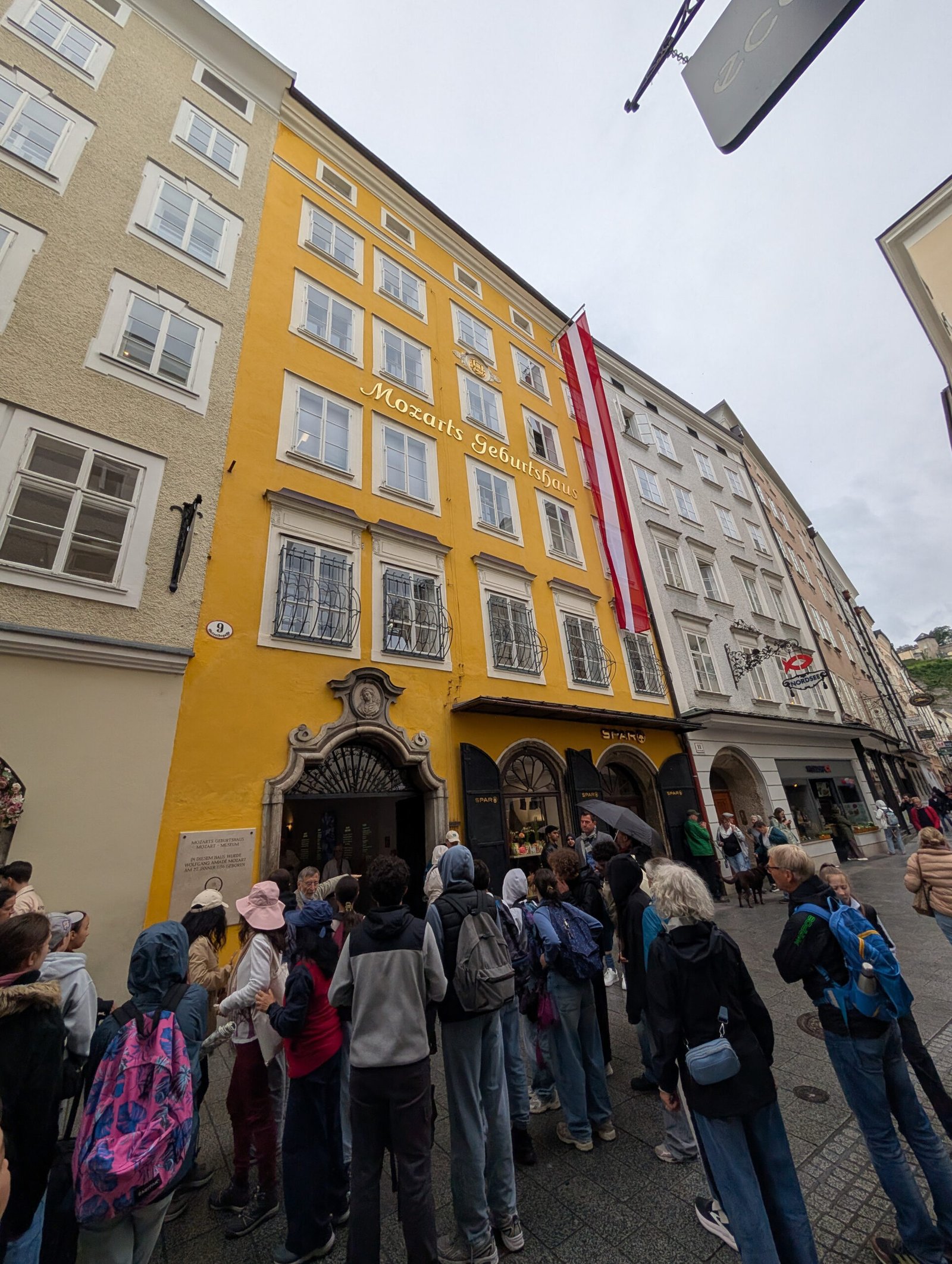
I think there were also 5 Mozart museums, each set up inside one of his houses. I think he must have changed houses every year if all this locations were authentic. We did not go in any of them but got pictures of the outside. Not sure why, but we did.
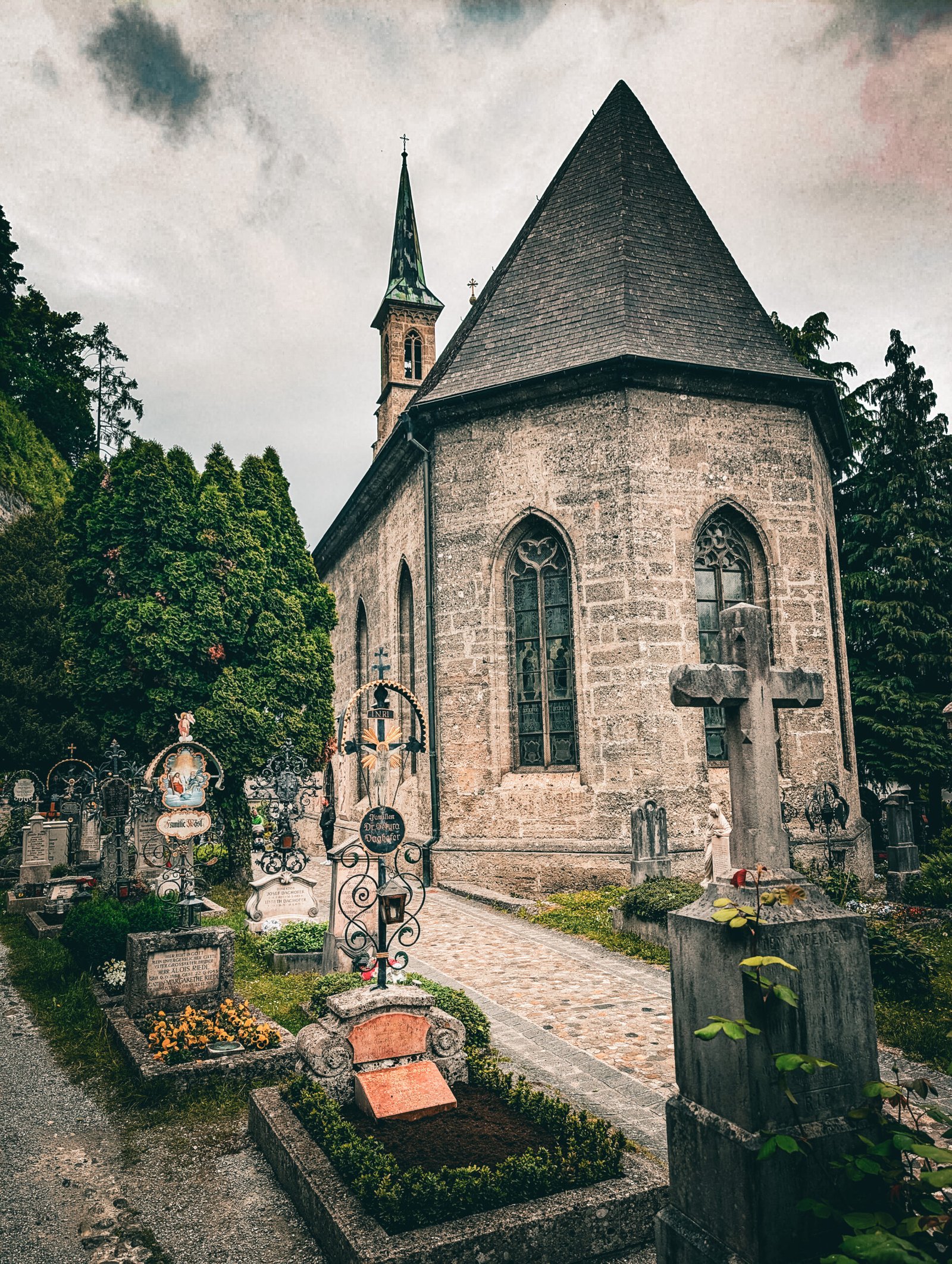
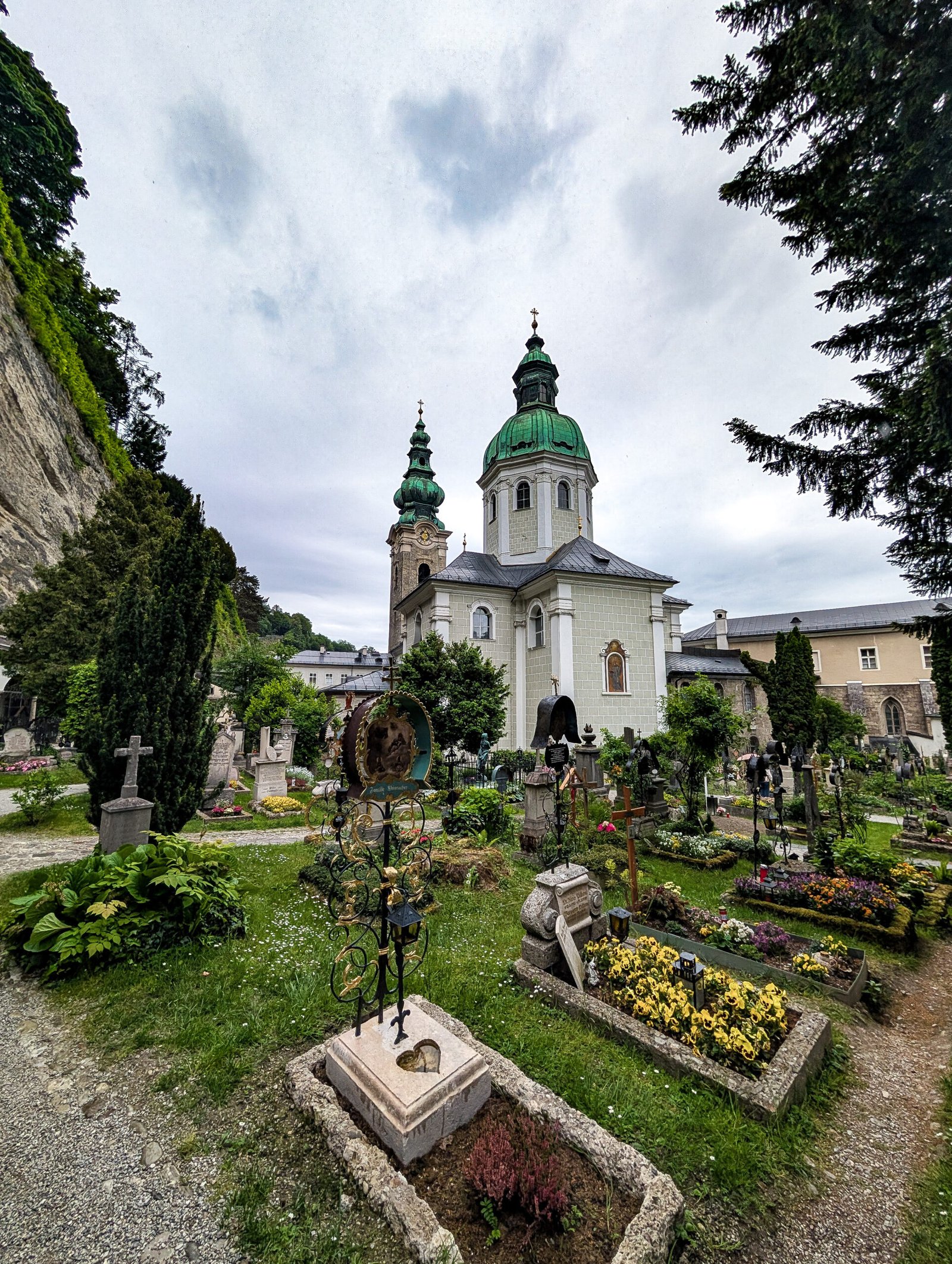
Here are a couple shots of Mozart’s parents grave. Mozart himself does not have a tourist trap of a headstone because he was buried in an unmarked grave.
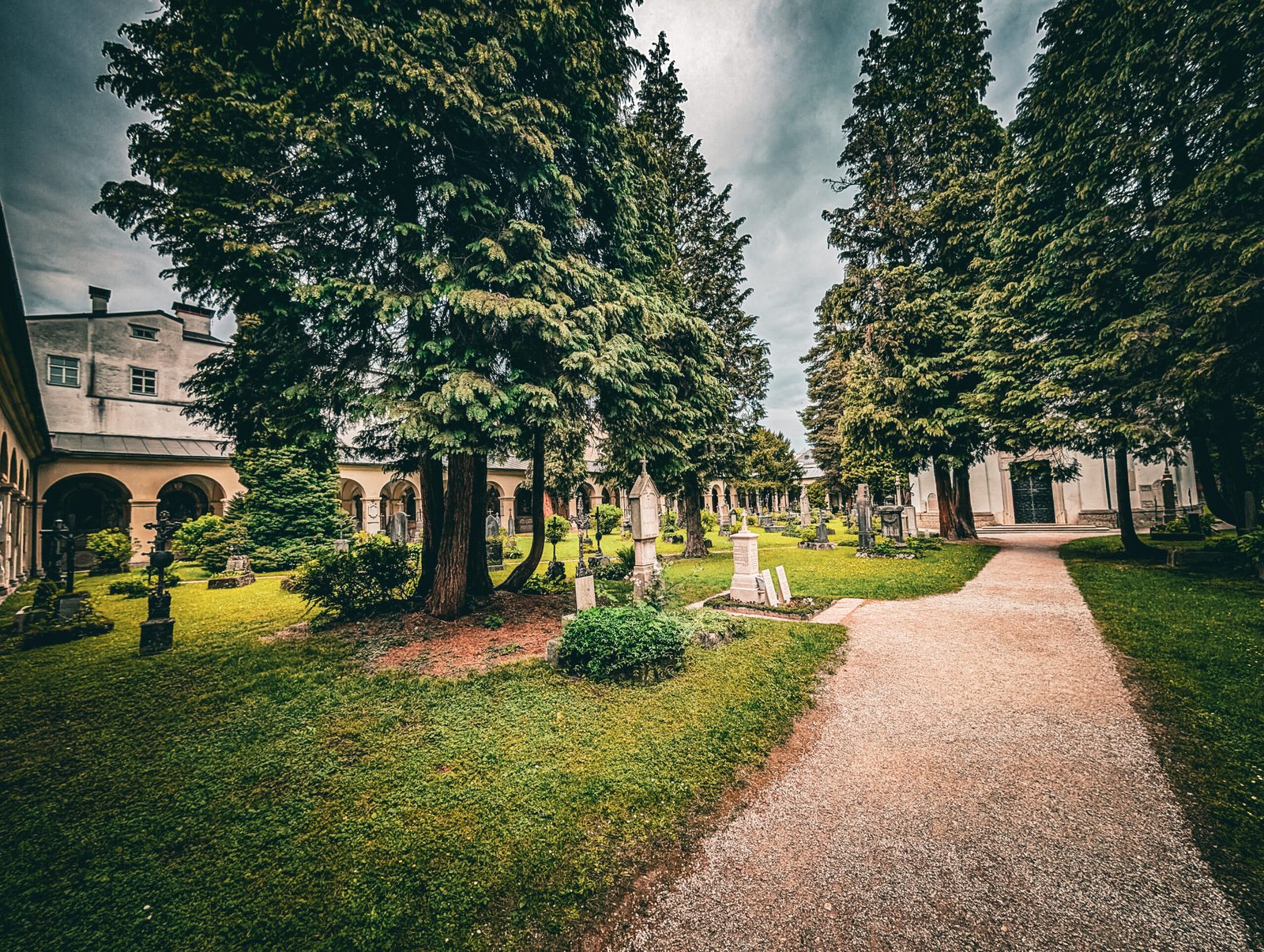
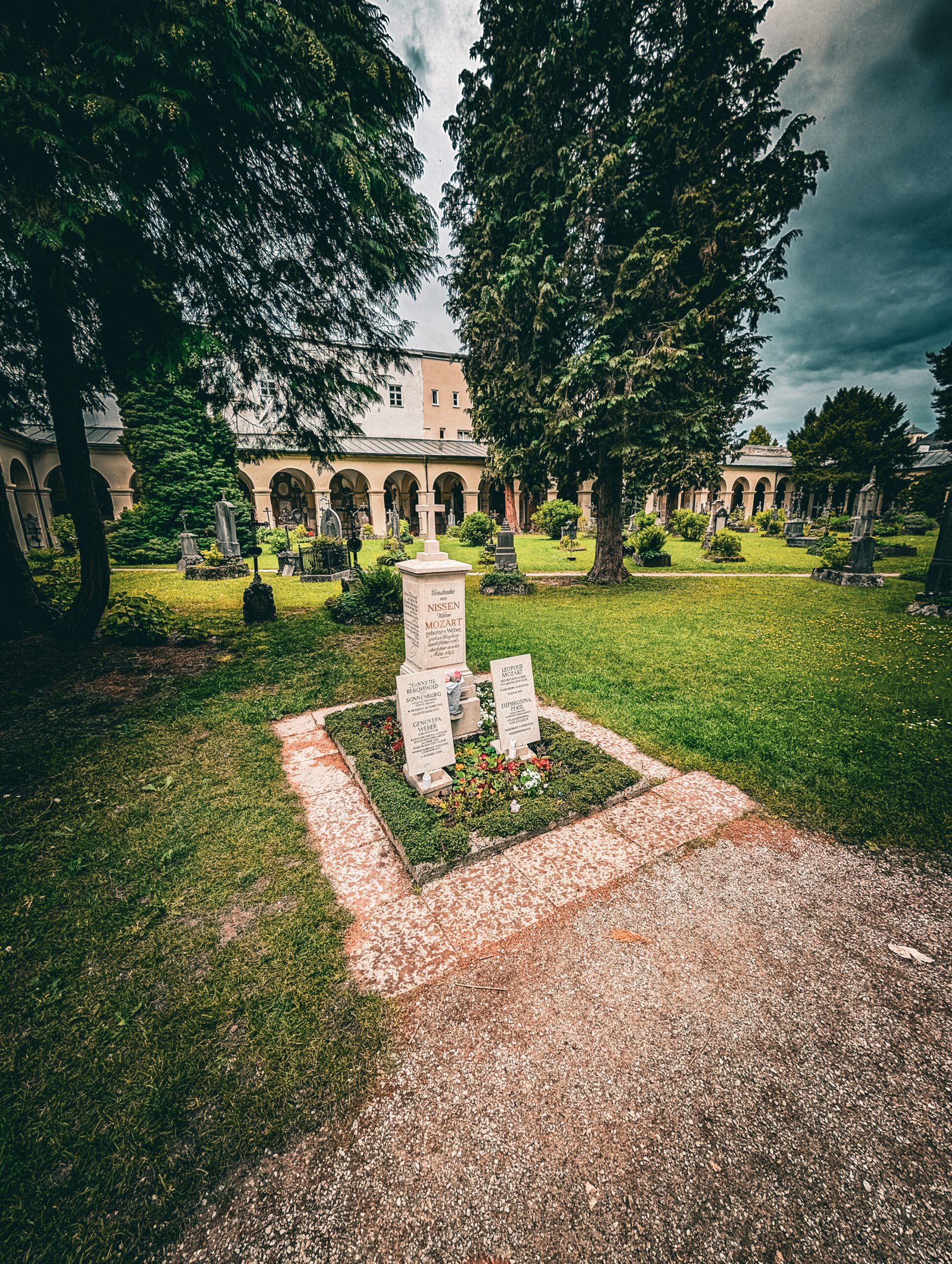
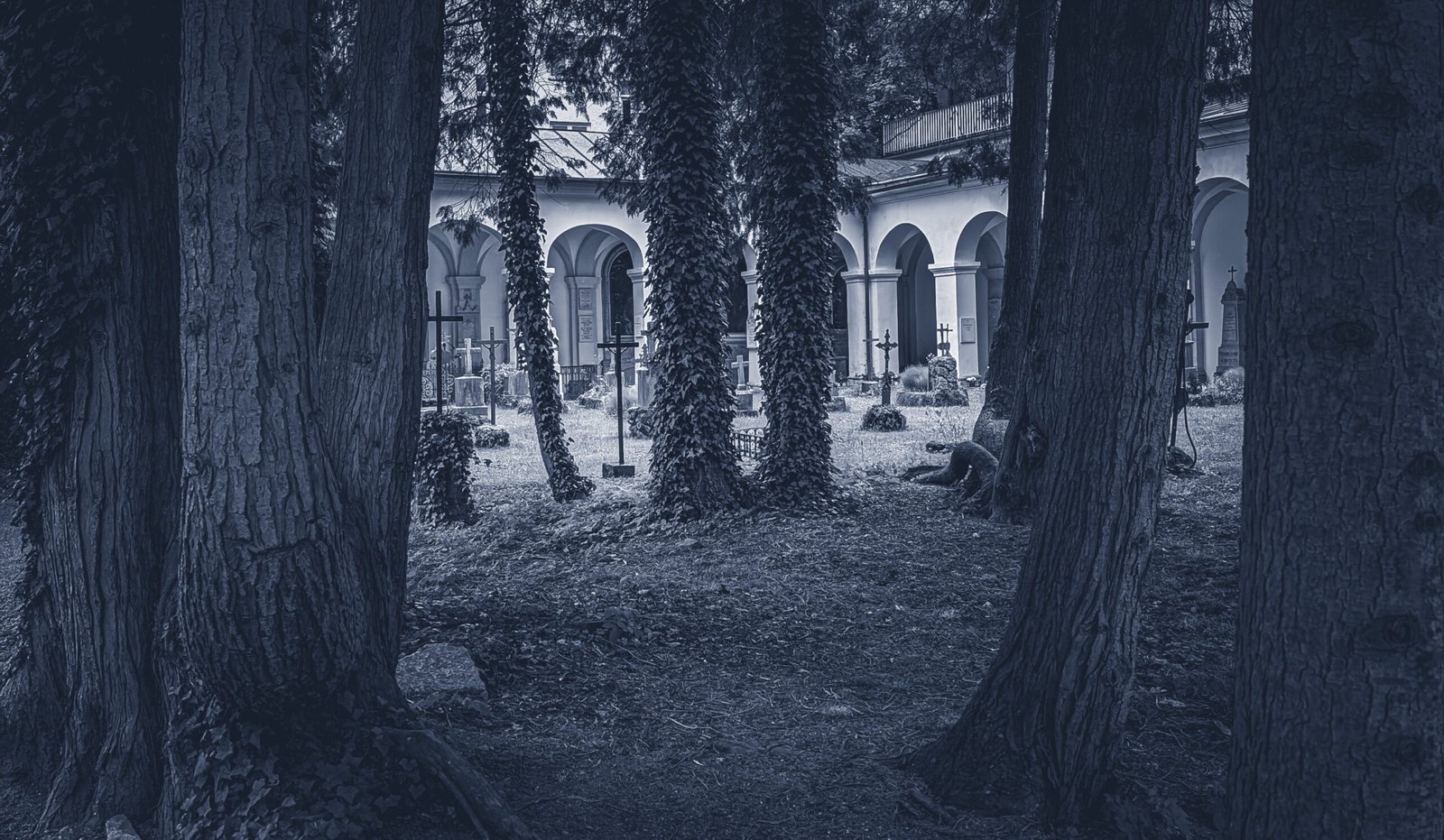
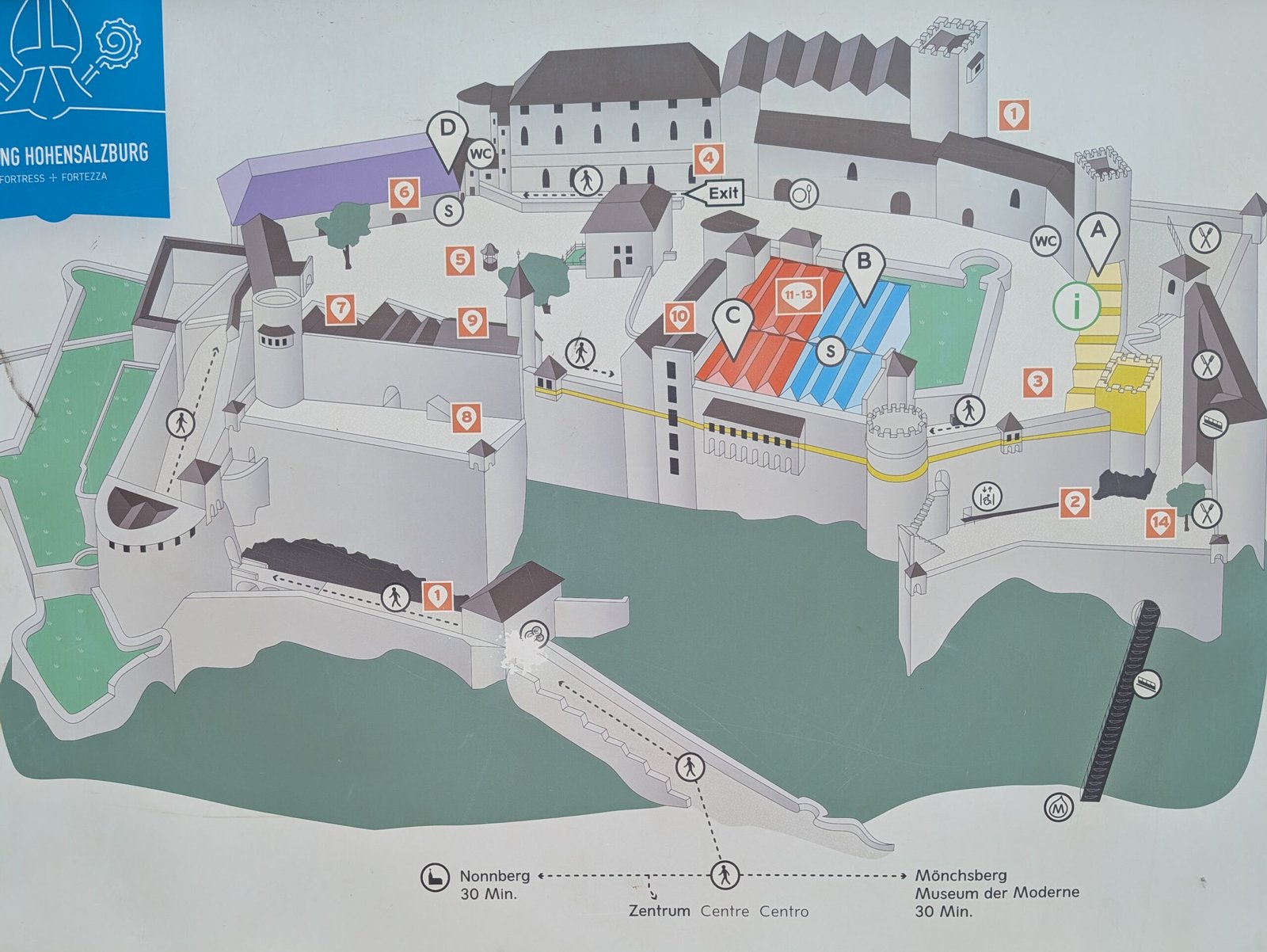
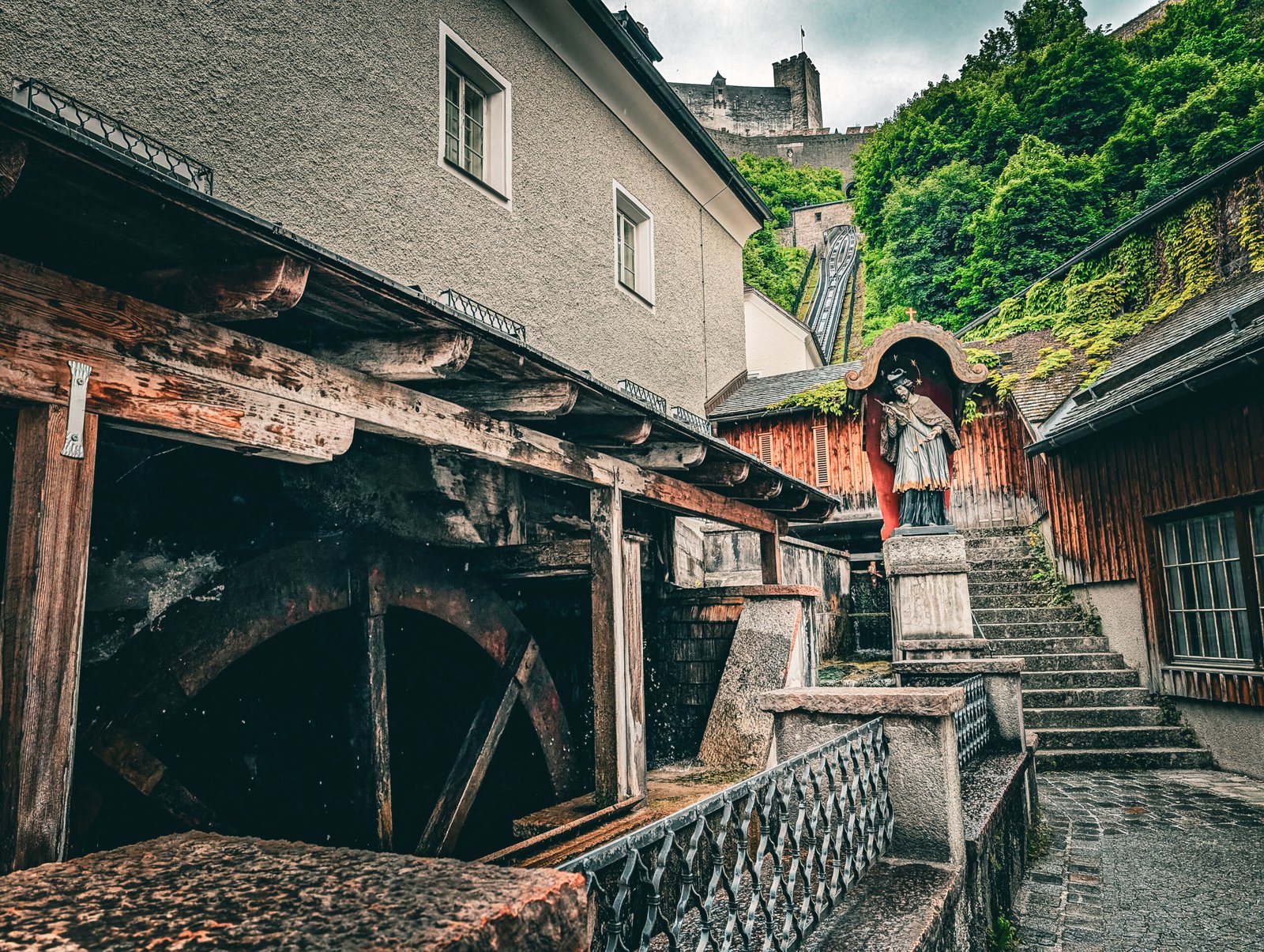
We walked up to the castle overlooking the city but opted not to pay the entrance fee to go inside
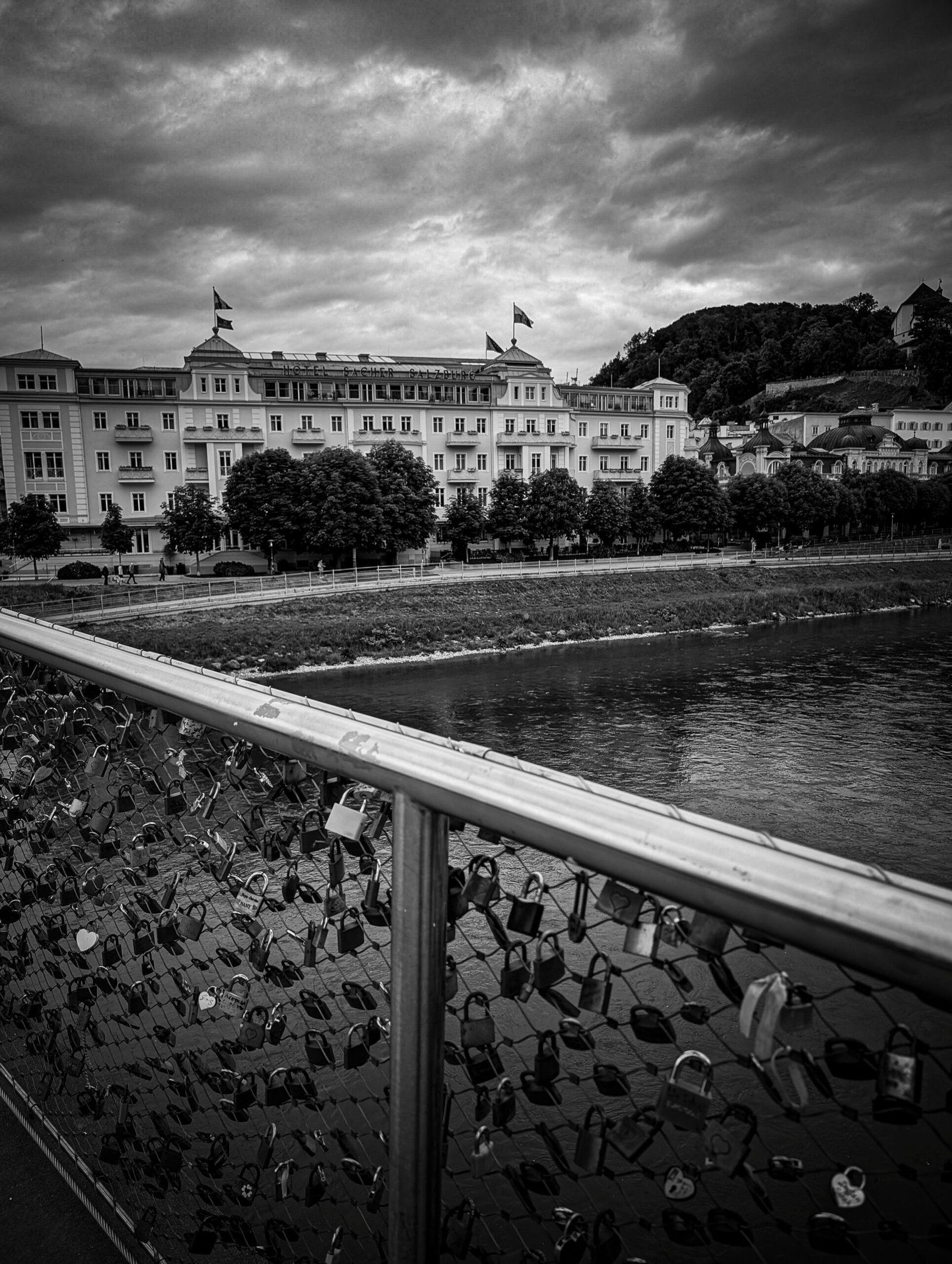
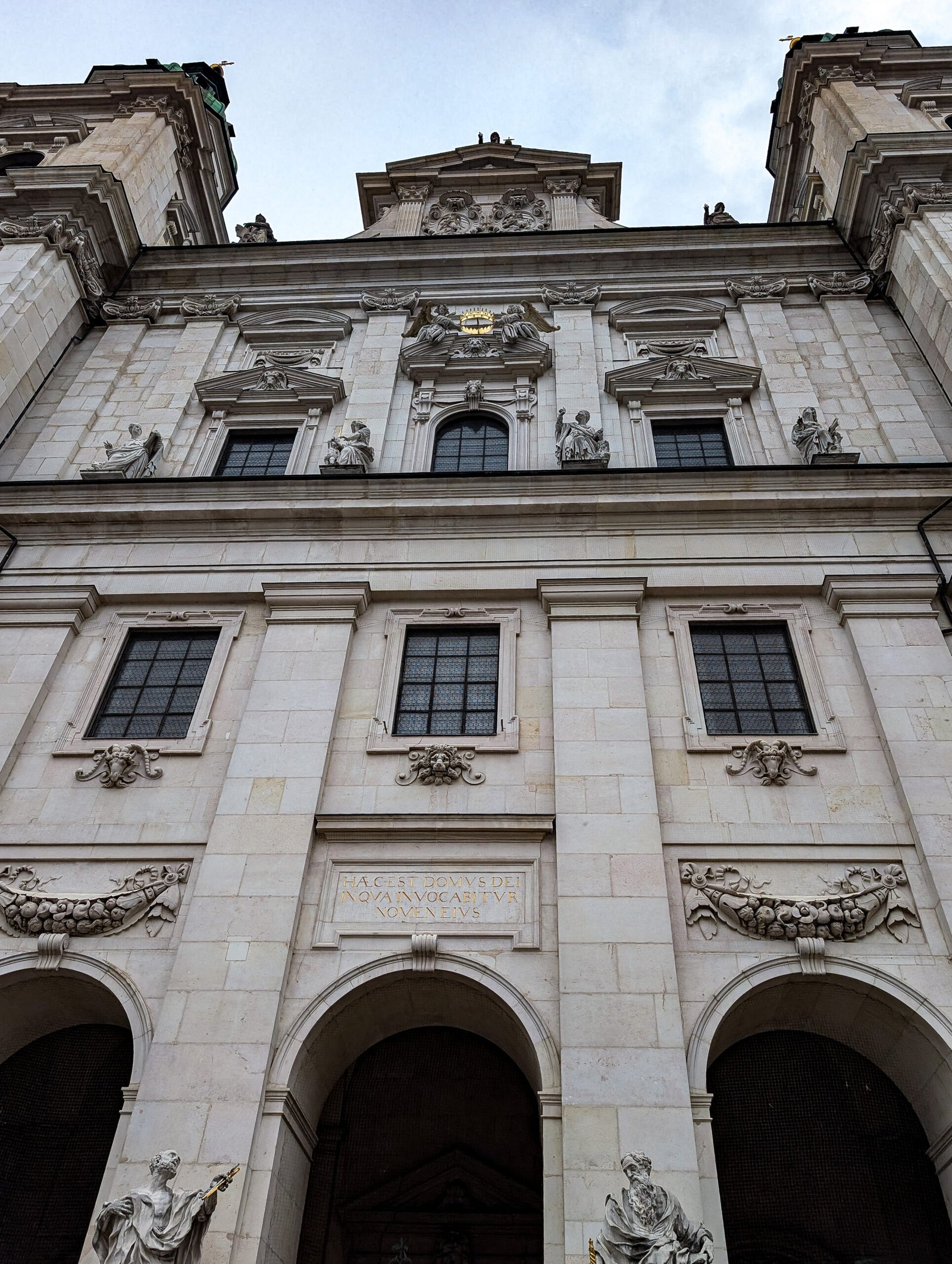
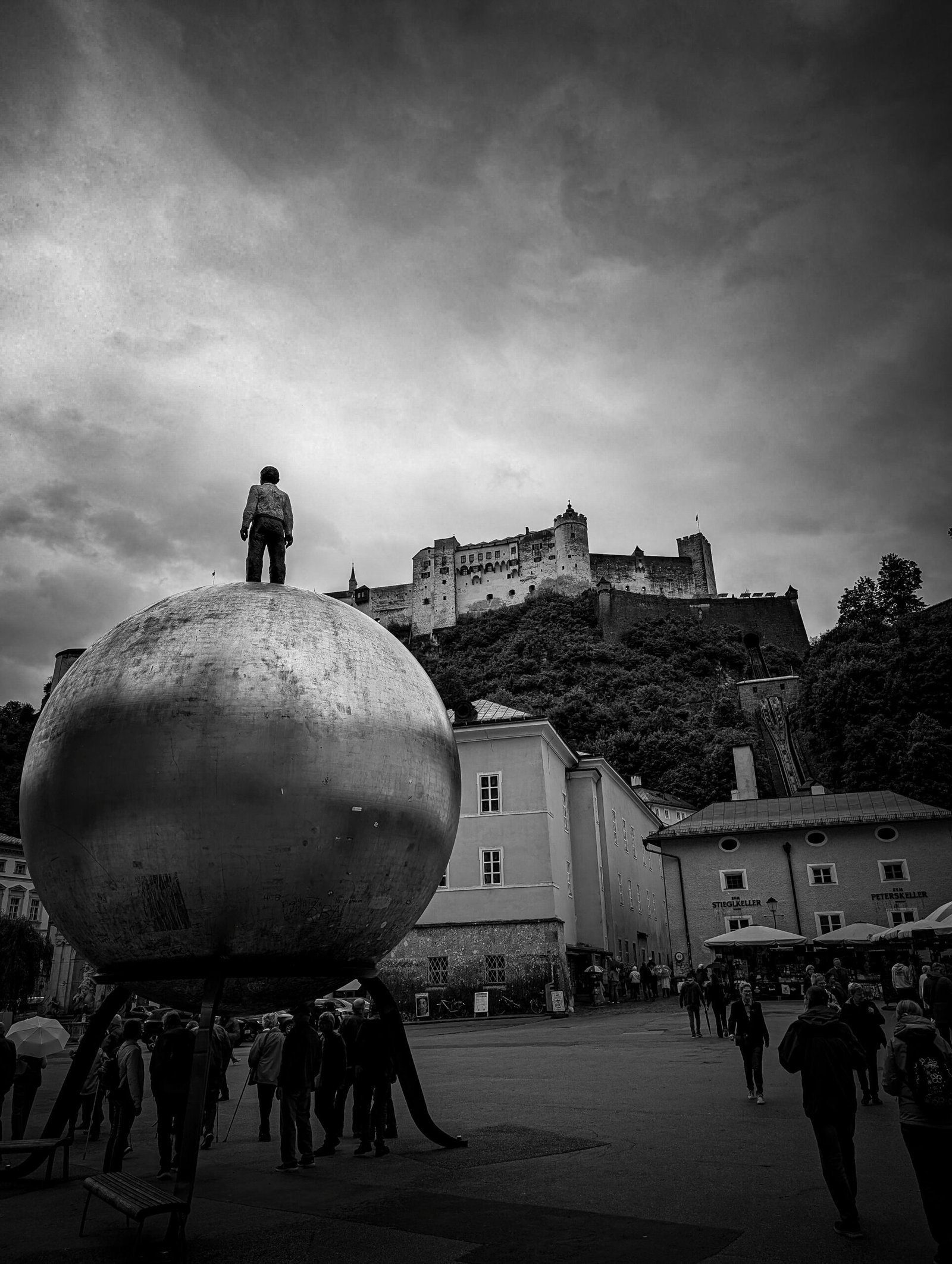
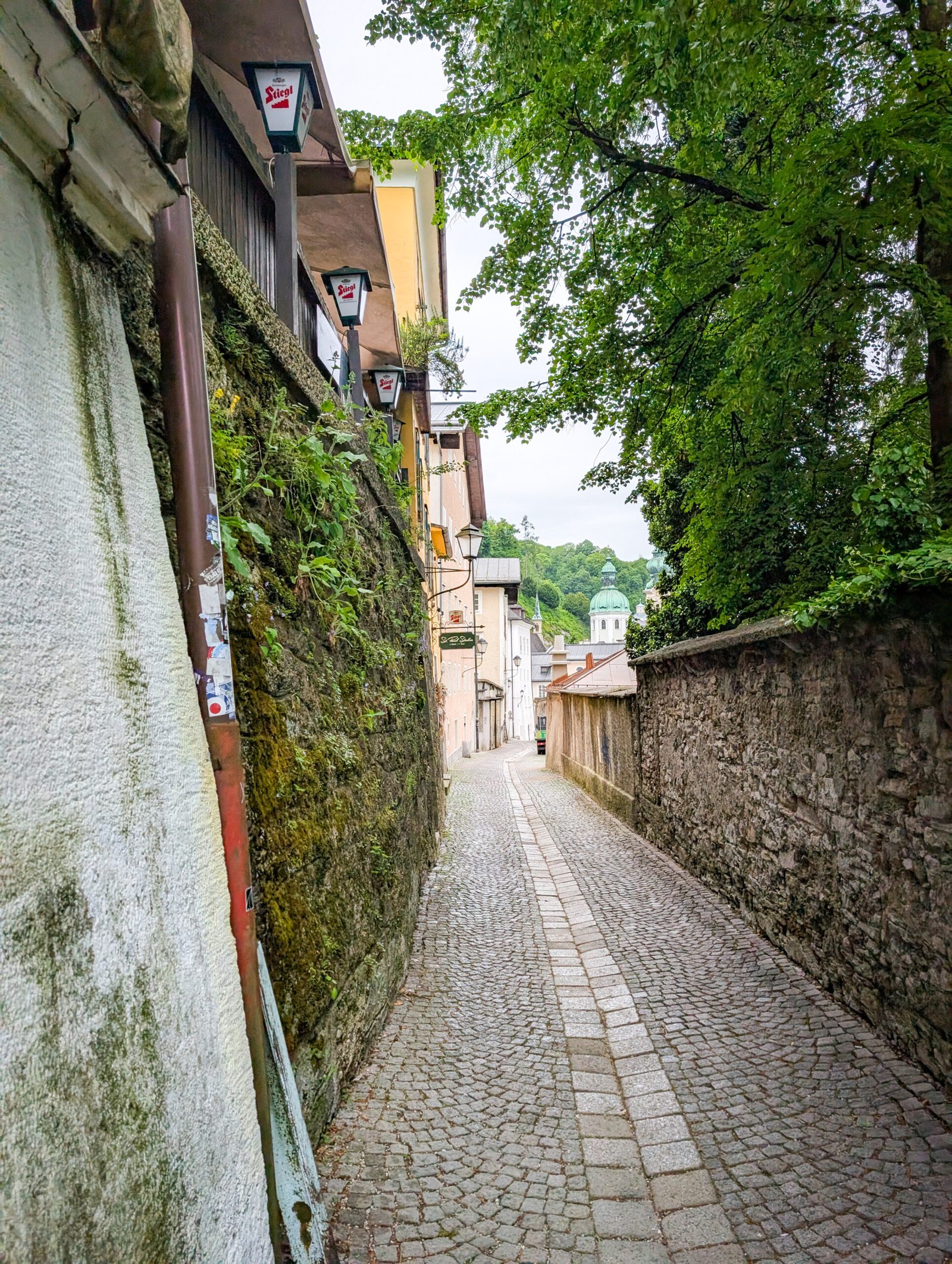
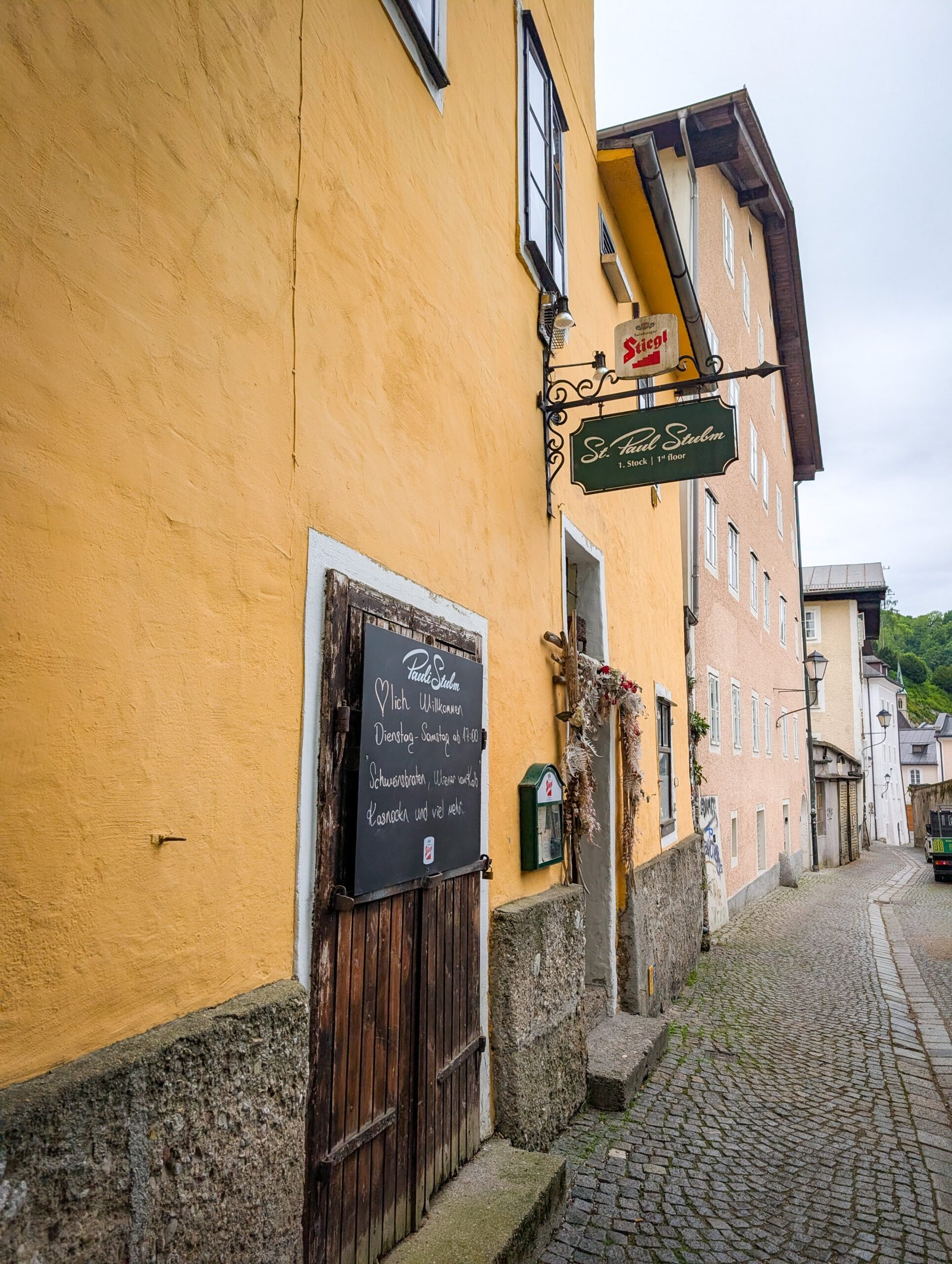
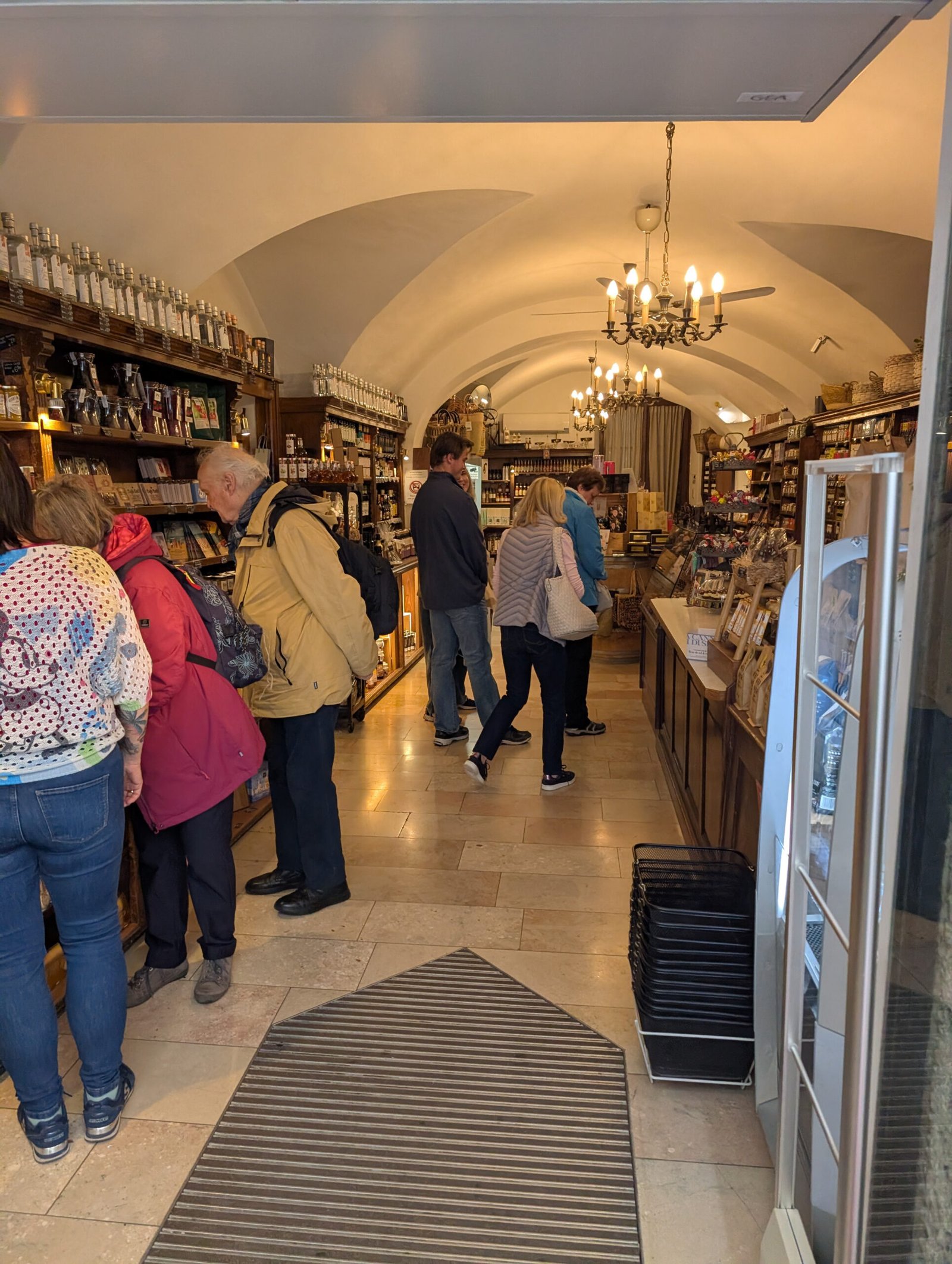
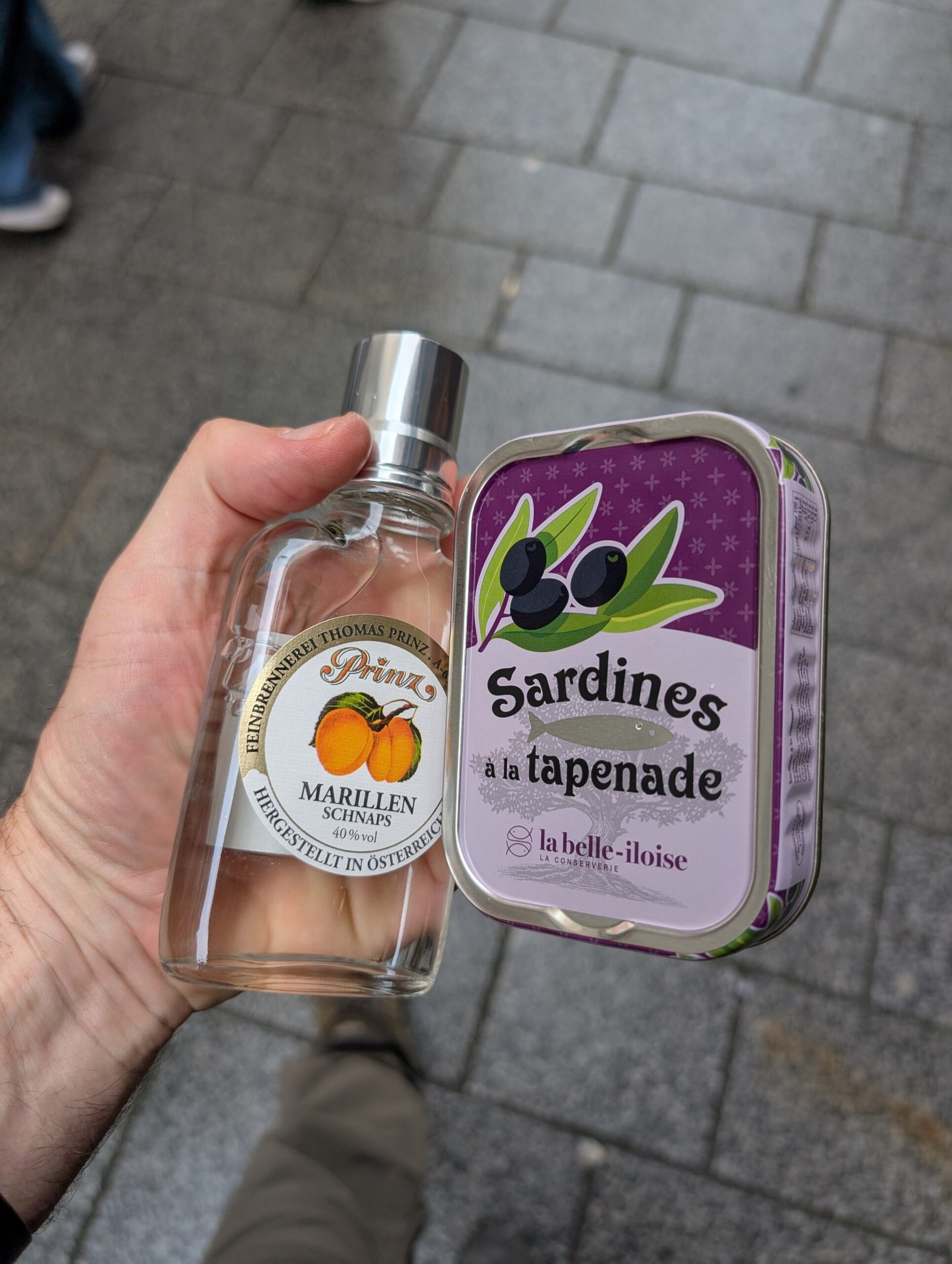
We stopped at this store that sold Schnapps, a favorite liquor of Austria. I opted for the Apricot, the national fruit of the country. I saw this place in an episode of Rick Steve’s Europe. I also grabbed some anchovies at the register. Turned out to be a pretty good walking around meal. More rewarding than a sausage in some sort of bread vehicle.
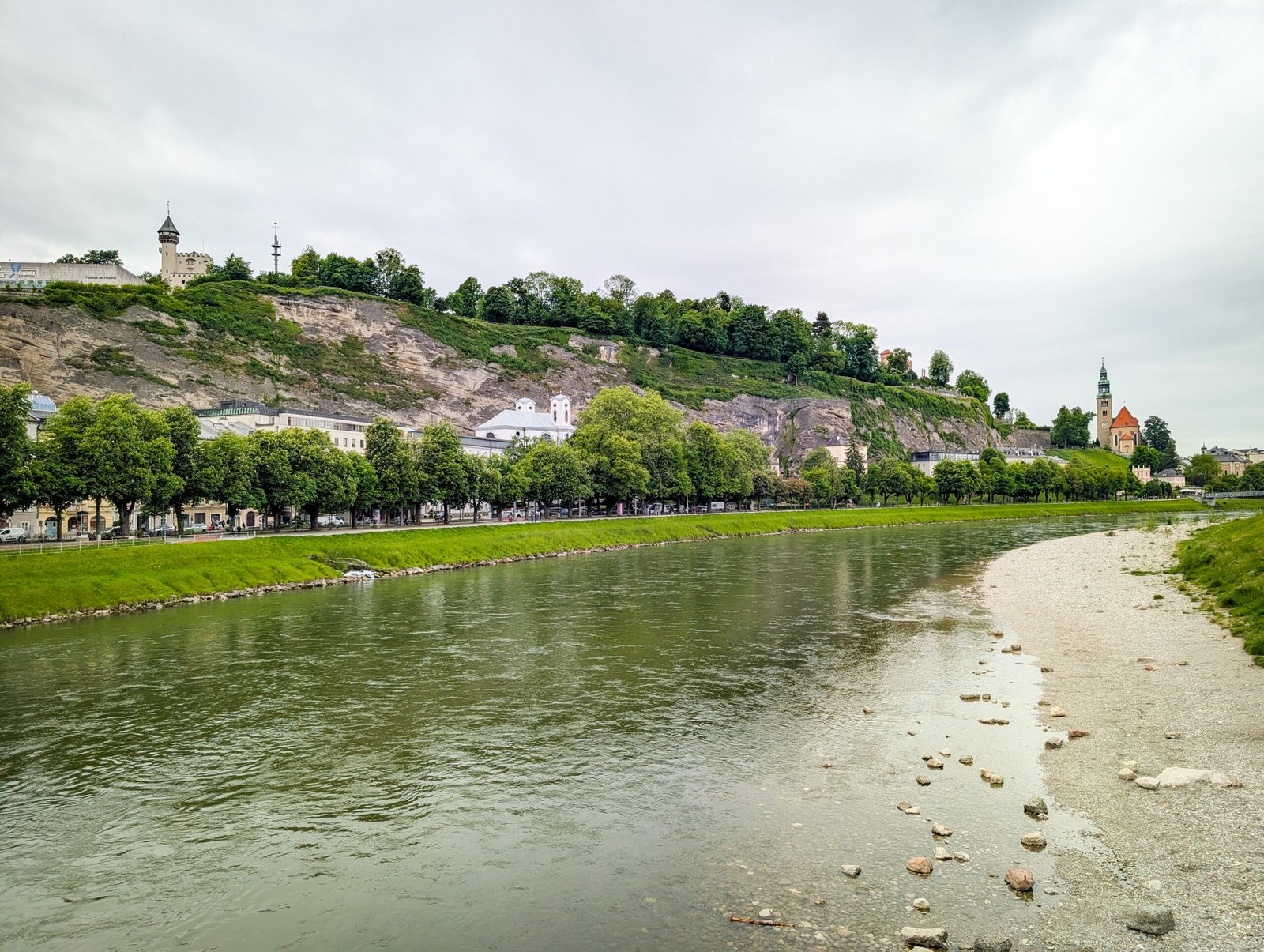
It was raining most of the day. We ended our tour walking along the Salzach River. You may recognize the name being similar to the town. It translates to Salt and that is the origins of this settlement. Salt was discovered and mined and the river made an easy means of getting it to market. You can still tour the salt mines, but that never really interested me.
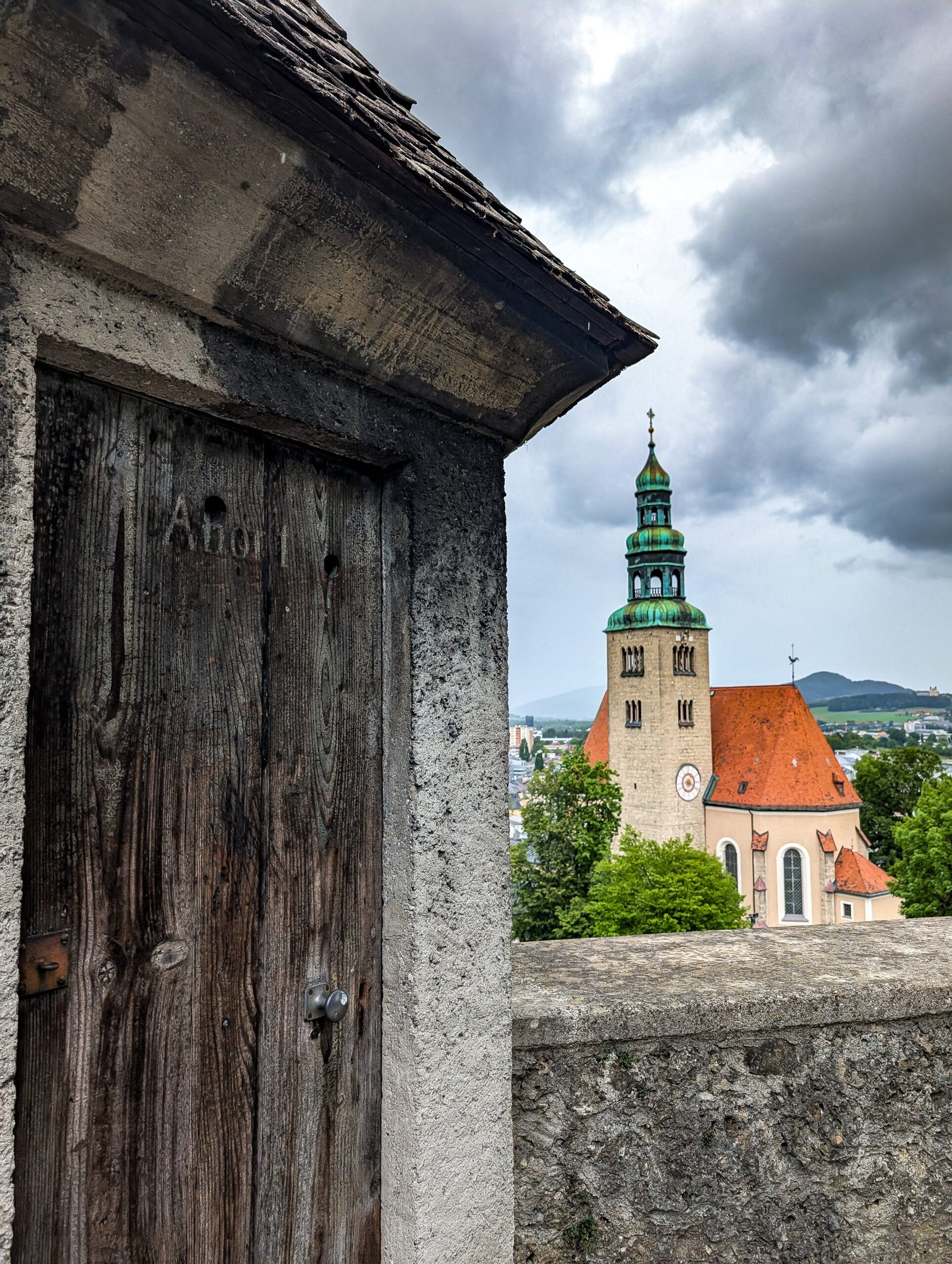
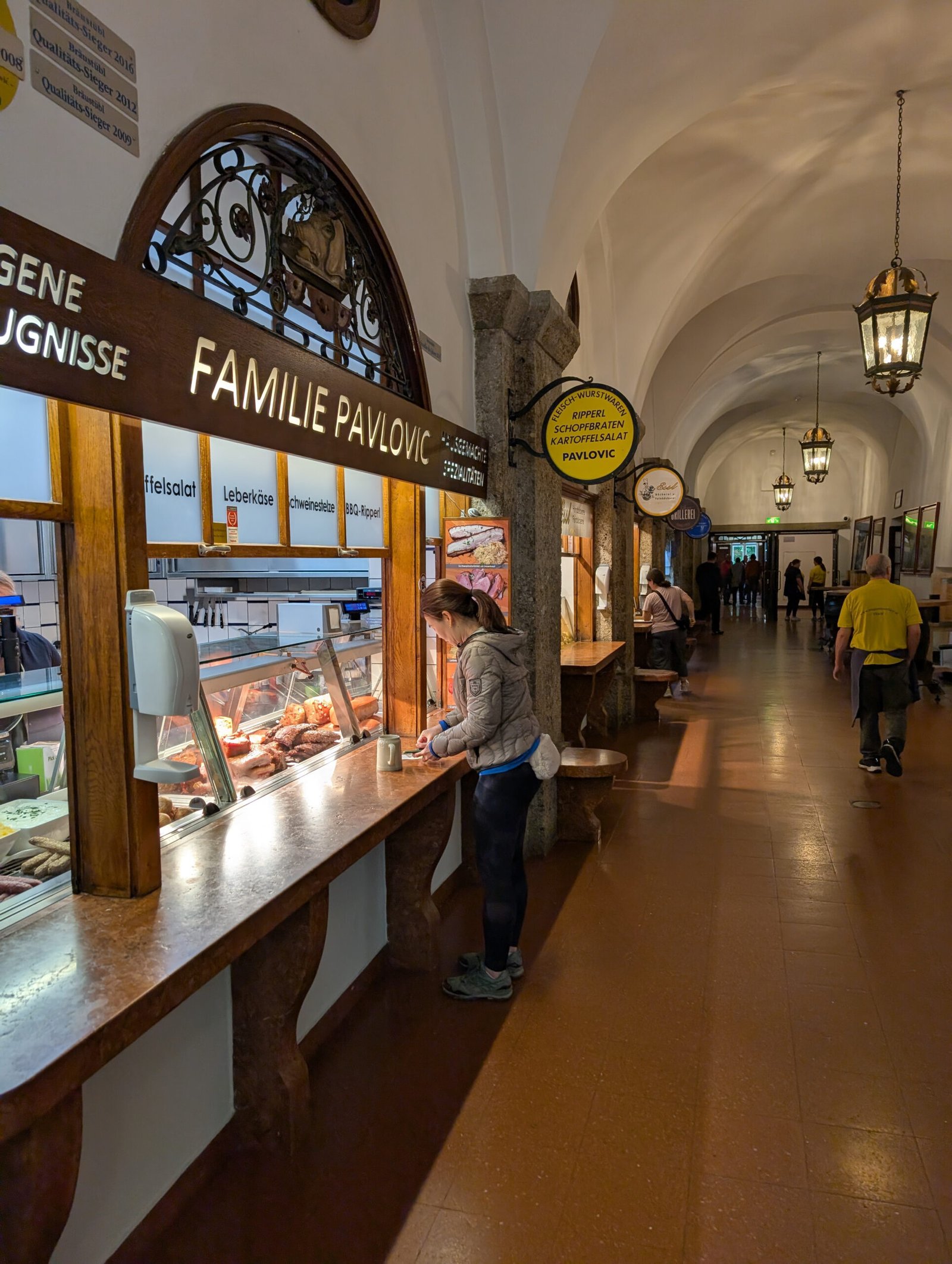
We closed the afternoon at the Augustiner Bräu Mülln. This is a famous beer hall in Salzburg. I also saw this on Rick Steve’s show. People line up early to snag a table for thier friends and end up drinking from 3pm until close. I am guessing the guy who shows up early to claim the table is pretty well snockered by the time he exits.
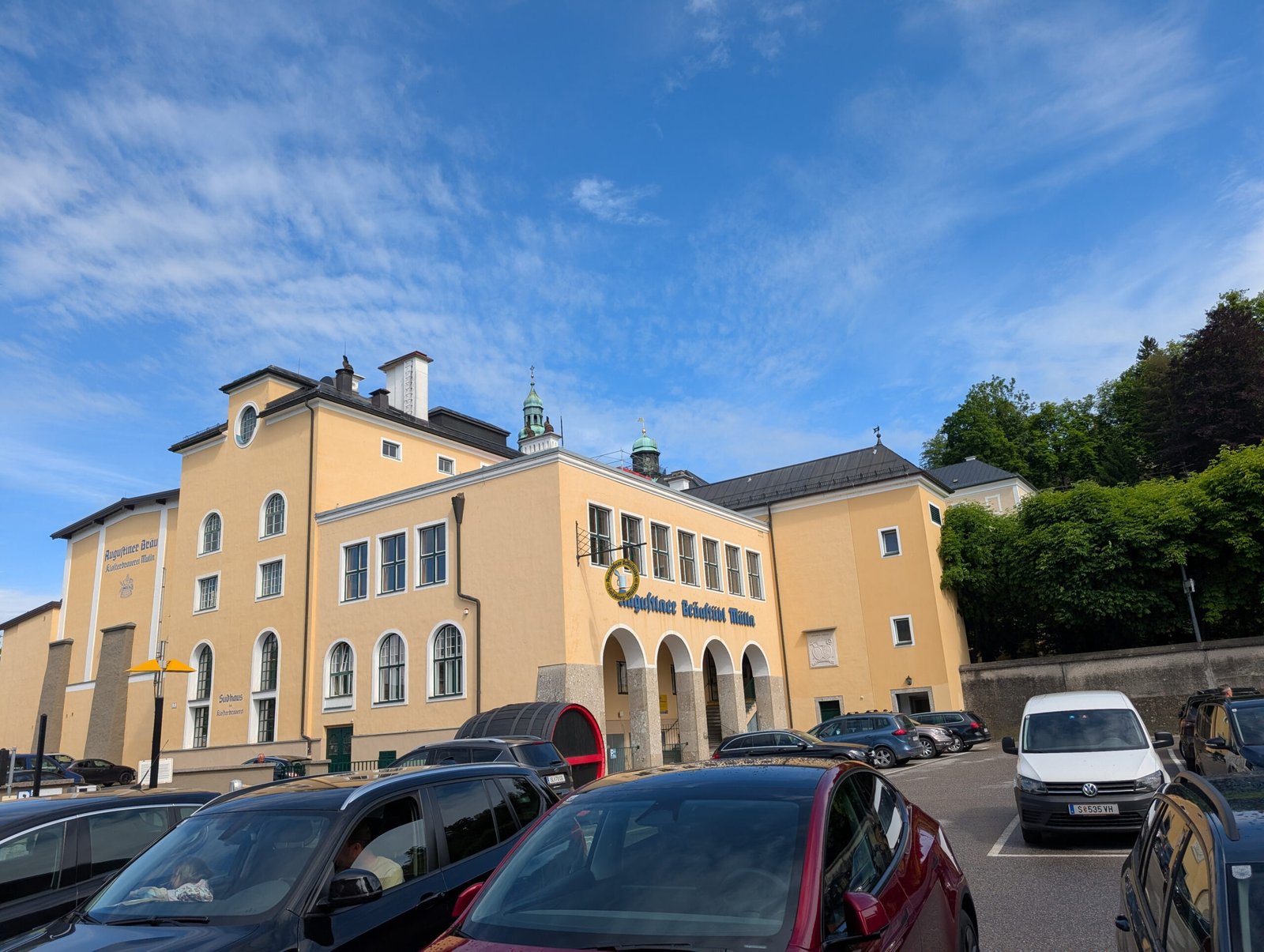
It is fun, you grab a mug, dump it in water, grab a token and they fill it up.
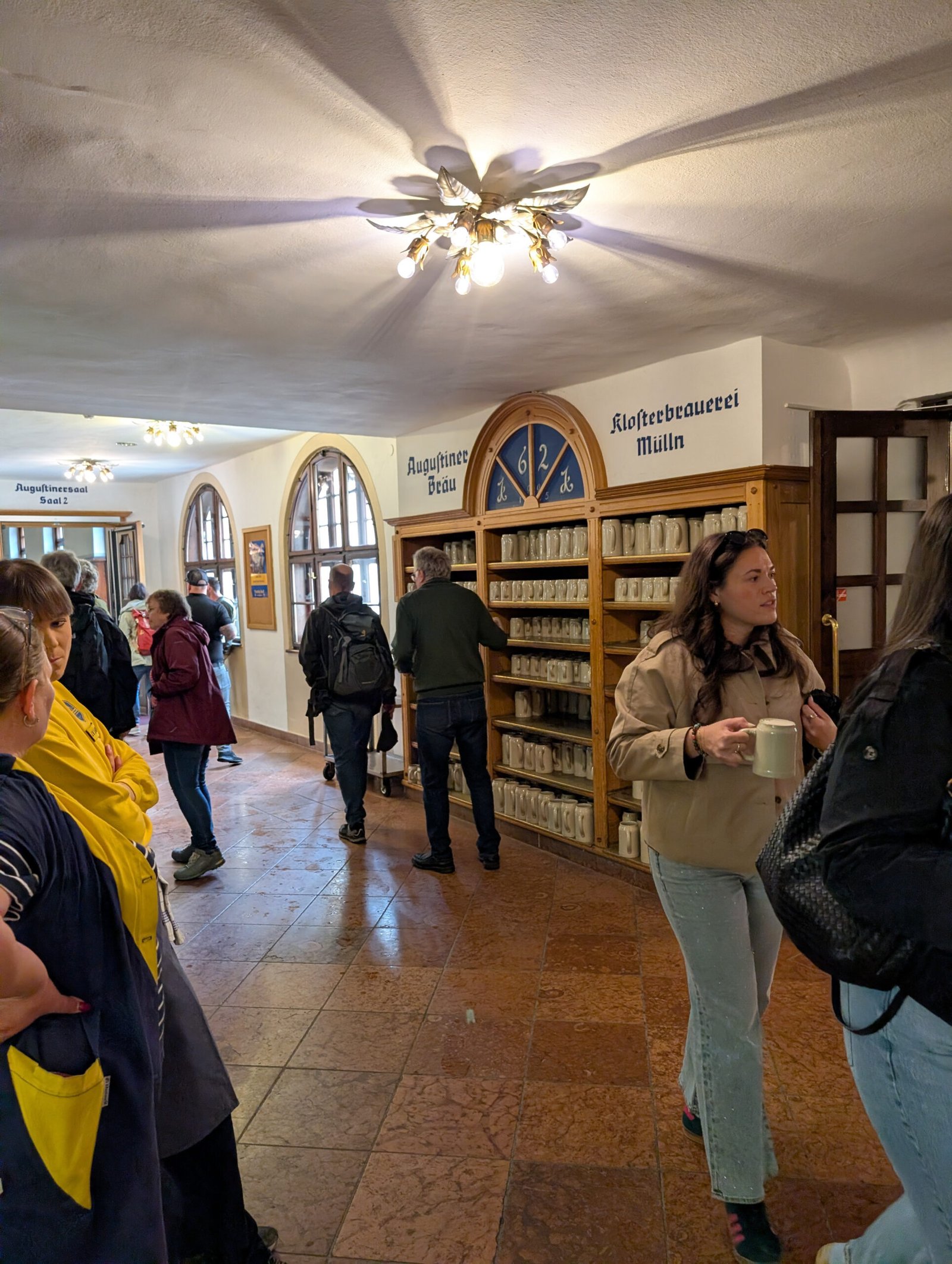
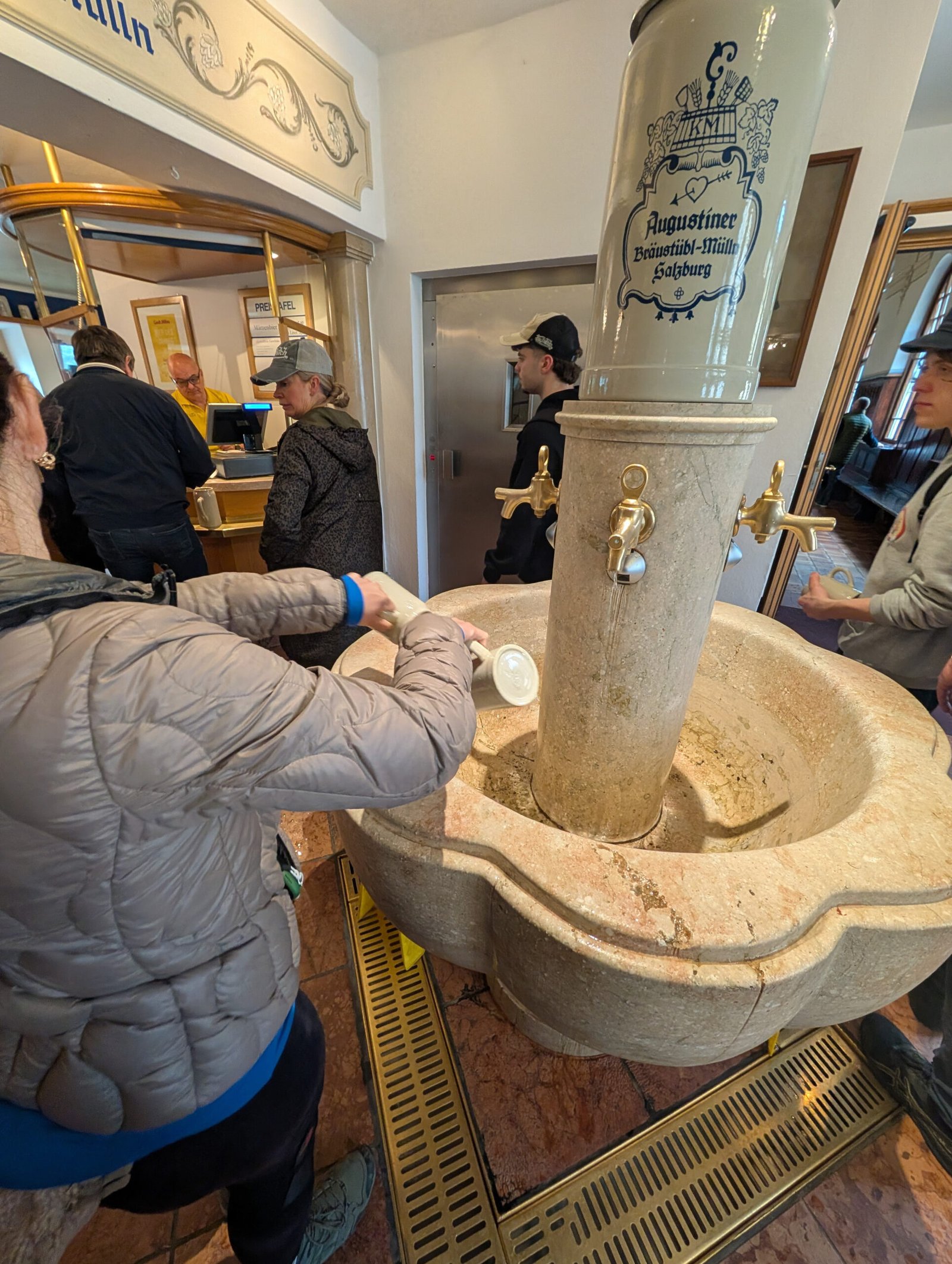
After that you stop at a food stall and load up on some meat and find a table
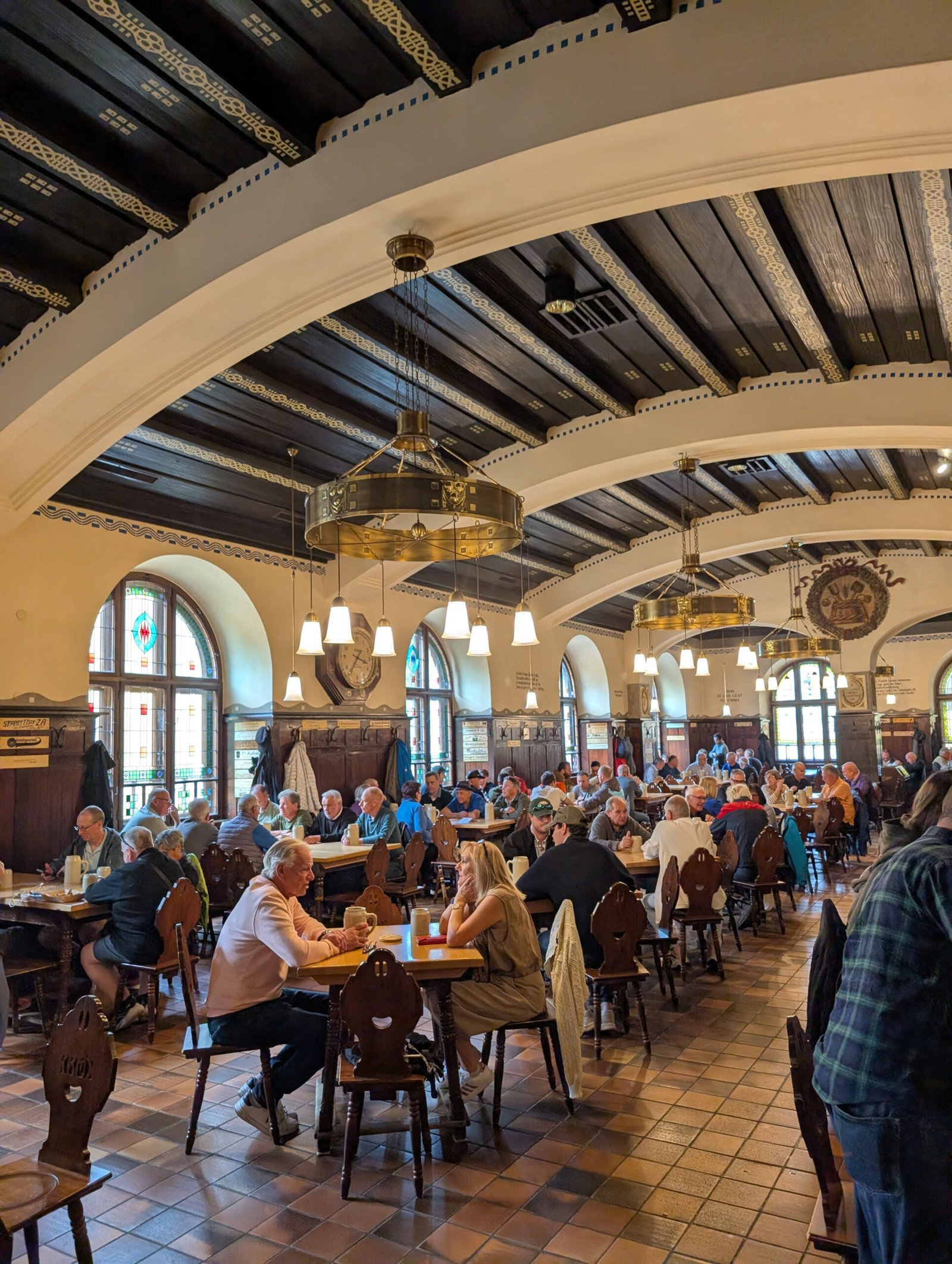
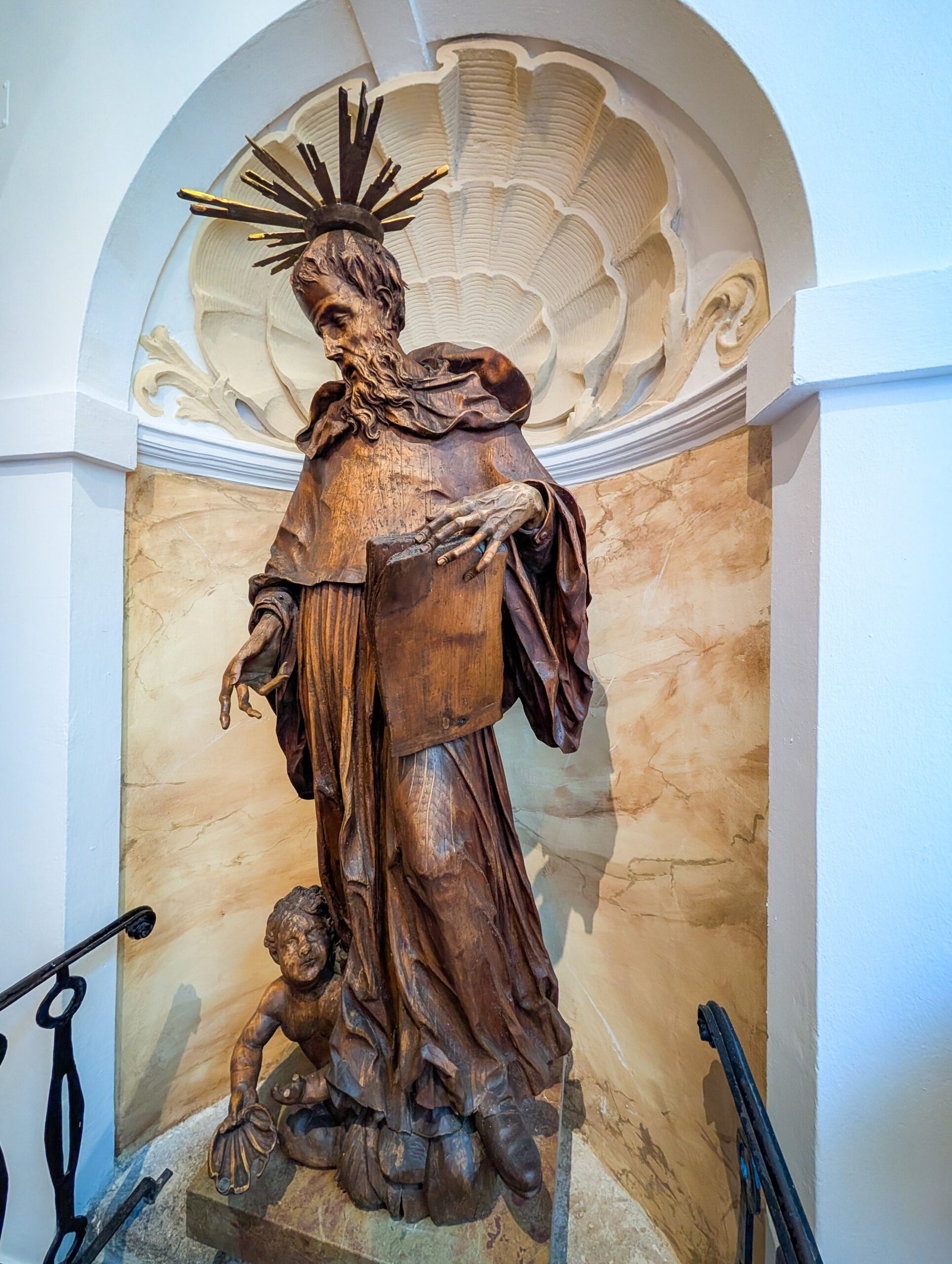
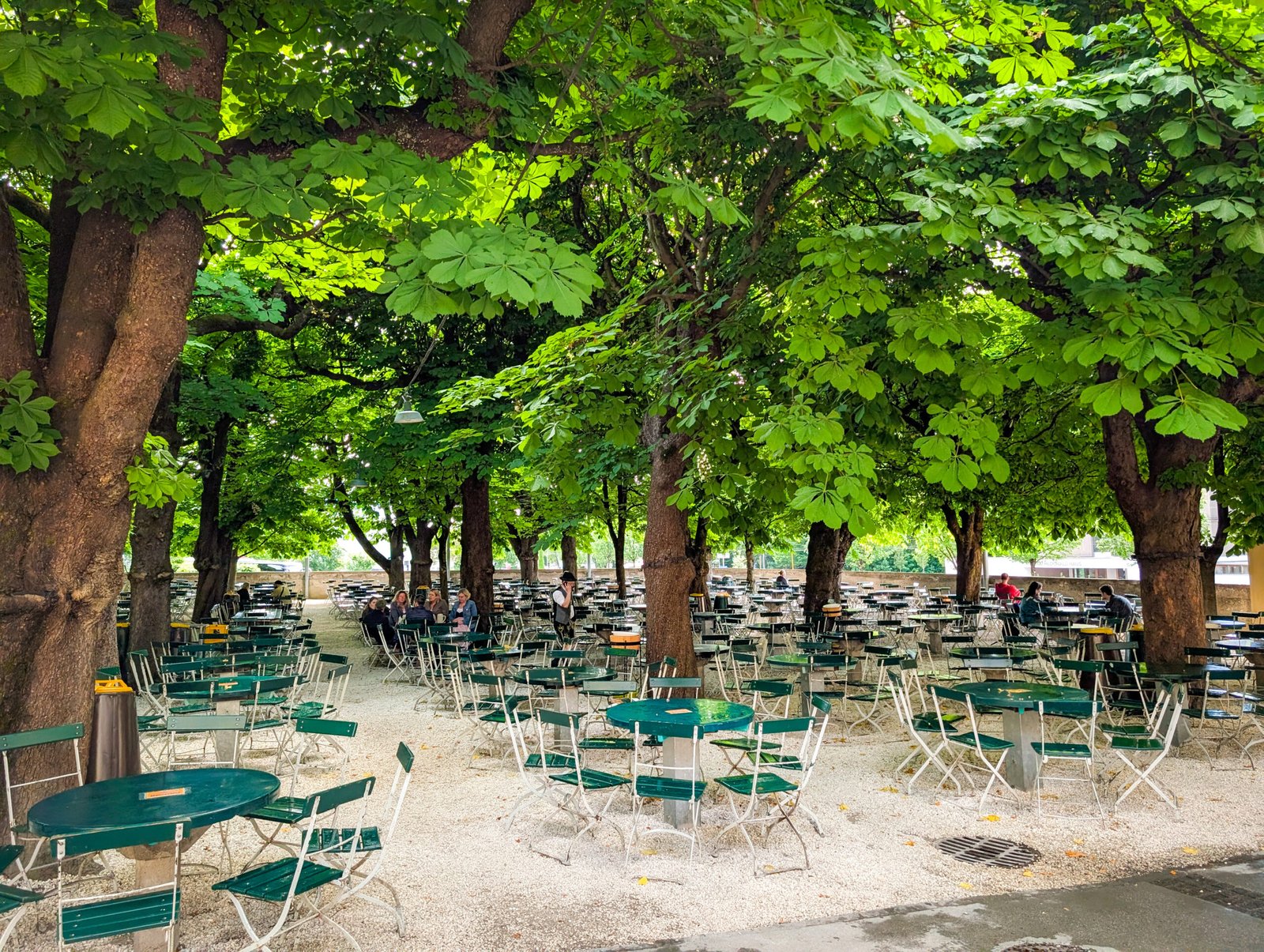
The Biergarten portion was empty due to the whether. I can only imaging what this is like on a summer weekend afternoon. A mini version of Oktoberfest in Munich I assume.
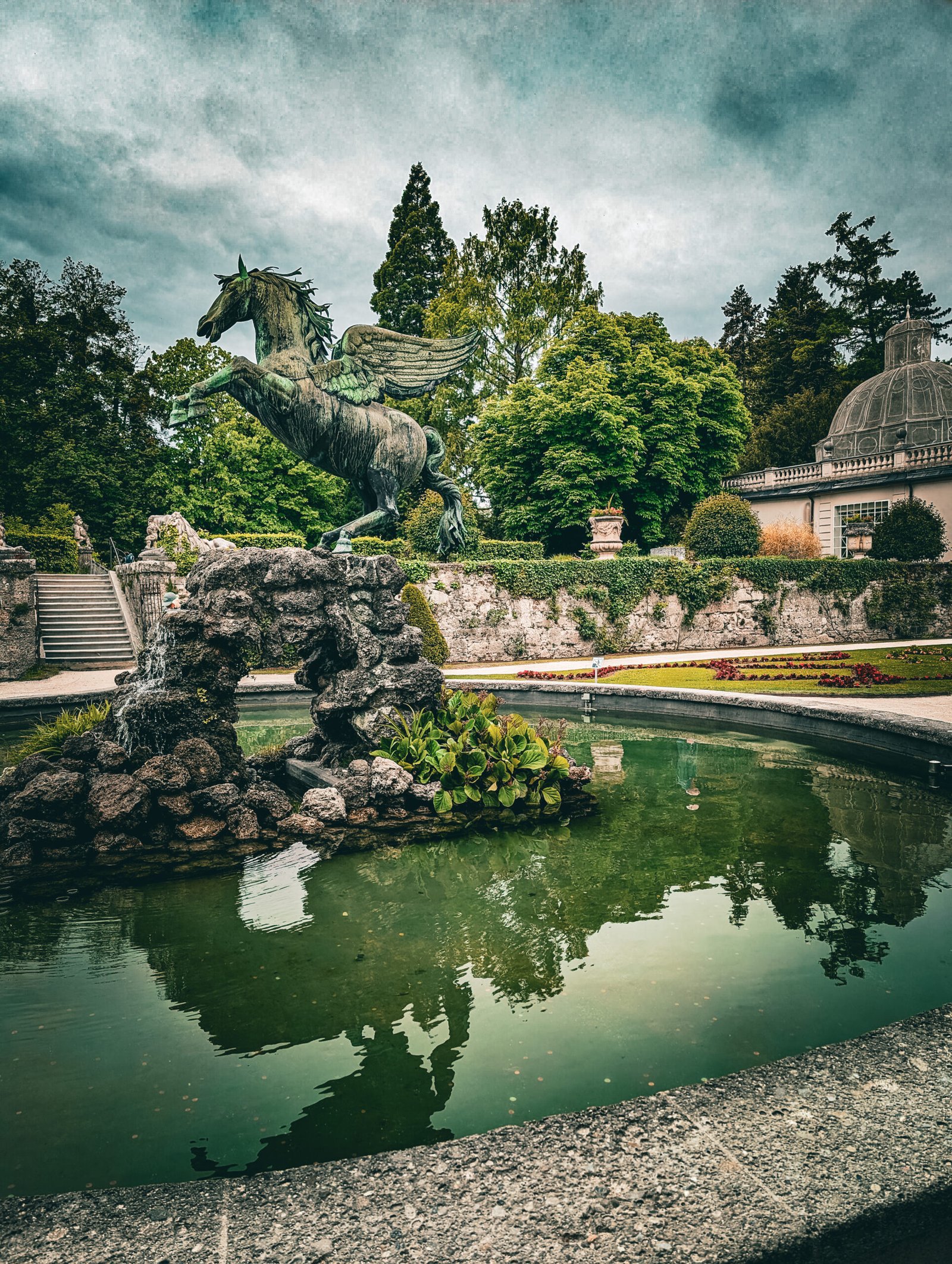
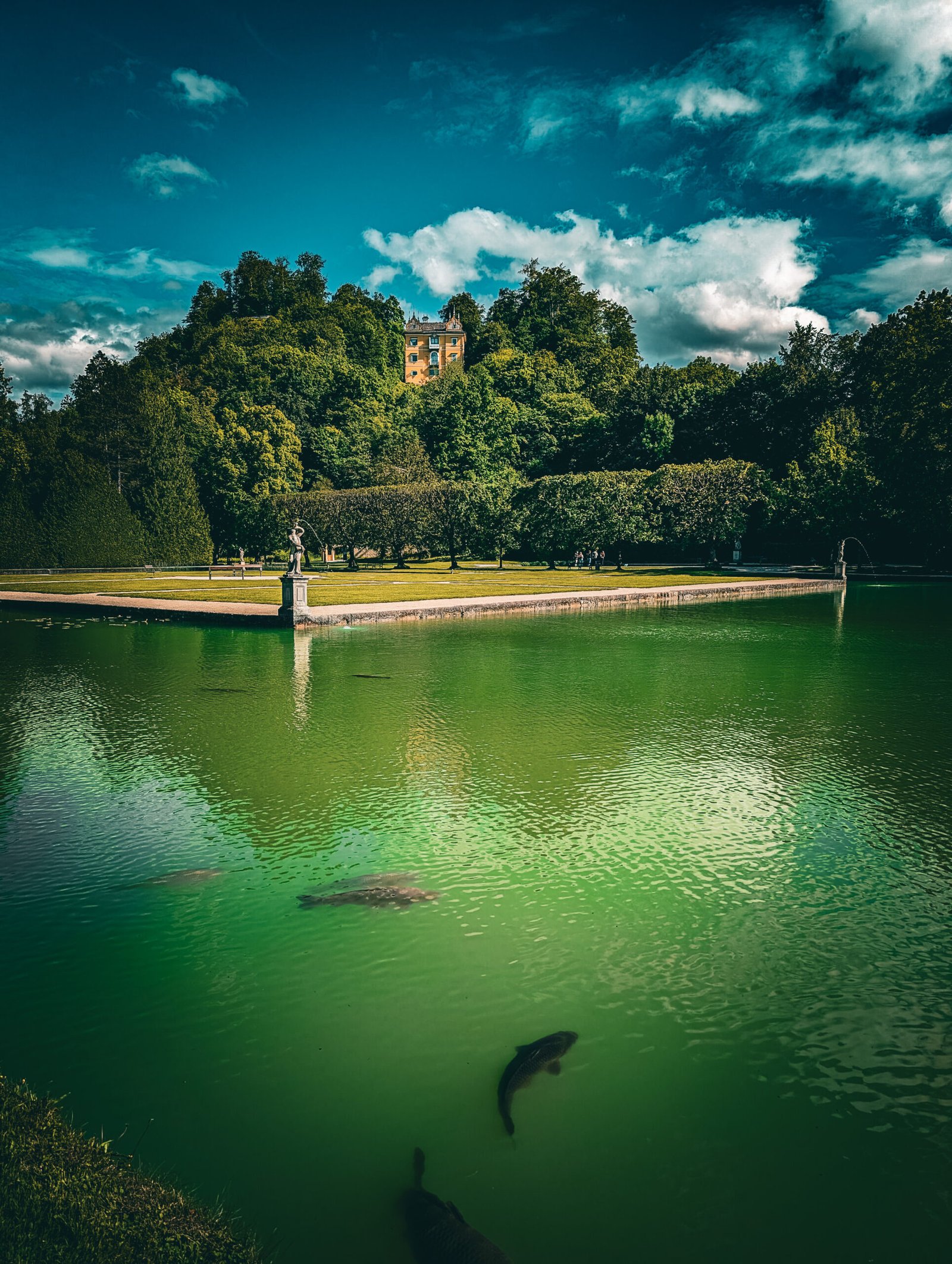
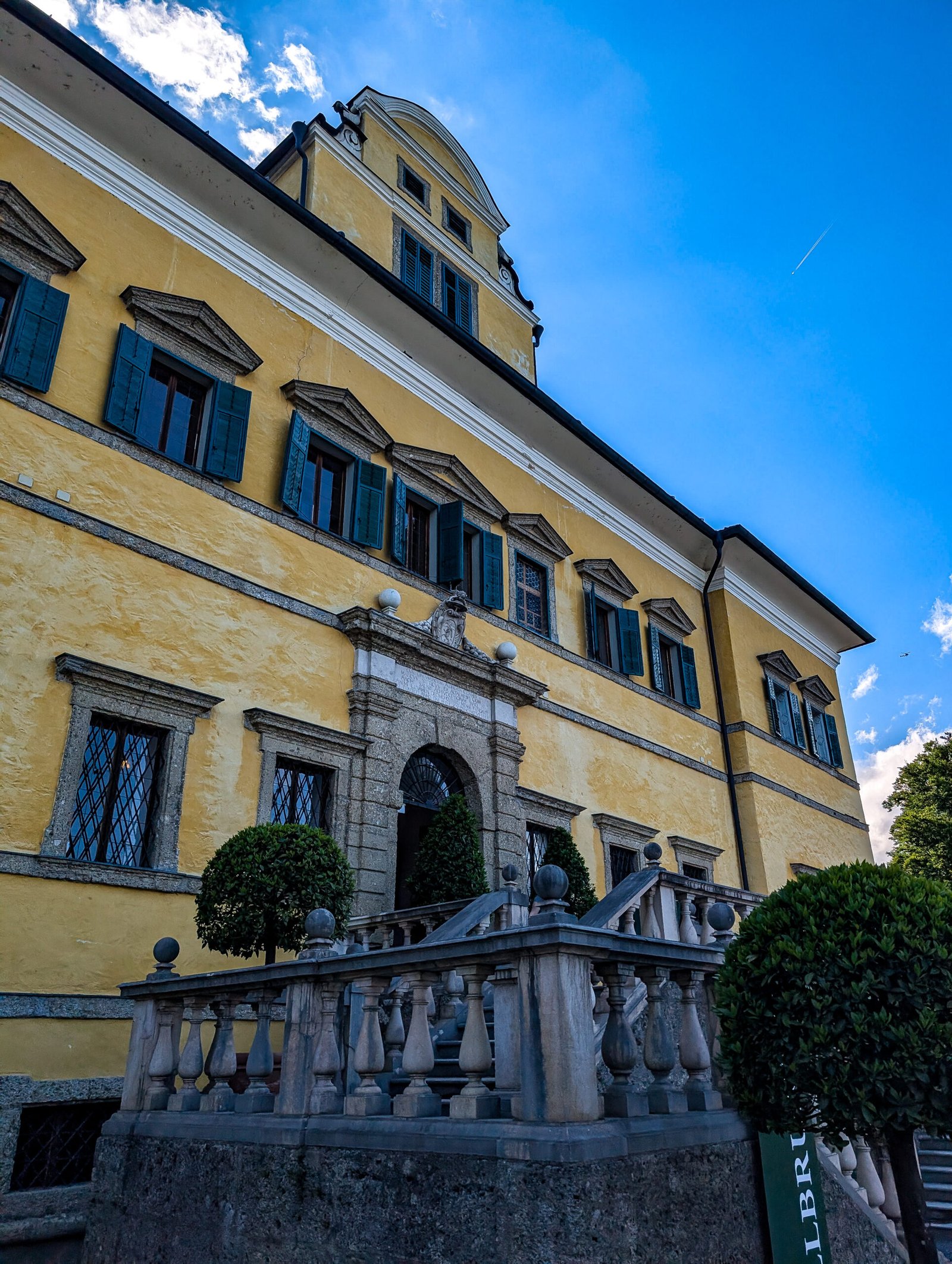
On the way out of town walked the gardens at the Hullbrunn Castle. Yet another spot for the filming of the Sound of Music with it’s Trick Fountains.
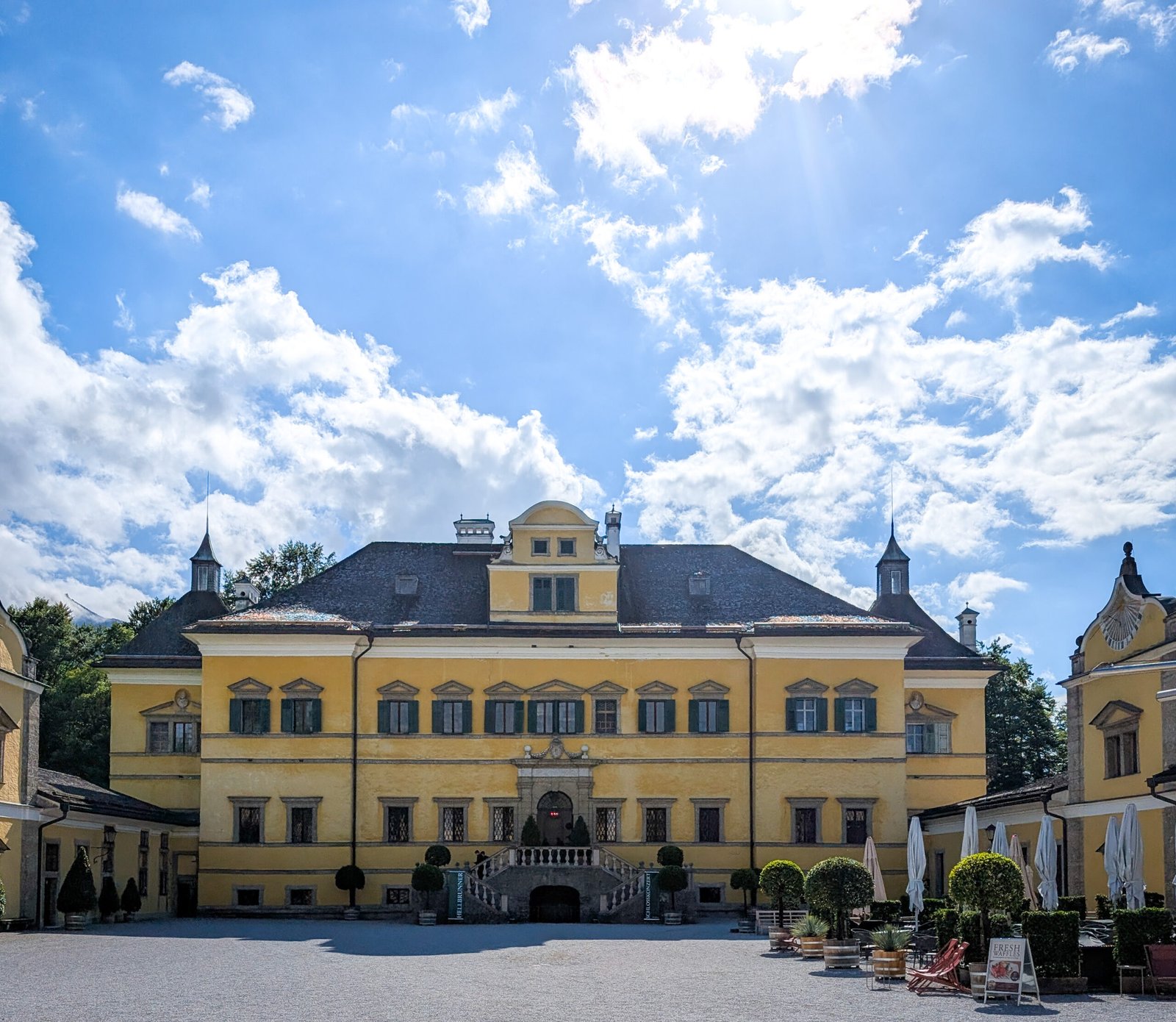
Tomorrow we pack up from our Home Exchange and head East into the Lake District.
Until Tomorrow, Darren